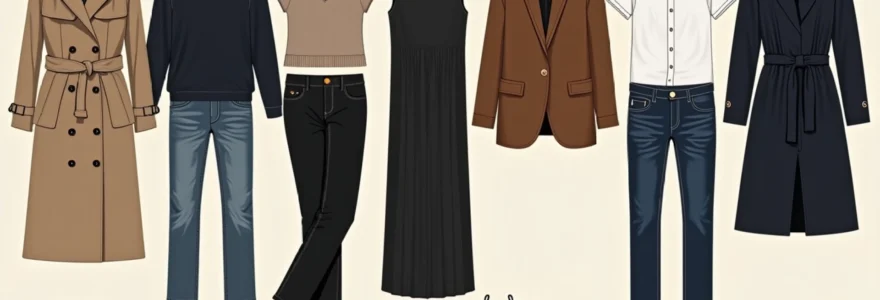
The modern wardrobe has evolved far beyond the overwhelming collections of fast fashion and impulse purchases that once defined personal style. Building a capsule wardrobe represents a strategic approach to dressing that prioritises versatility, quality, and timeless appeal over quantity. This methodology transforms the daily ritual of getting dressed from a stressful decision-making process into an effortless expression of refined taste. A well-constructed capsule wardrobe serves as the foundation for consistent, sophisticated styling while reducing decision fatigue and maximising cost-per-wear value across every garment investment.
Defining capsule wardrobe architecture: quality over quantity principles
The fundamental architecture of a capsule wardrobe rests on the principle that fewer, better pieces create more styling opportunities than a closet filled with mediocre garments. This counterintuitive concept challenges the traditional retail mindset that equates variety with value. Research indicates that individuals wear approximately 20% of their clothing 80% of the time, suggesting that most wardrobes contain significant redundancy and waste.
A properly structured capsule wardrobe typically contains between 30 to 50 pieces, including outerwear, but excluding accessories, undergarments, and sleepwear. This number provides sufficient variety for diverse occasions while maintaining visual cohesion and simplifying daily decision-making. The key lies in selecting pieces that possess high compatibility coefficients – garments that work harmoniously with multiple other items in the collection.
The investment approach to capsule wardrobe construction emphasises cost-per-wear calculations over initial purchase price. A £300 blazer worn twice weekly for three years yields a cost-per-wear of approximately £0.96, while a £50 jacket worn monthly for one year costs £4.17 per wear. This mathematical approach reveals the true economy of quality investment pieces versus frequent replacement of cheaper alternatives.
Successful capsule wardrobe architecture also requires honest self-assessment of lifestyle requirements. Office professionals need different foundation pieces than creative freelancers or new parents. The most effective capsules reflect genuine daily activities rather than aspirational lifestyle fantasies. This alignment between wardrobe contents and actual lifestyle ensures maximum utility from every piece.
Essential foundation garments: building your core wardrobe matrix
The foundation layer of any capsule wardrobe consists of versatile pieces that can transition seamlessly between casual and formal contexts. These garments form the structural backbone that supports more specific or statement pieces. Understanding the technical specifications and construction details of foundation garments enables informed investment decisions that will serve you for years.
Premium blazer selection: structured tailoring and fabric weight considerations
The blazer represents perhaps the most transformative piece in any capsule wardrobe, capable of elevating casual combinations while providing professional polish for formal occasions. Premium blazer construction begins with the canvas – the internal structure that provides shape and longevity. Full canvas construction, where horsehair canvas extends throughout the jacket front, offers superior drape and durability compared to fused alternatives.
Fabric weight significantly impacts blazer versatility and seasonal appropriateness. A 300-320 gram wool fabric provides ideal year-round wearability in most climates, offering enough structure for professional settings while remaining comfortable during temperature variations. Seasonal adaptability increases through strategic layering – the same blazer works over lightweight knits in autumn and crisp shirts in summer.
Colour selection for foundation blazers should prioritise navy or charcoal over black, as these shades offer greater versatility with both casual and formal pieces. Navy blazers pair effectively with virtually every colour except black, while charcoal provides sophisticated neutrality. The lapel width should reflect contemporary proportions – approximately 3.25 to 3.5 inches for optimal balance and longevity beyond fleeting trends.
White Button-Down shirt: cotton weave types and collar construction
The white button-down shirt functions as the Swiss Army knife of capsule wardrobes, adapting to countless styling scenarios with appropriate fit and quality construction. Cotton weave selection dramatically impacts both appearance and performance characteristics. Oxford cloth provides casual versatility with its textured basket weave, while poplin offers crisp formality through its tight plain weave structure.
Collar construction determines both aesthetic appeal and functional durability. Fused collars maintain their shape through adhesive interlining, while sewn collars use traditional stitching techniques that age more gracefully. The collar points should measure between 3 to 3.5 inches for contemporary proportions that complement most face shapes and blazer lapels.
Fit considerations extend beyond basic measurements to include movement allowance and styling flexibility. The optimal white shirt allows sufficient room for comfortable arm movement without creating excess fabric bulk when tucked. The shoulder seam should align precisely with your natural shoulder point, while the body provides enough ease for layering without appearing oversized when worn alone.
Little black dress: silhouette analysis and versatility metrics
The little black dress concept, popularised in the 1920s, remains relevant through its ability to serve as a blank canvas for accessory expression and styling creativity. Modern interpretations must balance timeless silhouette principles with contemporary fit preferences and lifestyle functionality. Silhouette analysis reveals that A-line and sheath dresses offer maximum versatility across body types and styling contexts.
Fabric selection impacts both drape characteristics and care requirements. Wool crepe provides excellent drape and wrinkle resistance, making it ideal for travel and long wear days. Ponte knits offer stretch comfort while maintaining structured appearance, though they require careful laundering to preserve shape integrity. Natural fibres generally age more gracefully than synthetic alternatives, developing character rather than degrading over time.
The optimal dress length balances professional appropriateness with social versatility. Knee-length or just below offers maximum workplace acceptance while remaining elegant for evening occasions when styled with appropriate accessories and footwear. This length also provides the most flattering proportions for the majority of body types.
Dark wash denim: raw selvedge vs. stretch blends for longevity
Premium denim serves as the casual foundation piece that bridges the gap between weekend comfort and elevated everyday style. Raw selvedge denim offers superior longevity and develops unique character through wear, creating personalised fading patterns that reflect individual movement and lifestyle patterns. However, this traditional construction requires patience during the break-in period and careful laundering to maintain fit and appearance.
Stretch blend alternatives incorporate elastane for immediate comfort and accommodation of modern sedentary lifestyles. Quality stretch denim maintains its shape through recovery properties while providing the flexibility required for contemporary activities. The optimal blend contains 1-2% elastane for subtle stretch without compromising the authentic denim aesthetic.
Rise selection significantly impacts both comfort and styling versatility. High-rise silhouettes offer superior comfort for seated activities while creating flattering proportions when tucked into tops. Mid-rise options provide balance between comfort and contemporary styling preferences. The wash should remain dark enough to appear appropriate for business casual environments while offering enough character to avoid corporate uniformity.
Investment outerwear: Climate-Adaptive layering systems
Outerwear represents the most visible and impactful element of any wardrobe, often determining first impressions and defining overall style perception. Investment-grade outerwear must perform across multiple seasons and styling contexts while providing genuine protection from environmental conditions. The layering system approach allows strategic combination of pieces to accommodate varying weather conditions without requiring extensive coat collections.
Trench coat construction: burberry heritage techniques and gabardine weaving
The trench coat’s evolution from military necessity to civilian wardrobe staple demonstrates the power of functional design translated into everyday elegance. Traditional construction techniques, perfected by heritage manufacturers, create garments that improve with age rather than deteriorating. Gabardine weaving produces the characteristic water-resistant properties through tightly woven cotton or wool fibres that shed moisture while maintaining breathability.
Authentic trench coat construction includes specific functional elements that distinguish quality pieces from fashion interpretations. The storm shield provides additional weather protection across the back shoulder area, while D-rings allow secure belt positioning during active wear. Gun flaps and throat latches serve both functional and aesthetic purposes, creating the layered visual complexity that defines the silhouette.
Colour selection for investment trench coats should prioritise longevity over trend responsiveness. Classic beige or stone colours offer maximum versatility while maintaining the authentic military heritage aesthetic. Navy alternatives provide sophisticated formality, while black versions lean more heavily formal but sacrifice some of the casual versatility that makes trench coats so valuable in capsule wardrobes.
Cashmere knitwear: ply count and mongolian vs. scottish mills
Cashmere represents the pinnacle of luxury knitwear, offering unmatched softness and insulation properties when sourced and constructed properly. Ply count significantly impacts both durability and aesthetic appeal – two-ply construction provides optimal balance between luxury hand-feel and practical durability for everyday wear. Single-ply cashmere, while incredibly soft, lacks the structural integrity required for frequent wearing and laundering.
Geographic sourcing affects both quality and price positioning within the cashmere market. Mongolian cashmere, harvested from goats in harsh mountain climates, produces longer, stronger fibres that create superior yarn quality. Scottish mill processing applies centuries of expertise in transforming raw cashmere into finished garments, though Italian mills also produce exceptional results through different traditional techniques.
Garment construction details separate investment pieces from mass-market alternatives. Fully-fashioned knitting creates seamless construction that eliminates bulk and weak points, while linking techniques join pieces invisibly for superior comfort and appearance. The gauge, or stitch density, should provide enough structure to maintain shape while allowing the natural cashmere characteristics to express themselves through wear.
Wool coat selection: melton vs. tweed fabrications for seasonal transitions
Wool coat selection requires balancing warmth requirements with versatility across seasons and occasions. Melton wool fabrication creates dense, weather-resistant outerwear through felting processes that compress fibres into windproof and water-resistant surfaces. This construction technique produces coats suitable for harsh winter conditions while maintaining refined appearance suitable for professional environments.
Tweed alternatives offer texture and visual interest through varied yarn combinations and traditional weaving patterns. Harris Tweed, protected by geographical designation, provides authentic Scottish island production using traditional methods and local materials. The inherent texture of tweed fabrications creates more casual positioning than smooth melton alternatives, making them ideal for weekend and country wear applications.
Silhouette selection should prioritise timeless proportions that complement rather than compete with underlying garments. Single-breasted styles offer greater versatility for layering, while double-breasted alternatives provide more dramatic silhouettes suitable for formal occasions. The optimal coat length extends to mid-thigh for most body types, providing adequate coverage while maintaining proportional balance.
Leather jacket investment: Full-Grain vs. Top-Grain hide quality assessment
Leather jacket investment requires understanding hide quality grades and construction techniques that determine both longevity and aging characteristics. Full-grain leather retains the complete hide surface, including natural grain patterns and imperfections that create character and durability. This premium grade develops rich patina through wear while maintaining structural integrity for decades with proper care.
Top-grain alternatives remove the surface layer to eliminate imperfections, creating uniform appearance but sacrificing some durability and aging potential. The sanding process required for top-grain preparation weakens the hide structure slightly, though quality examples still provide excellent longevity for casual wear applications.
Construction details significantly impact both comfort and durability. YKK zippers provide reliable operation and replacement availability, while reinforced stress points prevent tearing at pocket corners and seam intersections. The lining should allow easy on-and-off while providing thermal regulation – quilted options add warmth while smooth linings facilitate layering over thick sweaters.
Footwear foundation: versatile sole solutions and construction methods
Footwear selection represents one of the most critical decisions in capsule wardrobe construction, as shoes must perform across diverse contexts while maintaining comfort throughout extended wear periods. The foundation footwear collection requires strategic balance between formal capabilities, casual versatility, and seasonal appropriateness. Quality construction methods ensure longevity that justifies the investment approach essential to capsule wardrobe philosophy.
The essential footwear matrix typically includes four categories: formal leather shoes for professional contexts, versatile boots for seasonal transitions, casual sneakers for weekend activities, and weather-appropriate options for climate-specific challenges. This structure provides comprehensive coverage while maintaining the minimalist philosophy central to capsule wardrobes.
Construction methods dramatically impact both durability and repairability. Goodyear welted shoes allow multiple resolutions, extending useful life significantly compared to cemented alternatives. Blake stitched construction provides sleeker profiles while maintaining some repairability, though at reduced durability compared to welted options. Understanding these technical differences enables informed investment decisions that align with personal priorities regarding longevity versus aesthetics.
Sole selection affects both comfort and versatility. Leather soles provide traditional elegance and breathability but require careful maintenance and weather consideration. Rubber sole alternatives offer superior weather resistance and comfort for extended walking, while maintaining sufficient formality for most professional environments. Commando soles provide maximum traction and durability for challenging conditions while adding casual character to formal shoe silhouettes.
Colour palette engineering: monochromatic and neutral coordination systems
Effective colour palette engineering forms the invisible infrastructure that enables effortless coordination across all wardrobe pieces. A well-planned colour system eliminates the possibility of incompatible combinations while providing sufficient variety to avoid monotony. The scientific approach to colour coordination leverages colour theory principles to create harmonious combinations that enhance rather than compete with personal colouring characteristics.
Neutral base theory: beige, navy, and charcoal as wardrobe anchors
The neutral base theory establishes foundational colours that provide maximum compatibility with both each other and accent colours introduced through accessories and statement pieces. Navy blue functions as the most versatile wardrobe anchor, offering the formality of black while providing greater compatibility with warm and cool tones alike. This colour works effectively in professional environments while remaining appropriate for casual contexts.
Charcoal grey provides sophisticated neutrality that complements virtually every other colour while offering more visual interest than basic black. The slight warmth inherent in quality charcoal fabrics prevents the stark contrast that can make black challenging to coordinate with certain complexions and other wardrobe elements.
Beige and camel tones create warm neutral alternatives that particularly complement autumn and winter wardrobes. These colours provide sophisticated earthiness while maintaining the coordination flexibility essential to capsule wardrobe function. The key lies in selecting beige tones that complement rather than compete with personal colouring – cooler undertones suit those with pink-based complexions, while warmer beiges flatter golden undertones.
Accent colour integration: strategic pops through accessories and statement pieces
Accent colour integration prevents neutral-heavy capsule wardrobes from appearing monotonous while maintaining the coordination simplicity that makes daily dressing effortless. Strategic colour placement through accessories allows personal expression without compromising the foundational neutrality that enables piece compatibility. This approach provides flexibility to incorporate seasonal colour trends without destabilising the core wardrobe investment.
The 60-30-10 rule provides effective guidance for colour distribution – 60% neutral base colours, 30% supporting neutrals or muted accent colours, and 10% bold accent colours introduced through accessories. This proportion maintains visual balance while allowing personality expression through colour choices.
Jewellery tones significantly impact colour coordination success. Gold-toned accessories warm overall colour palettes and complement cream, camel, and warm grey foundations. Silver alternatives cool palettes and work harmoniously with navy, charcoal, and true grey bases. Consistent metal choice throughout accessories creates cohesive sophistication regardless of specific colour combinations.
Seasonal colour adaptation: transitioning palettes without complete overhauls
Seasonal colour adaptation allows capsule wardrobes to remain fresh and appropriate throughout the year without requiring complete replacement of foundation pieces. Transitional colour strategies leverage the natural progression of seasonal light and environmental colours to maintain harmonious coordination while reflecting temporal changes.
Spring transitions benefit from introducing lighter, clearer versions of existing colours – navy lightens to mid-blue, charcoal softens to light grey, and beige brightens to cream. These shifts maintain the established colour relationships while reflecting the increased light levels and emerging growth associated with spring seasons.
Autumn adaptations deepen existing colours while introducing earth-toned accents that complement the
seasonal spectrum. Burgundy, forest green, and rich brown accents enhance the natural colour progression while maintaining compatibility with existing neutral foundations. Winter colour transitions emphasise deeper, richer versions of established palettes – navy deepens to midnight blue, charcoal intensifies to anthracite, and beige warms to rich camel. These adjustments require minimal investment while providing dramatic seasonal appropriateness.
Fabric technology and longevity: performance textiles in timeless design
The intersection of traditional craftsmanship and modern textile innovation creates unprecedented opportunities for capsule wardrobe development. Performance textile integration allows contemporary garments to maintain classic aesthetics while incorporating functional benefits that enhance durability and versatility. Understanding these technological advances enables informed decisions that balance tradition with practical performance requirements of modern lifestyles.
Merino wool technologies exemplify successful performance integration without aesthetic compromise. Modern processing techniques create wool garments with enhanced moisture-wicking properties, odour resistance, and wrinkle recovery while maintaining the natural beauty and luxury associated with premium wool fabrics. These advances particularly benefit travel wardrobes where pieces must perform reliably across diverse climates and extended wear periods.
Synthetic blend innovations focus on enhancing natural fibre performance rather than replacing traditional materials entirely. Strategic incorporation of technical fibres like Tencel or modal can improve drape, reduce care requirements, and extend garment lifespan while preserving the aesthetic characteristics that make natural fibres desirable. The key lies in selecting blends where synthetic additions enhance rather than diminish the primary fibre’s inherent qualities.
Fabric treatment technologies provide additional longevity benefits through protective finishes that resist staining, fading, and premature wear. Nano-coating treatments create invisible barriers against liquid spills while maintaining fabric breathability and hand-feel. These protective measures prove particularly valuable for light-coloured pieces that form the foundation of many capsule wardrobes, extending their pristine appearance despite frequent wear.
Care technology integration simplifies maintenance requirements while preserving garment integrity throughout extended lifespans. Machine-washable wool treatments eliminate dry cleaning requirements for many pieces, reducing both environmental impact and ongoing maintenance costs. Similarly, wrinkle-resistant treatments reduce ironing requirements while maintaining crisp appearance standards essential for professional wardrobes. These innovations align perfectly with capsule wardrobe philosophy by reducing the hidden costs and complexity associated with garment ownership.
The future of capsule wardrobe construction increasingly depends on understanding how technological advances can enhance traditional design principles rather than replacing them. Smart fabric integration allows classic silhouettes to perform better and last longer while maintaining the timeless aesthetic appeal that makes them suitable for long-term wardrobe investment. This synthesis of innovation and tradition represents the evolution of capsule dressing for contemporary lifestyles that demand both style and substance from every garment choice.