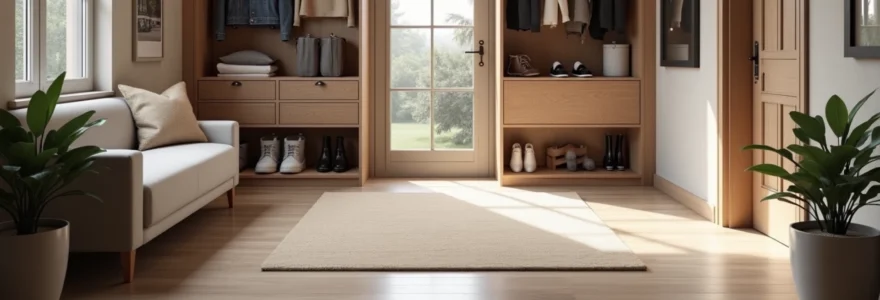
The entryway serves as the crucial transition zone between the outside world and your home’s interior, demanding both aesthetic appeal and practical functionality. Modern homeowners increasingly recognise that this space requires thoughtful planning to accommodate daily routines while creating an impressive first impression for guests. The challenge lies in selecting accessories that seamlessly blend visual impact with storage efficiency, lighting adequacy, and organisational capabilities.
Today’s entryway design trends emphasise intelligent storage solutions that eliminate clutter whilst maintaining accessibility to essential items. From sophisticated console tables with hidden compartments to advanced lighting systems with motion sensors, contemporary entryway accessories reflect our evolving lifestyle needs. The integration of smart home technology has revolutionised how we approach entryway functionality, transforming these spaces into highly efficient command centres for daily departures and arrivals.
Professional interior designers consistently emphasise that successful entryway design requires balancing three core elements: storage capacity, lighting quality, and visual harmony. Each accessory choice should contribute to the overall functionality whilst supporting your home’s aesthetic vision. The investment in quality entryway accessories pays dividends through improved daily efficiency and enhanced property value, making this often-overlooked space worthy of serious design consideration.
Essential storage solutions for modern entryway design
Contemporary entryway storage has evolved beyond simple coat hooks and shoe racks to encompass sophisticated systems that maximise vertical space whilst maintaining clean lines. The most effective storage solutions integrate multiple functions within single units, reducing visual clutter whilst increasing organisational capacity. Modern families require storage for outerwear, footwear, bags, keys, mail, and seasonal accessories, demanding versatile systems that adapt to changing needs throughout the year.
Wall-mounted console tables with integrated compartments
Wall-mounted console tables represent the pinnacle of space-efficient entryway storage, offering surface area for decorative items whilst concealing essential storage compartments. These floating units typically feature depths ranging from 15 to 30 centimetres, making them ideal for narrow entryways where traditional furniture would impede traffic flow. Many contemporary models incorporate soft-close drawers, cable management systems, and adjustable shelving to accommodate various household items.
The installation of wall-mounted consoles requires careful consideration of wall structure and weight distribution. Professional installers recommend securing these units to wall studs rather than relying solely on drywall anchors, particularly when the console will support heavy items like bags or books. High-quality models often feature weight capacities exceeding 50 kilograms, providing substantial storage potential without compromising structural integrity.
Multi-tiered shoe cabinets and boot storage systems
Shoe storage remains one of the most challenging aspects of entryway organisation, particularly for households with multiple family members and diverse footwear needs. Multi-tiered cabinet systems offer enclosed storage that conceals unsightly shoe collections whilst providing adequate ventilation to prevent moisture buildup. Contemporary designs feature adjustable shelving systems that accommodate everything from children’s trainers to adult wellington boots.
Advanced shoe storage systems incorporate antimicrobial treatments and moisture-wicking materials to maintain hygiene standards. Some premium models feature individual compartments with ventilation holes and removable drip trays for wet footwear. The average household requires storage for 12 to 20 pairs of frequently used shoes, making capacity planning essential for selecting appropriate cabinet dimensions.
Modular cubby units for seasonal outerwear organisation
Modular cubby systems provide flexible storage solutions that adapt to seasonal clothing variations and changing household needs. These units typically feature open compartments that accommodate bulky winter coats, sports equipment, and seasonal accessories whilst maintaining easy accessibility. The modular design allows for configuration adjustments as storage requirements evolve, making these systems particularly valuable for growing families.
Professional organizers recommend assigning individual cubbies to family members, creating personalised storage zones that encourage consistent use. Color-coding systems or labelling can enhance organisation efficiency, particularly in households with children. High-quality modular units feature reinforced construction capable of supporting up to 25 kilograms per compartment, ensuring durability under regular use.
Hidden storage benches with hydraulic lift mechanisms
Storage benches serve the dual purpose of providing seating for putting on shoes whilst concealing seasonal items, sports equipment, or emergency supplies. Modern hydraulic lift mechanisms ensure smooth operation and prevent lid slamming, whilst safety hinges protect fingers during operation. These benches typically offer storage capacities between 150 and 300 litres, providing substantial concealed storage in compact footprints.
The selection of storage bench materials should consider both durability and comfort, with upholstered tops providing seating comfort whilst solid wood or engineered materials ensure structural integrity. Many contemporary models feature removable cushions for easy cleaning and maintenance. Professional installation ensures proper weight distribution and optimal hydraulic performance, particularly for heavier models that require floor anchoring.
Lighting fixtures and illumination strategies for entryway functionality
Effective entryway lighting extends beyond basic illumination to create welcoming atmospheres whilst ensuring safety and security. The layering of different light sources provides functional task lighting for activities like finding keys or reading mail, ambient lighting for general illumination, and accent lighting to highlight architectural features or decorative elements. Modern lighting systems increasingly incorporate energy-efficient LED technology and smart controls that enhance both convenience and energy conservation.
Professional lighting designers emphasise that entryway illumination should provide at least 200 lux at floor level for safe navigation, whilst accent lighting can operate at lower levels to create visual interest and warmth.
LED pendant lighting with Motion-Sensor technology
Motion-sensor pendant lights offer hands-free operation that proves invaluable when entering with packages or struggling with keys in low-light conditions. Contemporary LED pendant systems provide customisable colour temperatures ranging from warm 2700K for evening ambience to bright 4000K for task-oriented lighting. Advanced models feature adjustable sensitivity settings and programmable delay timers that prevent unnecessary activation whilst ensuring reliable operation.
The positioning of pendant lights requires careful consideration of ceiling height and traffic patterns to avoid head strikes whilst providing optimal illumination. Professional electricians recommend installing pendant lights at minimum heights of 2.1 metres in high-traffic areas, with higher installations possible in areas with limited foot traffic. Smart pendant systems can integrate with home automation platforms, allowing for scheduled operation and remote control capabilities.
Recessed ceiling spotlights for uniform light distribution
Recessed spotlights provide clean, unobtrusive illumination that works particularly well in contemporary and minimalist entryway designs. The strategic placement of multiple recessed fixtures eliminates shadows and provides even light distribution across the entire entryway area. LED recessed lights offer exceptional longevity, with quality fixtures providing 25,000 to 50,000 hours of operation whilst consuming minimal electricity.
The installation of recessed lighting requires adequate ceiling depth and consideration of insulation requirements to prevent heat buildup. Professional installers typically recommend spacing recessed fixtures approximately 1.5 metres apart for optimal light distribution, though specific spacing depends on ceiling height and fixture specifications. Dimmable options provide flexibility for creating different lighting moods throughout the day.
Statement chandeliers in High-Ceiling entry spaces
Statement chandeliers serve as dramatic focal points in entryways with generous ceiling heights, combining illumination with artistic impact. Modern chandelier designs range from minimalist geometric forms to elaborate crystal arrangements, allowing for personalisation that reflects individual style preferences. The scale of chandelier selection should complement room proportions, with fixtures typically measuring one-third to one-half the width of the entryway space.
Professional installation of statement chandeliers requires reinforced ceiling mounting systems capable of supporting weights that often exceed 25 kilograms. Electrical requirements may include dedicated circuits for high-wattage fixtures, whilst maintenance access should be considered for cleaning and bulb replacement. Contemporary LED chandelier systems offer significant energy savings compared to traditional incandescent or halogen alternatives.
Accent wall sconces for ambient pathway illumination
Wall sconces provide gentle ambient lighting that guides movement through entryway spaces whilst creating visual interest along wall surfaces. These fixtures prove particularly effective for highlighting architectural details, artwork, or decorative wall treatments. The placement of wall sconces typically follows the rule of positioning fixtures 150 to 180 centimetres above floor level, though specific heights may vary based on ceiling height and design objectives.
Modern wall sconce designs incorporate advanced LED technology that provides consistent illumination whilst minimising maintenance requirements. Wireless and battery-powered options eliminate installation complexity in spaces where electrical access proves challenging. Smart sconce systems offer programmable operation schedules and integration with security systems for enhanced functionality.
Mirror placement and reflective surface integration
Mirrors serve multiple functions in entryway design, from practical grooming checks before departing to creating illusions of expanded space and enhanced natural light distribution. Strategic mirror placement can dramatically transform the perceived size and brightness of compact entryways whilst providing essential functionality for daily routines. The selection of mirror sizes, shapes, and mounting styles should complement existing architectural elements whilst serving practical needs.
Professional designers recognise that mirrors positioned opposite windows or light sources can double the effective illumination within entryway spaces through light reflection. Large mirrors, typically measuring 60 centimetres or more in width, provide full-body viewing capabilities whilst creating dramatic visual impact. The height positioning of mirrors should accommodate all household members, with centres typically positioned 150 to 165 centimetres above floor level for optimal usability.
Contemporary mirror designs range from simple frameless options that maintain clean lines to ornate framed pieces that serve as decorative focal points. The integration of LED lighting within mirror frames provides dedicated task lighting for grooming activities whilst eliminating shadows. Some advanced mirror systems incorporate smart glass technology that can display information like weather forecasts, calendar appointments, or security camera feeds, transforming traditional mirrors into interactive display surfaces.
The mounting of large mirrors requires substantial wall support, particularly for decorative mirrors with heavy frames. Professional installers typically use mirror clips or French cleat systems that distribute weight across multiple wall studs. Safety considerations become paramount in high-traffic areas, with tempered glass or acrylic alternatives providing impact resistance whilst maintaining optical clarity.
Interior designers consistently emphasise that mirror selection should balance functional requirements with aesthetic goals, ensuring that reflective surfaces enhance rather than overwhelm the entryway design scheme.
Floor protection systems and entrance matting solutions
Effective floor protection extends the lifespan of interior flooring whilst maintaining cleanliness and safety standards throughout the home. Professional-grade matting systems can capture up to 80% of tracked dirt and moisture within the first few steps, significantly reducing maintenance requirements for interior floors. The selection of appropriate matting solutions depends on climate conditions, traffic volumes, and specific flooring materials requiring protection.
Commercial-grade coir and natural fibre door mats
Coir matting, derived from coconut husk fibres, provides exceptional durability and moisture absorption capabilities that surpass synthetic alternatives. These natural fibre mats effectively scrape dirt and debris from shoe soles whilst providing slip-resistant surfaces for safe entry. Quality coir mats can withstand years of heavy use whilst maintaining their appearance and functionality, making them cost-effective investments for busy households.
The natural properties of coir fibres include antimicrobial characteristics that resist odour development and bacterial growth. Professional cleaning involves regular vacuuming and periodic washing with mild detergents, though many coir mats can withstand power washing for deep cleaning. The standard thickness for effective dirt removal ranges from 12 to 20 millimetres, with thicker options providing enhanced cushioning and durability.
Recessed mat wells for seamless floor integration
Recessed mat wells create flush transitions between entrance mats and surrounding flooring, eliminating trip hazards whilst providing professional-grade dirt and moisture capture. The installation of mat wells requires careful planning during construction or renovation phases, with depths typically matching mat thickness plus 3 to 5 millimetres for proper drainage. Professional installation ensures adequate waterproofing and drainage systems that prevent moisture accumulation beneath mat surfaces.
The dimensions of mat wells should provide adequate coverage for typical entry patterns, with lengths of 120 to 180 centimetres proving effective for most residential applications. The integration of drainage systems becomes essential in climates with significant precipitation, preventing water accumulation that could lead to mould or structural damage. Quality mat well systems feature removable grating systems that facilitate cleaning and maintenance whilst providing stable walking surfaces.
Anti-slip rubber backing technologies
Modern anti-slip backing technologies prevent mat movement whilst protecting underlying floor surfaces from scratches or damage. Advanced rubber compounds provide grip without leaving residue on hard flooring surfaces, whilst cushioned backings enhance comfort underfoot. The selection of backing materials should consider compatibility with specific flooring types, as some rubber compounds can cause discolouration on certain surfaces.
Nitrile rubber backings offer superior durability and chemical resistance compared to standard rubber alternatives, maintaining grip characteristics through extended use cycles. Perforated backing designs enhance drainage capabilities whilst maintaining anti-slip properties, proving particularly valuable in high-moisture environments. Professional-grade backing systems often feature bevelled edges that create smooth transitions and reduce curling tendencies.
Seasonal mat rotation and Weather-Resistant materials
Seasonal mat rotation optimises cleaning effectiveness whilst extending the lifespan of individual mats through distributed wear patterns. Winter months may require mats with enhanced moisture absorption and ice-melt resistance, whilst summer conditions favour quick-drying materials that handle lighter soil loads. The implementation of mat rotation systems requires storage solutions for off-season mats and scheduling systems that ensure timely exchanges.
Weather-resistant materials include polypropylene fibres that resist moisture absorption and synthetic backing that prevents degradation from temperature fluctuations. UV-resistant treatments prevent colour fading in areas exposed to direct sunlight, whilst antimicrobial treatments inhibit bacterial growth in high-moisture environments. Quality weather-resistant mats can maintain appearance and functionality through multiple seasonal cycles, providing long-term value despite higher initial investments.
Wall-mounted organisation hardware and hanging systems
Efficient wall-mounted organisation systems maximise vertical storage capacity whilst maintaining accessibility to frequently used items. Modern hanging systems feature modular designs that accommodate changing storage needs throughout seasons and household evolution. The integration of multi-functional hardware reduces wall clutter whilst providing dedicated storage for specific item categories like bags, umbrellas, and outerwear.
Professional-grade mounting systems distribute weight across multiple wall anchors, ensuring stability under full load conditions. The selection of appropriate wall anchors depends on wall construction materials, with hollow wall installations requiring toggle bolts or molly bolts rated for specific weight capacities. Solid masonry or stud mounting provides maximum security for heavy storage loads, supporting organisation systems that accommodate substantial seasonal clothing collections.
Contemporary organisation hardware incorporates sleek designs that complement modern interior aesthetics whilst providing practical functionality. Powder-coated finishes resist corrosion and maintain appearance through extended use, whilst hidden mounting systems create clean wall presentations. The positioning of hanging systems should consider user heights and accessibility requirements, with adjustable components accommodating various family members’ needs.
Smart organisation systems integrate charging capabilities for electronic devices, transforming coat hooks into multifunctional charging stations. These systems typically feature integrated USB ports and wireless charging pads that maintain device accessibility whilst eliminating cable clutter. The electrical requirements for smart hanging systems may necessitate dedicated circuits or proximity to existing outlets for proper functionality.
Smart home integration for entryway automation
Smart home technology transforms traditional entryways into intelligent spaces that respond to occupancy patterns and user preferences. Automated systems can adjust lighting levels, activate security features, and provide environmental controls based on detected movement or scheduled programming. The integration of artificial intelligence allows these systems to learn household routines and optimise functionality accordingly, creating seamless user experiences that enhance daily convenience.
Voice control systems enable hands-free operation of entryway functions, proving particularly valuable when entering with packages or struggling with multiple bags. Smart speakers positioned in entryway spaces can provide weather updates, traffic reports, and calendar reminders during departure routines. The integration of intercom systems allows communication throughout the home, whilst security features provide monitoring and alert capabilities for enhanced safety.
Automated climate control systems can pre-condition entryway temperatures based on outdoor conditions and occupancy schedules. These systems prove particularly valuable in extreme climates where temperature transitions create comfort challenges. Smart thermostats can detect door opening events and temporarily adjust HVAC settings to maintain energy efficiency whilst ensuring occupant comfort during entry and exit activities.
Mobile device integration allows remote monitoring and control of entryway systems from any location. Smartphone applications provide status updates for security systems, lighting controls, and climate settings, enabling preemptive adjustments before arrival. Cloud-based storage systems maintain usage data and system preferences, facilitating easy restoration after power outages or system updates. Advanced systems feature machine learning capabilities that continuously optimise performance based on usage patterns and environmental conditions, ensuring that entryway automation becomes increasingly efficient over time.
The convergence of artificial intelligence and home automation continues to expand entryway functionality beyond traditional expectations. Machine learning algorithms analyse usage patterns to predict optimal lighting schedules, security activation times, and climate control adjustments. These intelligent systems adapt to seasonal variations and household routine changes, ensuring that entryway automation remains relevant and efficient throughout evolving lifestyle demands.
Security integration represents a cornerstone of smart entryway systems, with advanced cameras, motion detectors, and access control systems providing comprehensive monitoring capabilities. Facial recognition technology enables personalised greetings and customised environmental settings for individual family members, whilst unauthorised access attempts trigger immediate alerts and security responses. The integration of smart locks with mobile applications eliminates the need for physical keys whilst maintaining detailed access logs for security monitoring.
Energy management systems monitor and optimise power consumption across all entryway devices, ensuring that automation enhancements don’t compromise household energy efficiency goals. Smart power strips and energy monitoring devices provide real-time consumption data, enabling informed decisions about device usage and scheduling. Advanced systems feature load balancing capabilities that prioritise essential functions during peak demand periods whilst deferring non-critical operations to off-peak hours.
Technology integration specialists emphasise that successful smart entryway systems require robust network infrastructure and reliable internet connectivity to ensure consistent performance and remote accessibility across all connected devices.
The implementation of smart entryway systems requires careful consideration of privacy concerns and data security protocols. Cloud-based storage solutions must comply with data protection regulations whilst providing secure access to system controls and monitoring information. Local network segmentation protects smart home devices from external security threats whilst maintaining full functionality for authorised users. Regular software updates and security patches ensure that entryway automation systems remain protected against emerging cyber threats.
Future developments in entryway automation include gesture recognition systems that respond to hand movements for touchless control, predictive maintenance algorithms that identify potential system failures before they occur, and integration with electric vehicle charging systems for seamless transportation connectivity. These advancing technologies promise to further enhance the functionality and convenience of modern entryway spaces whilst maintaining the aesthetic appeal that contemporary homeowners demand.
The investment in comprehensive entryway accessories yields substantial returns through improved daily efficiency, enhanced property value, and elevated living quality. Modern families benefit from organised storage systems that eliminate departure delays, intelligent lighting that ensures safety and security, and smart automation that adapts to evolving household needs. Professional installation and quality component selection ensure that these systems provide reliable service for years whilst maintaining compatibility with advancing technology standards.
As entryway design continues to evolve, the integration of beautiful and functional accessories becomes increasingly sophisticated, reflecting our growing appreciation for spaces that seamlessly blend aesthetic appeal with practical utility. The thoughtful selection and implementation of these accessories transforms the humble entryway into a sophisticated command centre that enhances every arrival and departure experience whilst creating lasting impressions for visitors and residents alike.