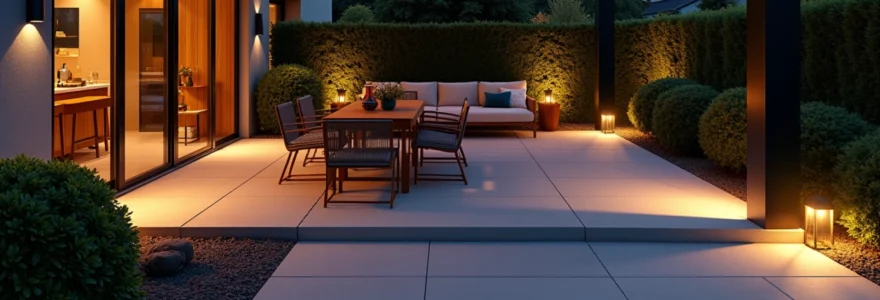
The transformation of outdoor spaces through thoughtful lighting design represents one of the most impactful improvements homeowners can make to their properties. When natural daylight fades, your patio doesn’t have to surrender its appeal or functionality. Instead, carefully selected soft lighting creates an enchanting atmosphere that extends the usability of outdoor spaces well into the evening hours. The science behind this transformation lies in how warm, gentle illumination affects our psychological state, triggering feelings of comfort and relaxation that mirror our evolutionary connection to firelight and candlelit gatherings.
Modern lighting technology offers unprecedented control over ambience creation, allowing property owners to craft experiences that rival professional hospitality venues. The strategic implementation of soft lighting solutions transforms ordinary patios into extraordinary retreats that beckon family and friends to linger longer. Understanding the technical aspects of colour temperature, fixture selection, and layered lighting approaches enables homeowners to create outdoor sanctuaries that serve multiple purposes throughout different seasons and occasions.
Understanding colour temperature and kelvin scale for optimal patio ambience
The colour temperature of lighting fundamentally shapes the emotional response to any outdoor space. Measured in Kelvin (K), this scale determines whether your patio feels clinical and stark or warm and inviting. Lower Kelvin values produce warmer, more orange-tinted light that naturally promotes relaxation and social interaction. Higher values create cooler, bluer light that enhances alertness but can feel harsh in intimate outdoor settings. The selection of appropriate colour temperatures becomes crucial when designing a space intended for evening entertainment and peaceful retreats.
Professional lighting designers consistently emphasise that outdoor spaces benefit from colour temperatures between 1800K and 3000K for optimal ambience creation. This range mimics the natural progression of daylight as it transitions from golden hour through to candlelight. The psychological impact of these warmer tones cannot be overstated – they trigger the production of melatonin, helping guests naturally wind down from the day’s activities. Additionally, warmer colour temperatures complement skin tones more favourably, creating a flattering environment for social gatherings.
Warm white LED options between 2700K-3000K for evening relaxation
The 2700K-3000K range represents the sweet spot for most patio lighting applications, offering sufficient illumination for practical activities while maintaining the soft warmth essential for relaxation. This colour temperature closely resembles traditional incandescent bulbs, providing familiar comfort that appeals to diverse age groups. LED fixtures in this range have become increasingly sophisticated, offering excellent dimming capabilities that allow fine-tuning of ambience throughout the evening.
Quality LED options in this temperature range typically provide 15,000-25,000 hours of operation, making them highly cost-effective for regular outdoor use. The warm white spectrum enhances natural materials commonly found in patio settings, such as wood decking, stone surfaces, and textile elements. When selecting fixtures, prioritise those offering consistent colour temperature across their dimming range, as some budget options shift noticeably cooler when dimmed.
Candlelight mimicry through 1800K-2200K amber lighting solutions
Ultra-warm lighting solutions in the 1800K-2200K range create the most intimate and romantic outdoor atmospheres possible. These amber-toned fixtures directly mimic candlelight and firelight, triggering primal responses that promote deep relaxation and social bonding. The orange-red spectrum naturally complements evening settings, particularly during cooler months when patios benefit from visually warming elements.
Amber lighting solutions work exceptionally well as accent elements rather than primary illumination sources. Consider incorporating these fixtures around seating areas, within landscape features, or as background illumination behind plants and architectural elements. The key lies in using amber lighting strategically to create zones of intimate warmth while maintaining adequate visibility through complementary 2700K fixtures in task-oriented areas.
Circadian rhythm considerations for Dusk-to-Dawn illumination
Understanding circadian rhythm impacts becomes increasingly important as outdoor living spaces extend further into evening hours. Blue light wavelengths, prevalent in cooler colour temperatures above 4000K, can disrupt natural sleep patterns by suppressing melatonin production. Conversely, warm light wavelengths support healthy circadian rhythms, making them ideal for spaces used during evening relaxation periods.
Smart lighting systems now offer circadian rhythm programming that automatically adjusts colour temperature throughout the evening. These systems might begin at 3000K during early evening hours and gradually shift to 2200K as night progresses. This subtle transition supports natural biological processes while maintaining functional visibility for outdoor activities. The investment in circadian-aware lighting pays dividends in improved sleep quality and overall wellbeing for regular patio users.
CRI rating selection above 90 for natural colour rendering
Colour Rendering Index (CRI) ratings measure how accurately artificial light sources display colours compared to natural sunlight. For patio environments where food presentation, plant appearance, and natural material beauty matter, selecting fixtures with CRI ratings above 90 ensures optimal colour accuracy. High-CRI lighting enhances the visual appeal of outdoor dining experiences and showcases landscape elements in their true colours.
The difference between standard CRI lighting (80-85) and premium options (90-95+) becomes particularly noticeable in the warm colour temperature ranges preferred for patios. Food appears more appetising, plants look healthier, and skin tones appear more natural under high-CRI illumination. While premium fixtures command higher prices, the enhanced visual experience justifies the investment for frequently used outdoor spaces.
Strategic lighting layer implementation using multiple fixture types
Professional outdoor lighting design relies on layered approaches that combine multiple fixture types to achieve comprehensive illumination coverage. This methodology ensures adequate light levels for various activities while creating visual depth and interest throughout the space. The layering concept draws from interior design principles, adapting them for outdoor environments where weather resistance and extended operation cycles become additional considerations.
Successful patio lighting schemes typically incorporate five distinct layers: ambient foundation lighting, task-specific illumination, accent highlighting, safety pathway lighting, and feature spotlighting. Each layer serves specific purposes while contributing to the overall atmospheric effect. The art lies in balancing these layers to achieve seamless integration where individual fixtures disappear into the overall lighting experience. Proper layering eliminates harsh shadows and bright spots that can make outdoor spaces feel uncomfortable or uninviting.
Accent lighting through linear LED strip integration along pergolas
Linear LED strips offer exceptional versatility for creating continuous accent lighting along pergola beams, railings, and architectural elements. Modern strips provide even light distribution across their entire length, eliminating the dotted appearance of older LED technologies. When properly installed with appropriate diffusion channels, LED strips create smooth washes of light that define architectural features without overwhelming the space.
Installation considerations include selecting strips with appropriate IP ratings for outdoor exposure and implementing adequate heat dissipation measures. Quality strips offer 50,000+ hour lifespans when properly managed thermally. The ability to cut and reconnect strips at specific intervals allows perfect customisation for any pergola configuration. Dimming compatibility ensures these accent elements can be adjusted to complement other lighting layers throughout different occasions.
Task lighting zones for dining and entertainment areas
Task lighting addresses specific functional requirements within patio spaces, ensuring adequate illumination for dining, cooking, reading, and other activities. Unlike ambient lighting, task illumination focuses light precisely where needed, typically requiring higher intensity levels while maintaining warm colour temperatures. The challenge lies in providing sufficient visibility without creating glare or harsh contrasts that disturb the overall ambience.
Pendant fixtures suspended over dining tables represent classic task lighting solutions, offering focused downlight while adding visual interest to the space. For cooking areas, under-counter LED strips provide shadow-free illumination of work surfaces. Reading areas benefit from adjustable wall-mounted fixtures that can be directed as needed. The key principle involves placing task lighting slightly forward of the user to minimise shadows on work surfaces while avoiding direct glare into eyes.
Ambient wash lighting via Wall-Mounted sconces and lanterns
Ambient lighting creates the foundational illumination layer that establishes the overall mood and provides general visibility throughout the patio space. Wall-mounted sconces and lanterns excel in this role, offering gentle light distribution that washes walls and surrounding areas with comfortable illumination. The mounting height and fixture selection significantly impact the quality and coverage of ambient light.
Optimal sconce placement typically positions fixtures between 8-10 feet above ground level, allowing adequate light spread while maintaining human scale proportions. Lantern-style fixtures provide 360-degree light distribution, making them excellent for corners and areas requiring omnidirectional illumination. When selecting ambient fixtures, prioritise those offering frosted or diffused lenses that prevent direct view of light sources while maximising comfortable light distribution.
Pathway safety illumination using bollard and step light fixtures
Safety illumination serves the crucial dual purpose of preventing accidents while contributing to the overall lighting design aesthetic. Pathway lighting guides movement through outdoor spaces while creating visual rhythm and structure. The intensity and placement of safety lighting must balance visibility requirements with ambience preservation, ensuring adequate guidance without overwhelming the space with excessive brightness.
Bollard fixtures typically stand 24-42 inches tall, providing excellent pathway definition while maintaining sight lines across the patio. Step lights recessed into risers or adjacent walls offer precise illumination where needed most without adding visual clutter. Solar-powered options have evolved significantly, now offering reliable illumination comparable to low-voltage systems. The spacing of pathway fixtures depends on light output and surrounding ambient levels, typically ranging from 8-12 feet apart for continuous guidance.
Feature highlighting through directional spotlights and uplighting
Feature lighting draws attention to specific elements that deserve highlighting, such as mature trees, sculptures, water features, or architectural details. This layer adds drama and visual interest while creating focal points that guide the eye through the space. The technique requires careful consideration of beam angles, intensity levels, and positioning to achieve striking effects without creating uncomfortable glare or light pollution.
Uplighting techniques work particularly well for illuminating tree canopies and architectural elements, creating dramatic silhouettes against night skies. Spotlights with narrow beam angles (15-30 degrees) provide precise control for highlighting specific features. Cross-lighting techniques, using multiple fixtures from different angles, eliminate harsh shadows and create more natural-looking illumination. The key lies in experimentation with positioning and intensity to achieve the desired dramatic effect while maintaining overall design harmony.
Dimming control systems and smart technology integration
The ability to adjust lighting intensity throughout the evening represents perhaps the most important feature for creating versatile outdoor retreats. Dimming capabilities transform static lighting installations into dynamic systems that adapt to changing needs and preferences. Modern dimming technology extends far beyond simple intensity adjustment, offering colour temperature tuning, scene presets, and automated scheduling that enhances the outdoor experience while simplifying operation.
Smart lighting systems integrate seamlessly with home automation platforms, enabling control through smartphone apps, voice commands, or automated schedules. These systems learn usage patterns and can automatically adjust lighting based on time of day, weather conditions, or occupancy detection. The investment in smart dimming technology pays dividends through energy savings, extended fixture life, and enhanced user experience. Quality dimming systems maintain smooth operation across the entire range without flickering or colour shifting issues that plague cheaper alternatives.
Professional lighting designers consistently report that dimming capability represents the single most requested feature from clients seeking to create truly versatile outdoor spaces.
Advanced systems now offer circadian rhythm programming that gradually shifts both intensity and colour temperature throughout the evening. This automated approach supports healthy sleep patterns while ensuring optimal lighting for different activities. Preset scenes allow instant transformation from bright task lighting for dinner preparation to intimate ambient lighting for post-dinner relaxation. The ability to fine-tune these presets ensures perfect customisation for individual preferences and specific occasions.
Weather-resistant fixture selection and IP rating classifications
Outdoor lighting fixtures face constant exposure to moisture, temperature fluctuations, UV radiation, and physical impacts that never affect indoor installations. Understanding Ingress Protection (IP) ratings becomes crucial for ensuring long-term reliability and safety in outdoor applications. The IP rating system uses two digits to indicate protection levels against solids and liquids, with higher numbers indicating greater protection levels.
For most patio applications, fixtures rated IP65 or higher provide adequate protection against rain, snow, and moisture exposure. Coastal locations require enhanced corrosion resistance, typically achieved through marine-grade materials and coatings. The first digit indicates solid particle protection, while the second addresses liquid protection. An IP65 rating means complete protection against dust ingress and protection against water jets from any direction. Premium fixtures often exceed minimum requirements, offering IP67 or IP68 ratings for exceptional durability.
Material selection significantly impacts long-term performance in outdoor environments. Aluminium fixtures with powder coating provide excellent corrosion resistance while remaining lightweight for easier installation. Stainless steel options offer superior durability but command premium prices. Polymer fixtures have evolved considerably, with modern materials offering UV stability and impact resistance comparable to metal alternatives at lower costs. The key lies in matching fixture materials and protection levels to specific environmental challenges and expected service life requirements.
Quality outdoor fixtures designed for harsh environments typically offer 10-15 year warranties, demonstrating manufacturer confidence in their weather resistance capabilities.
Regular maintenance schedules extend fixture life significantly, particularly in challenging coastal or industrial environments. Simple cleaning routines remove accumulated debris that can trap moisture and accelerate corrosion. Annual inspection of seals and connections prevents small issues from becoming major failures. Many modern fixtures incorporate modular designs that simplify component replacement, reducing long-term maintenance costs while ensuring continued reliable operation throughout their extended service lives.
Energy-efficient solar and Low-Voltage lighting infrastructure
The evolution of energy-efficient lighting technologies has revolutionised outdoor illumination possibilities while dramatically reducing operational costs. LED fixtures now achieve luminous efficacies exceeding 130 lumens per watt, representing a five-fold improvement over traditional incandescent sources. This efficiency gain translates directly into reduced energy consumption and lower utility costs, making extensive outdoor lighting installations economically viable for residential applications.
Low-voltage systems operating at 12V or 24V provide significant safety advantages while simplifying installation requirements. These systems eliminate the need for electrical permits in many jurisdictions, enabling DIY installation by homeowners comfortable with basic electrical work. Transformer sizing becomes crucial for system reliability, with quality units offering multiple tap settings for voltage optimisation across different load configurations. Modern LED fixtures maintain consistent performance across wider voltage ranges, providing greater installation flexibility.
Solar lighting technology has matured significantly, now offering reliable illumination comparable to grid-connected systems in many applications. Advanced solar fixtures incorporate intelligent battery management systems that optimise charging cycles and extend battery life. Lithium phosphate batteries now provide 5-7 years of reliable service, compared to 2-3 years for older battery technologies. The elimination of trenching and electrical connections makes solar installations attractive for areas where conventional wiring proves challenging or expensive.
Hybrid systems combining solar and low-voltage grid power offer the ultimate in reliability and efficiency. These systems automatically switch between solar and grid power based on battery status and load requirements. During extended cloudy periods, the system seamlessly transitions to grid power, ensuring uninterrupted operation. This approach maximises solar energy utilisation while providing backup power when needed most. The investment in hybrid infrastructure pays dividends through reduced energy costs and enhanced system reliability throughout varying weather conditions.
Recent studies indicate that well-designed LED outdoor lighting systems typically achieve payback periods of 3-5 years through energy savings alone, with additional benefits from extended fixture life and reduced maintenance requirements.
Smart charging algorithms in modern solar systems monitor weather patterns and adjust charging parameters accordingly. These systems can predict available solar energy and adjust lighting schedules to maximise operational time. During peak solar production periods, excess energy charges backup batteries to their optimal levels. Advanced systems even incorporate grid-tie capabilities, allowing excess solar production to feed back into household electrical systems for additional energy savings. The integration of intelligent energy management transforms simple lighting installations into sophisticated power management systems that contribute to overall household energy efficiency.