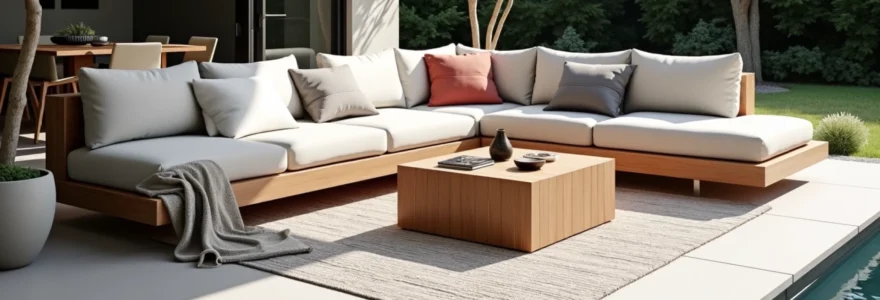
The evolution of outdoor living spaces has fundamentally transformed how homeowners approach patio design and functionality. Modern patios no longer serve as mere extensions of indoor spaces but function as sophisticated outdoor rooms that demand furniture solutions capable of adapting to diverse needs and occasions. Modular outdoor furniture has emerged as the definitive answer to this demand, offering unprecedented flexibility, durability, and aesthetic appeal that traditional fixed furniture sets simply cannot match.
This revolutionary approach to patio furnishing addresses the contemporary lifestyle’s requirement for versatile outdoor environments that can seamlessly transition from intimate family gatherings to large-scale entertainment venues. The modular concept eliminates the constraints of predetermined configurations, empowering homeowners to create bespoke arrangements that maximise both functionality and visual impact across varying spatial dimensions and seasonal requirements.
Weather-resistant material technologies in modular outdoor furniture
The foundation of exceptional modular outdoor furniture lies in advanced material technologies that withstand harsh environmental conditions whilst maintaining structural integrity and aesthetic appeal. Modern manufacturing processes have revolutionised the durability standards for outdoor furnishings, incorporating cutting-edge treatments and composite materials that extend product lifecycles significantly beyond traditional alternatives.
Contemporary weather-resistant technologies focus on multiple protection layers, addressing ultraviolet radiation exposure, moisture penetration, temperature fluctuations, and chemical degradation from environmental pollutants. These comprehensive protection systems ensure that modular furniture components maintain their performance characteristics and visual appeal throughout extended exposure periods, reducing replacement costs and maintenance requirements for homeowners.
Powder-coated aluminium framework systems for UV protection
Powder-coated aluminium frameworks represent the pinnacle of corrosion-resistant structural engineering for modular outdoor furniture. This advanced coating process creates a uniform, durable finish that bonds molecularly with the aluminium substrate, forming an impenetrable barrier against oxidation, salt air, and acidic precipitation. The electrostatic application method ensures complete coverage of complex geometries, eliminating vulnerable spots that traditional liquid paints often miss.
The UV-resistant properties of modern powder coatings incorporate specialised pigment systems that reflect harmful radiation whilst preventing colour degradation over time. High-performance formulations can maintain colour stability for decades under direct sunlight exposure, making them ideal for modular systems that require frequent reconfiguration and repositioning throughout different areas of outdoor spaces.
High-density polyethylene (HDPE) wicker weaving techniques
High-density polyethylene wicker weaving represents a significant advancement in synthetic rattan technology, offering the aesthetic appeal of natural materials with superior weather resistance and longevity. Modern HDPE formulations incorporate UV stabilisers and antioxidants that prevent degradation from prolonged sunlight exposure, maintaining flexibility and structural integrity across temperature extremes ranging from -40°C to +80°C.
Advanced weaving techniques utilise computer-controlled machinery to achieve consistent tension and pattern uniformity across modular components, ensuring seamless visual continuity when pieces are reconfigured. The closed-cell structure of HDPE prevents moisture absorption and bacterial growth, eliminating the maintenance requirements associated with natural wicker materials whilst providing comparable tactile and visual characteristics.
Solution-dyed acrylic fabric performance in extreme weather conditions
Solution-dyed acrylic fabrics have become the gold standard for modular outdoor furniture cushions and upholstery due to their exceptional resistance to fading, moisture, and mildew formation. The solution-dyeing process incorporates colour pigments at the molecular level during fibre production, creating colour-fast materials that maintain vibrancy even after years of intense UV exposure and frequent cleaning cycles.
These advanced fabric systems feature hydrophobic treatments that repel water whilst maintaining breathability, preventing moisture accumulation that leads to mould and mildew growth. The quick-drying properties enable rapid reconfiguration of modular seating arrangements without concerns about trapped moisture, whilst the inherent stain resistance simplifies maintenance protocols for busy households.
Teak and eucalyptus hardwood treatment processes for longevity
Premium hardwood modular furniture incorporates sophisticated treatment processes that enhance natural weather resistance whilst preserving the aesthetic characteristics that make timber so appealing. Modern kiln-drying techniques remove moisture content to optimal levels, preventing warping and cracking whilst stabilising dimensional characteristics across seasonal humidity variations.
Advanced preservation treatments utilise penetrating oils and sealers that enhance the natural weather resistance of teak and eucalyptus without creating surface films that can peel or flake over time. These treatments maintain the wood’s natural breathing characteristics whilst providing enhanced protection against water penetration, UV degradation, and insect damage, ensuring modular components retain their structural integrity through decades of outdoor exposure.
Sectional configuration systems and spatial adaptability
The revolutionary aspect of modular outdoor furniture lies in its sophisticated configuration systems that enable seamless adaptation to diverse spatial requirements and functional demands. These engineered connection mechanisms facilitate quick reconfiguration without compromising structural stability or aesthetic continuity, transforming how homeowners interact with their outdoor spaces throughout different seasons and occasions.
Modern sectional systems incorporate precision-engineered joining mechanisms that ensure perfect alignment between components whilst allowing for easy assembly and disassembly by individual users. These systems eliminate the need for tools or professional installation, democratising furniture arrangement and encouraging experimentation with different layouts to optimise space utilisation and traffic flow patterns.
Corner unit integration methods for L-Shaped seating arrangements
Corner unit integration represents a critical component in modular seating systems, providing the structural foundation for L-shaped and U-shaped configurations that maximise seating capacity within available space. Advanced corner units incorporate reinforced framework systems that distribute weight loads effectively across multiple connection points, ensuring stability even when supporting significant occupancy loads.
Modern corner units feature multi-directional connection systems that accommodate various approach angles, enabling creative configuration options beyond traditional perpendicular arrangements. These systems incorporate adjustable levelling mechanisms that compensate for uneven patio surfaces, ensuring consistent comfort levels and preventing premature wear from structural stress concentrations.
Ottoman Multi-Functionality as coffee tables and storage solutions
Modular ottomans have evolved beyond simple footrests to become versatile components that serve multiple functions within sectional arrangements. Contemporary designs incorporate reinforced top surfaces capable of supporting significant loads, enabling their use as coffee tables, serving surfaces, or additional seating when required. This multi-functionality maximises space efficiency whilst reducing the total number of furniture pieces required for complete outdoor room functionality.
Advanced ottoman designs feature integrated storage compartments that provide weather-protected space for cushions, throws, and entertainment accessories. These storage solutions incorporate gasket seals and drainage systems that prevent moisture accumulation whilst maintaining easy access to stored items. The combination of storage, seating, and table functionality makes ottomans indispensable components in space-constrained environments.
Modular dining set expansion capabilities for entertainment scaling
Modular dining systems address the challenge of accommodating variable guest numbers through innovative expansion mechanisms that maintain visual coherence and structural stability. These systems typically incorporate base modules that provide core functionality for daily use, with additional components available for special occasions or seasonal entertainment requirements.
Contemporary expansion systems utilise standardised connection protocols that ensure compatibility between different component generations, protecting long-term investment value whilst enabling gradual system growth. Extension leaves, additional seating modules, and auxiliary serving surfaces integrate seamlessly with existing arrangements, providing professional-grade entertainment capabilities without permanent space commitments.
Space-saving stackable design principles for compact patios
Stackable design principles revolutionise furniture storage in space-constrained environments, enabling comprehensive outdoor furniture systems within compact patios and balconies. Advanced stacking systems incorporate interlocking mechanisms that prevent shifting during storage whilst minimising vertical space requirements through optimised component geometry.
Modern stackable designs maintain full functionality and comfort characteristics whilst incorporating storage-friendly features such as removable cushions and nested table systems. These designs enable seasonal storage without requiring dedicated storage buildings, making comprehensive outdoor furniture systems accessible to urban residents with limited storage space availability.
Contemporary design aesthetics driving market demand
The surge in modular outdoor furniture popularity stems significantly from evolving design aesthetics that prioritise clean lines, minimalist profiles, and seamless indoor-outdoor transitions. Contemporary homeowners seek furniture solutions that complement architectural elements whilst providing the flexibility to adapt to changing design preferences without requiring complete replacement of existing pieces.
Modern modular designs embrace neutral colour palettes and geometric forms that transcend specific design trends, ensuring long-term relevance and compatibility with evolving outdoor décor schemes. This timeless approach reduces the risk of aesthetic obsolescence whilst providing a sophisticated foundation for accent pieces and seasonal decorative elements that can be updated more frequently and cost-effectively.
The integration of modular outdoor furniture with smart home technologies has created new possibilities for enhanced functionality and user experience. Contemporary systems incorporate features such as integrated LED lighting, wireless charging capabilities, and weather monitoring sensors that automatically adjust configuration recommendations based on environmental conditions. These technological integrations position modular furniture as a forward-thinking investment that adapts to emerging lifestyle trends.
Sustainability considerations have become paramount in contemporary design decisions, with modular furniture offering inherent environmental advantages through reduced material waste and extended product lifecycles. The ability to replace individual components rather than entire furniture sets aligns with circular economy principles whilst reducing landfill contributions and resource consumption over time.
Installation and reconfiguration mechanics for homeowners
The practical advantages of modular outdoor furniture extend beyond aesthetic flexibility to encompass user-friendly installation and reconfiguration processes that eliminate the need for professional assistance or specialised tools. Modern connection systems utilise intuitive mechanisms that enable single-person assembly and modification of complex seating arrangements within minutes rather than hours.
Contemporary modular systems incorporate visual alignment guides and colour-coded connection points that simplify the assembly process whilst ensuring proper component orientation and secure joining. These design elements reduce installation errors and enable confident reconfiguration by users with varying technical abilities, democratising access to sophisticated outdoor furniture arrangements.
Advanced modular systems feature reversible connections that allow for temporary configurations without permanent commitment to specific arrangements. This capability enables experimentation with different layouts to optimise space utilisation and traffic flow patterns before establishing permanent configurations. The ability to easily modify arrangements encourages active engagement with outdoor spaces throughout different seasons and occasions.
The mechanical simplicity of modern modular systems belies their sophisticated engineering, with connection mechanisms designed to withstand significant loads whilst maintaining ease of operation across thousands of assembly cycles.
Weather-protected storage solutions for connection hardware ensure that reconfiguration capabilities remain accessible throughout extended storage periods. Many systems incorporate integrated hardware storage within furniture components themselves, eliminating the risk of lost fasteners and enabling spontaneous reconfiguration without advance planning or tool gathering.
Cost-effectiveness analysis compared to fixed furniture sets
The financial advantages of modular outdoor furniture become apparent through comprehensive lifecycle cost analysis that considers initial investment, maintenance requirements, replacement frequency, and adaptation capabilities. Whilst modular systems often require higher upfront investments compared to basic fixed furniture sets, their superior durability and reconfiguration capabilities provide exceptional long-term value through reduced replacement costs and enhanced functionality.
Traditional fixed furniture sets typically require complete replacement when spatial requirements change, lifestyle needs evolve, or components suffer damage beyond economical repair. Modular systems address these limitations through component-level replacement capabilities that preserve the majority of the initial investment whilst addressing specific functional or aesthetic requirements. This approach can reduce furniture replacement costs by up to 70% over a typical ten-year ownership period.
The versatility of modular systems eliminates the need for multiple furniture sets to accommodate different occasions and seasonal requirements. A well-designed modular system can replace the functionality of separate dining, lounging, and entertainment furniture sets through strategic reconfiguration, reducing the total furniture investment required for comprehensive outdoor functionality. This consolidation advantage becomes particularly significant in space-constrained environments where storage limitations prevent multiple furniture set ownership.
Insurance considerations favour modular systems due to their component-based replacement capabilities and superior weather resistance characteristics. Many insurance providers offer reduced premiums for outdoor furniture with demonstrated durability standards, whilst the ability to replace individual damaged components rather than entire sets reduces claim values and processing complexity.
Resale value retention represents another significant financial advantage of premium modular systems. The timeless design aesthetics and proven durability of high-quality modular furniture maintain market appeal across multiple ownership cycles, whilst the ability to reconfigure systems for different spaces enhances their attractiveness to diverse buyer demographics.
Leading manufacturers and product line innovations
The modular outdoor furniture market has attracted significant investment from established manufacturers who recognise the growing demand for flexible, high-quality outdoor living solutions. These companies have developed sophisticated product lines that showcase the potential of modular design whilst establishing new standards for durability, functionality, and aesthetic appeal in outdoor furniture applications.
Innovation in modular outdoor furniture focuses on enhancing user experience through simplified assembly processes, improved weather resistance, and expanded configuration options. Leading manufacturers invest heavily in research and development to address emerging consumer needs whilst anticipating future trends in outdoor living preferences and technological integration requirements.
Ikea’s ÄPPLARÖ series modular timber solutions
IKEA’s ÄPPLARÖ series represents a democratised approach to modular outdoor furniture, offering sophisticated functionality at accessible price points through efficient manufacturing processes and streamlined design principles. The series utilises sustainably sourced acacia wood treated with advanced weather-resistant finishes that maintain natural aesthetic characteristics whilst providing exceptional durability in diverse climate conditions.
The ÄPPLARÖ system incorporates standardised dimensions across all components, enabling unlimited expansion possibilities and ensuring long-term compatibility between different product generations. This standardisation approach reduces complexity for consumers whilst maintaining manufacturing efficiency that supports competitive pricing strategies. The series includes comprehensive seating, dining, and storage solutions that integrate seamlessly within unified design aesthetics.
West elm’s portside collection weatherproof features
West Elm’s Portside collection exemplifies premium modular outdoor furniture through advanced material selection and sophisticated engineering approaches that address the most challenging outdoor environment conditions. The collection utilises marine-grade aluminium frameworks combined with high-performance synthetic wicker that maintains flexibility and colour stability across extreme temperature ranges and UV exposure levels.
The Portside series incorporates proprietary cushion systems that feature quick-drying foam cores and solution-dyed fabric covers designed for easy removal and cleaning. These advanced textile systems resist fading, staining, and moisture absorption whilst providing exceptional comfort characteristics that rival indoor furniture quality. The modular components feature reinforced connection points that ensure structural integrity through repeated assembly cycles.
Cb2’s cayman aluminium modular range specifications
CB2’s Cayman collection showcases the potential for lightweight aluminium construction in modular outdoor furniture applications, utilising advanced alloy formulations that provide exceptional strength-to-weight ratios whilst maintaining corrosion resistance in coastal environments. The collection features powder-coated finishes available in multiple colour options that complement contemporary architectural styles and landscape design trends.
The Cayman series incorporates precision-engineered connection systems that enable tool-free assembly whilst ensuring structural stability under significant load conditions. The lightweight characteristics of aluminium construction facilitate easy reconfiguration by individual users, whilst the modular design principles enable creative arrangements that maximise space utilisation in compact outdoor environments.
Article’s taiga outdoor series scandinavian design elements
Article’s Taiga outdoor series combines Scandinavian design principles with modular functionality to create furniture systems that emphasise simplicity, functionality, and natural material integration. The series utilises FSC-certified teak combined with powder-coated steel frameworks that provide durability whilst maintaining the clean lines and minimalist aesthetics characteristic of Nordic design traditions.
The Taiga collection features multi-functional components that serve multiple purposes within modular arrangements, maximising utility whilst minimising visual complexity. The series incorporates weather-resistant cushion systems and integrated storage solutions that maintain functionality across seasonal transitions whilst preserving the understated elegance that defines Scandinavian outdoor furniture design.
The convergence of traditional craftsmanship principles with modern modular functionality represents the evolution of outdoor furniture from purely functional items to sophisticated lifestyle enablers that enhance the outdoor living experience.
Emerging manufacturers continue to push the boundaries of modular outdoor furniture through innovative material applications and advanced manufacturing processes that reduce environmental impact whilst enhancing performance characteristics. These developments ensure that modular outdoor furniture remains at the forefront of outdoor living trends, providing homeowners with increasingly sophisticated options for creating personalised outdoor environments that adapt to changing needs and preferences.