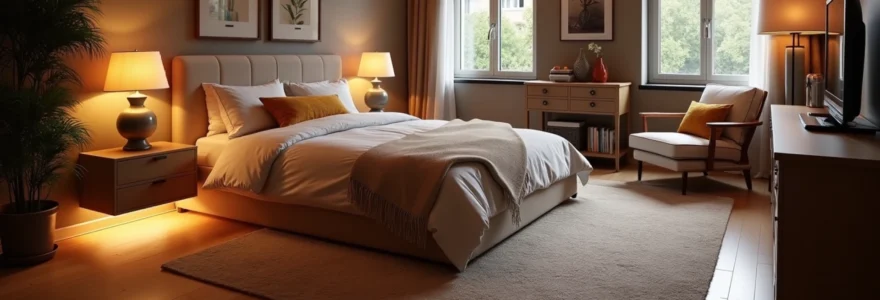
The difference between a house and a home often lies in the quality of light that fills each room. While many homeowners focus on furniture placement and colour schemes, lighting remains one of the most underutilised elements in interior design. Proper illumination doesn’t simply brighten a space—it transforms the entire atmosphere, creating depth, warmth, and functionality that single overhead fixtures simply cannot achieve. The sophisticated technique of layered lighting combines multiple light sources at varying heights and intensities to craft environments that feel both luxurious and welcoming. This approach mimics natural lighting patterns, where sunlight bounces off surfaces, filters through windows, and creates the gentle interplay of brightness and shadow that makes spaces feel alive. Understanding how to implement this professional design strategy can elevate any interior from ordinary to extraordinary.
Understanding the Three-Layer lighting hierarchy: ambient, task, and accent illumination
The foundation of effective lighting design rests upon a three-tiered hierarchy that professional designers have relied upon for decades. This systematic approach ensures that every lighting need is addressed whilst creating visual interest and flexibility throughout the space. Each layer serves a distinct purpose, yet when combined harmoniously, they produce lighting schemes that feel both natural and sophisticated.
Ambient lighting foundation using recessed LED downlights and flush mount fixtures
Ambient lighting forms the bedrock of any successful lighting scheme, providing the general illumination necessary for safe navigation and basic activities. This foundational layer typically accounts for 60-70% of the total light output in a room, establishing the overall brightness level and initial mood. Modern recessed LED downlights have revolutionised ambient lighting, offering precise beam control and exceptional energy efficiency compared to traditional incandescent alternatives.
When planning ambient lighting placement, the ceiling height becomes a critical factor in determining fixture spacing and lumen output. For standard 8-9 foot ceilings, recessed lights should be positioned approximately 4-6 feet apart, whilst higher ceilings may require closer spacing or higher wattage fixtures to achieve adequate illumination. Flush mount fixtures serve as excellent alternatives in rooms where recessed installation isn’t feasible, providing broad light distribution without compromising ceiling height.
Task-specific illumination through Under-Cabinet strips and adjustable track systems
Task lighting addresses the functional requirements of specific activities, delivering focused illumination where precision matters most. This layer typically operates at higher intensity levels than ambient lighting, often requiring 500-1000 lux at the work surface depending on the activity complexity. Under-cabinet LED strips have become the gold standard for kitchen task lighting, eliminating shadows cast by upper cabinets and providing consistent illumination across work surfaces.
Adjustable track systems offer remarkable flexibility for task lighting applications, allowing fixtures to be repositioned as room layouts change over time. The ability to direct light precisely where needed makes track systems particularly valuable in multi-functional spaces where lighting requirements may vary throughout the day. Modern LED track heads consume significantly less energy than their halogen predecessors whilst providing superior colour rendering and longer operational life.
Accent lighting implementation with picture lights and architectural uplighting
Accent lighting serves as the jewellery of interior lighting, highlighting architectural features, artwork, and decorative elements that define a room’s character. This layer typically operates at lower intensities than task lighting but creates dramatic visual impact through strategic placement and beam shaping. Picture lights remain the classic choice for artwork illumination, with modern LED versions offering adjustable colour temperature and precise beam control.
Architectural uplighting techniques create indirect illumination that bounces off ceilings and walls, producing a soft, enveloping glow that adds warmth and visual height to spaces. Cove lighting, wall washers, and carefully positioned floor uplights can transform ordinary rooms into sophisticated environments that feel professionally designed. The key lies in concealing the light sources themselves whilst maximising their visual impact on surrounding surfaces.
Lumen distribution ratios between primary, secondary, and tertiary light sources
Professional lighting designers follow established ratios when distributing light output across the three layers to achieve optimal visual comfort and functionality. The ambient-to-task ratio should typically maintain a 1:3 relationship, where task lighting provides three times the illumination of the surrounding ambient light. This ratio prevents excessive contrast that can cause eye strain whilst ensuring adequate visibility for detailed work.
Accent lighting requires more nuanced calculation, with ratios varying based on the specific application and desired visual impact. For artwork illumination, the recommended ratio ranges from 3:1 to 5:1 compared to surrounding ambient light levels. Wall washing applications typically operate at lower ratios of 2:1 to maintain visual comfort whilst providing sufficient emphasis on architectural features.
Colour temperature coordination across multiple light sources
The colour temperature of light sources profoundly influences the emotional response to interior spaces, affecting everything from perceived warmth to productivity levels. Coordinating colour temperatures across multiple fixtures ensures visual harmony whilst supporting the intended function of each space. Understanding the relationship between Kelvin ratings and human psychology enables designers to craft environments that feel naturally comfortable and inviting.
Kelvin scale management from 2700K warm white to 4000K neutral tones
The Kelvin scale provides a standardised method for describing light colour, with lower values indicating warmer, more yellow tones and higher values representing cooler, bluer light. Residential applications typically favour the 2700K-3000K range for living spaces, as these temperatures create the cozy, intimate atmosphere associated with traditional incandescent lighting. The slight yellow cast of warm white LEDs complements wood tones and fabric textures whilst flattering skin tones during social interactions.
Neutral colour temperatures in the 3500K-4000K range offer versatility for spaces requiring both relaxation and productivity. These temperatures work particularly well in kitchens, home offices, and bathrooms where accurate colour perception becomes important. The balanced spectrum enhances concentration whilst maintaining sufficient warmth to prevent the clinical feeling often associated with cooler commercial lighting.
CRI rating optimisation for natural skin tone rendering
Colour Rendering Index (CRI) measures how accurately light sources reveal the true colours of objects compared to natural sunlight. High-quality LED fixtures now achieve CRI ratings of 90 or higher, approaching the colour fidelity of natural daylight. This improvement proves particularly important for accent lighting applications where artwork, fabric colours, and architectural details must appear natural and appealing.
For residential applications, maintaining consistent CRI ratings across all light sources ensures that colours appear uniform throughout the space. Mixing fixtures with varying CRI ratings can create colour shifts that feel unsettling, particularly in open-plan layouts where multiple light sources illuminate the same surfaces. Premium LED fixtures with CRI ratings above 95 justify their higher cost through superior colour reproduction and enhanced visual comfort.
Circadian rhythm support through tunable white LED technology
Advanced LED technology now enables dynamic colour temperature adjustment throughout the day, supporting natural circadian rhythms and enhancing overall wellbeing. Tunable white systems can automatically shift from cool, energising light during morning hours to warm, relaxing tones in the evening. This technology proves particularly valuable in spaces lacking adequate natural light exposure.
Research indicates that exposure to cooler light temperatures (4000K-6500K) during daytime hours can improve alertness and cognitive performance, whilst warmer temperatures (2200K-2700K) in the evening promote relaxation and better sleep quality. Smart lighting systems can program these transitions automatically, creating seamless colour temperature changes that feel natural and unobtrusive.
Mixed light source balancing between incandescent and LED fixtures
Many homes feature a combination of traditional incandescent or halogen fixtures alongside modern LED installations, requiring careful balancing to achieve colour temperature consistency. Incandescent sources naturally produce warm light around 2700K, making them compatible with warm white LED alternatives. However, the slight spectral differences between technologies can become apparent when fixtures operate in close proximity.
Professional colour matching involves testing fixture combinations under actual operating conditions, as manufacturer specifications may not perfectly predict visual compatibility. High-quality LED fixtures with excellent colour rendering can seamlessly integrate with existing incandescent installations, whilst budget alternatives may produce noticeable colour shifts that compromise the overall lighting scheme.
Strategic fixture placement for optimal light distribution
The positioning of lighting fixtures determines not only the quantity of illumination but also its quality and visual impact throughout the space. Strategic placement considers factors such as room geometry, furniture layouts, and natural light patterns to create balanced illumination that feels both functional and aesthetically pleasing. Professional designers employ mathematical calculations and visual assessment techniques to optimise fixture locations for maximum effectiveness.
Ceiling height plays a fundamental role in fixture placement decisions, with higher ceilings requiring different spacing ratios than standard residential installations. The general rule suggests spacing recessed fixtures at distances equal to half the ceiling height—so an 8-foot ceiling would utilise 4-foot spacing between fixtures. However, this formula serves only as a starting point, with adjustments necessary based on beam angles, lumen output, and specific room requirements.
Wall lighting placement requires careful consideration of both functional and aesthetic factors. Sconces positioned at eye level (approximately 60-66 inches from the floor) provide optimal illumination for corridors and seating areas whilst avoiding glare issues. In dining areas, the relationship between chandelier height and table dimensions becomes critical—fixtures should hang 30-36 inches above dining surfaces to provide adequate illumination without obstructing sight lines across the table.
The interaction between artificial and natural light sources demands thoughtful planning to avoid conflicts and maximise synergy. Windows create zones of varying light intensity throughout the day, requiring artificial lighting to compensate for these fluctuations whilst maintaining visual comfort. Fixtures positioned to complement natural light patterns feel more harmonious than those fighting against established brightness hierarchies.
Professional lighting design considers not just where light falls, but equally important, where shadows are cast to create depth and visual interest throughout the space.
Layering different fixture types at varying heights creates visual depth that single-point sources cannot achieve. Table lamps, floor lamps, and wall-mounted fixtures each contribute unique characteristics to the overall lighting composition. The key lies in balancing these elements to avoid competition between sources whilst ensuring adequate illumination for all intended activities.
Dimming controls and smart integration systems
Modern dimming technology has evolved far beyond simple brightness adjustment, offering precise control over lighting scenes and energy consumption. Smart integration systems enable homeowners to create sophisticated lighting programmes that respond to daily routines, seasonal changes, and specific activities. The investment in quality dimming controls pays dividends through enhanced functionality, extended fixture life, and reduced energy consumption over time.
Leading-edge vs Trailing-Edge dimmer compatibility with LED loads
Understanding dimmer technology becomes essential when specifying LED fixtures, as compatibility issues can result in flickering, buzzing, or premature failure. Leading-edge dimmers, designed for traditional incandescent loads, may struggle with the low power consumption of LED fixtures. Trailing-edge dimmers specifically engineered for LED compatibility provide smoother dimming performance and eliminate the electronic interference that can affect other household devices.
The minimum load requirements of dimmer switches present challenges in LED installations where total power consumption may fall below the dimmer’s operational threshold. Professional-grade dimmers designed for LED loads can operate effectively with loads as low as 5-10 watts , accommodating modern energy-efficient fixtures without performance issues. Consultation with electrical professionals ensures proper dimmer selection and installation for optimal long-term performance.
Lutron caseta and philips hue ecosystem integration
Leading smart lighting ecosystems offer comprehensive solutions for residential lighting control, with Lutron Caseta and Philips Hue representing two distinct approaches to home automation. Lutron’s system focuses on reliable, professional-grade dimming control that integrates seamlessly with existing electrical infrastructure. The Caseta platform provides precise dimming performance across multiple fixture types whilst maintaining the familiar operation of traditional wall switches.
Philips Hue emphasises colour-changing capabilities and app-based control, offering extensive customisation options for creating dynamic lighting scenes. The system’s strength lies in its ability to transform space ambiance through colour temperature adjustment and full-spectrum colour control. However, the requirement for specialised Hue-compatible fixtures may limit integration with existing lighting installations compared to universal dimming solutions.
Scene programming for morning, evening, and entertainment settings
Automated scene programming eliminates the manual adjustment of multiple fixtures whilst ensuring optimal lighting for specific activities and times of day. Morning scenes typically emphasise cooler colour temperatures and higher intensity levels to promote alertness and energy. These programmes can gradually increase brightness to simulate natural sunrise patterns, supporting healthy circadian rhythm maintenance.
Evening scenes prioritise warm, lower-intensity lighting that promotes relaxation and prepares the body for sleep. Entertainment settings might combine accent lighting with dimmed ambient sources to create atmosphere for social gatherings whilst maintaining sufficient visibility for safe navigation. The sophistication of modern smart systems allows for virtually unlimited scene customisation based on personal preferences and lifestyle requirements.
Voice control implementation through amazon alexa and google assistant
Voice-activated lighting control has transitioned from novelty to practical necessity, offering hands-free operation that proves particularly valuable when carrying items or during meal preparation. Integration with Amazon Alexa and Google Assistant platforms enables natural language commands for scene activation, brightness adjustment, and fixture control. The convenience of voice commands becomes especially apparent in situations where manual switch operation proves difficult or inconvenient.
The reliability of voice control systems depends heavily on proper network configuration and device naming conventions. Clear, distinctive names for lighting groups and scenes prevent confusion and ensure accurate command interpretation. Regular software updates and network maintenance preserve optimal performance as smart home ecosystems continue evolving and expanding their capabilities.
Room-specific layered lighting applications
Each room type presents unique lighting challenges that require tailored solutions balancing functionality, aesthetics, and energy efficiency. Living spaces demand flexibility to accommodate various activities throughout the day, from morning reading sessions to evening entertainment. The layering approach adapts to these changing requirements whilst maintaining visual consistency with the overall interior design scheme.
Kitchen lighting applications prioritise task illumination for food preparation whilst creating welcoming environments for casual dining and social interaction. Under-cabinet LED strips eliminate shadows on work surfaces, whilst pendant fixtures over islands provide both task lighting and visual interest. Recessed ceiling lights establish the ambient foundation, with dimming controls allowing adjustment from bright work lighting to intimate dinner settings. The coordination of these layers ensures kitchens feel both functional and inviting regardless of the time or activity.
Bedroom lighting schemes emphasise relaxation and sleep quality through carefully controlled light levels and colour temperatures. Bedside reading lights provide focused illumination without disturbing sleeping partners, whilst ceiling fixtures offer general room lighting for cleaning and clothing selection. Indirect lighting techniques , such as cove lighting behind headboards or toe-kick illumination beneath built-in furniture, create subtle ambient effects that enhance the room’s restful atmosphere without overwhelming the senses.
Bathroom lighting must address both functional requirements and aesthetic considerations, with particular attention to flattering illumination around mirrors and vanity areas. Side-mounted sconces provide even facial lighting that eliminates shadows, whilst overhead fixtures contribute ambient illumination for general room lighting. Shower and bath areas require dedicated task lighting that maintains safety whilst creating spa-like atmosphere through careful beam positioning and intensity control.
The most successful lighting schemes feel invisible in their operation—providing exactly the right illumination for each activity without drawing attention to the fixtures themselves.
Home office environments benefit from layered lighting that supports productivity whilst reducing eye strain during extended computer work. Task lighting positioned to minimise screen glare becomes essential, with adjustable desk lamps offering precise beam control. Ambient lighting maintains comfortable room brightness that prevents excessive contrast between screen and surroundings, whilst accent lighting can highlight bookshelves or artwork that personalise the workspace environment.
Energy efficiency and lighting performance metrics
The transition to LED technology has fundamentally changed the economics of residential lighting, offering dramatic energy savings without compromising light quality or functionality. Modern LED fixtures consume approximately 75-85% less energy than equivalent incandescent sources whilst providing superior colour rendering and controllability. The initial investment in quality LED fixtures typically recovers within 2-3 years through reduced electricity consumption and maintenance costs.
Luminous efficacy measurements, expressed in lumens per watt, provide standardised comparison between different lighting technologies and fixture types. High-performance LED fixtures now achieve efficacies exceeding 100 lumens per watt, compared to roughly 15 lumens per watt for traditional incandescent bulbs. This improvement enables the creation of comprehensive layered lighting schemes without significant impact on household energy consumption or utility costs.
Smart lighting systems contribute additional energy savings through automated scheduling and occupancy sensing capabilities. Motion sensors can activate lighting only when spaces are occupied, whilst daylight sensors automatically adjust artificial lighting levels based on available natural light. These intelligent control systems optimise energy consumption without sacrificing lighting quality or user convenience, making sophisticated lighting schemes more environmentally and economically sustainable.
Performance monitoring systems track actual energy consumption patterns across different lighting zones, providing data-driven insights for optimising layouts and control strategies. This information enables continuous refinement of lighting schemes to achieve maximum efficiency whilst maintaining desired illumination levels. The long-term operational data proves particularly valuable when planning future lighting projects or evaluating the performance of different fixture technologies.
Energy Star certification provides reliable guidance for selecting high-performance lighting fixtures that meet stringent efficiency standards. Certified products undergo rigorous testing to verify their performance claims and operational longevity. The program’s requirements ensure that qualified fixtures deliver consistent performance throughout their rated lifespan whilst minimising environmental impact through reduced energy consumption and waste generation.
Integration with home energy management systems allows lighting to participate in broader sustainability initiatives, such as demand response programs and time-of-use electricity pricing structures. Smart lighting systems can automatically reduce consumption during peak demand periods, contributing to grid stability whilst reducing utility costs. This level of coordination between lighting and other building systems represents the future of residential energy management.
The most effective lighting schemes achieve their impact through precision rather than excess, delivering exactly the required illumination whilst minimising energy waste and light pollution.
Maintenance considerations for layered lighting systems have simplified dramatically with LED technology adoption. Traditional incandescent and fluorescent fixtures required frequent lamp replacement and cleaning, whilst modern LED installations can operate for 25,000-50,000 hours with minimal maintenance requirements. This longevity reduces the total cost of ownership whilst ensuring consistent light output and colour temperature throughout the fixture’s operational life.
Life cycle assessment calculations demonstrate the environmental benefits of investing in quality lighting fixtures and control systems. The reduced energy consumption over a fixture’s operational life typically offsets the higher initial manufacturing impact within the first year of operation. High-quality LED fixtures with excellent thermal management and driver electronics extend this environmental benefit through extended operational life and maintained performance characteristics.
Power quality considerations become increasingly important as homes adopt more LED fixtures and electronic control systems. The switched-mode power supplies used in LED drivers can introduce harmonic distortion into electrical systems, potentially affecting other sensitive electronic devices. Professional electrical design addresses these concerns through proper circuit design and power factor correction, ensuring optimal performance of both lighting and other household systems.
The economic benefits of layered lighting extend beyond simple energy savings to include increased property values and enhanced quality of life. Well-designed lighting schemes contribute significantly to a home’s market appeal, with potential buyers recognising the value of thoughtfully planned illumination. The flexibility to adapt lighting to different activities and moods enhances daily living experiences whilst reducing the need for costly renovations as lifestyle requirements change over time.
Future developments in lighting technology promise even greater integration with smart home ecosystems and renewable energy systems. Solar charging capabilities for wireless fixtures eliminate installation constraints whilst maintaining professional performance standards. Advanced sensor technologies enable predictive lighting that anticipates user needs based on established patterns and environmental conditions. These innovations continue expanding the possibilities for creating sophisticated, responsive lighting environments that adapt seamlessly to modern lifestyles whilst supporting sustainability goals and energy independence initiatives.