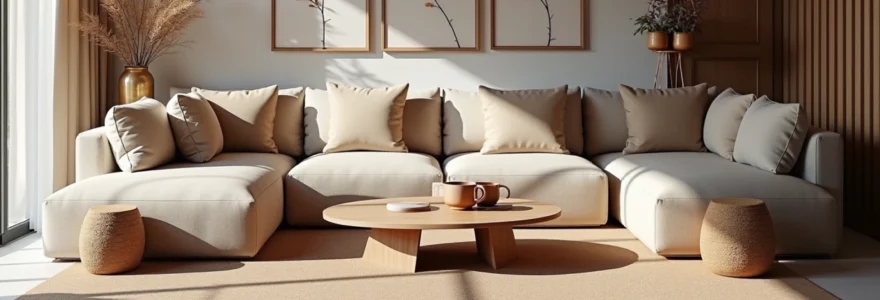
In an era dominated by mass production and digital convenience, something profound happens when you introduce a handcrafted object into your living space. The gentle asymmetry of a hand-thrown ceramic bowl, the subtle tool marks on a carved wooden sculpture, or the irregular weave of an artisan textile creates an immediate shift in atmosphere. These imperfections, far from being flaws, become the very essence of what transforms a house into a home filled with character and emotional resonance.
Handcrafted objects possess an inherent ability to connect us with the human experience in ways that factory-produced items simply cannot replicate. Each piece carries within it the maker’s intentions, skills, and cultural heritage, creating tangible links between past and present, tradition and innovation. When you surround yourself with these authentic creations, you’re not merely decorating a space—you’re cultivating an environment that speaks to something deeper within the human psyche, fostering wellbeing and creating lasting emotional connections.
Artisanal craftsmanship psychology: how Hand-Made objects trigger emotional connectivity
The human brain responds differently to handmade objects compared to mass-produced alternatives, triggering complex psychological processes that enhance our emotional wellbeing. Research in environmental psychology suggests that authentic materials and handcrafted elements activate neural pathways associated with comfort, security, and belonging. This phenomenon occurs because our brains are evolutionarily programmed to recognise and appreciate the subtle variations that indicate human craftsmanship.
When you observe a handcrafted piece, your visual cortex processes thousands of micro-variations in texture, colour, and form. These variations create what psychologists term “cognitive richness”—a state where your brain engages more deeply with the object, leading to enhanced appreciation and emotional attachment. Unlike the sterile uniformity of machine-made products, handcrafted items provide visual interest that sustains attention and creates memorable experiences.
Wabi-sabi philosophy and imperfection appreciation in home décor
The Japanese aesthetic philosophy of wabi-sabi celebrates the beauty found in imperfection, impermanence, and incompleteness. This concept transforms the way we perceive handcrafted objects, encouraging us to embrace rather than dismiss the irregular elements that make each piece unique. In handmade ceramics, the slight wobble of a rim or the uneven glaze distribution becomes a source of contemplative beauty rather than a manufacturing defect.
Incorporating wabi-sabi principles into your space through handcrafted objects creates an environment that promotes mindful appreciation and reduces the anxiety often associated with maintaining perfection. A hand-woven textile with its natural variations in tension and colour becomes a meditation on the beauty of human effort and natural materials working together.
Tactile memory formation through handcrafted texture variations
The human sense of touch plays a crucial role in forming emotional connections with handcrafted objects. Unlike machine-produced items with their uniform surfaces, handmade pieces offer rich tactile experiences that create lasting sensory memories. When you run your fingers along the hand-carved grooves of a wooden bowl or feel the subtle ridges of hand-thrown pottery, you’re engaging haptic memory systems that enhance emotional attachment.
These tactile experiences trigger the release of oxytocin, often called the “bonding hormone,” which strengthens your emotional connection to both the object and the space it inhabits. Over time, these positive tactile associations contribute to a sense of home comfort and psychological anchoring that mass-produced items rarely achieve.
Mirror neuron activation when observing maker’s tool marks
One of the most fascinating aspects of our response to handcrafted objects involves the activation of mirror neurons—specialised brain cells that fire both when we perform an action and when we observe others performing the same action. When you examine the tool marks on a hand-forged iron gate or the brush strokes on a painted ceramic vase, your mirror neurons activate as if you were performing the crafting motions yourself.
This neurological response creates a profound sense of connection with the artisan who created the piece, bridging time and space through shared human experience. The visible evidence of human hands at work—whether in the chisel marks on carved stone or the fingerprints preserved in clay—triggers empathetic responses that deepen your appreciation for both the object and the skill required to create it.
Biophilic design integration with natural material handwork
Handcrafted objects often utilise natural materials in their raw or minimally processed state, aligning perfectly with biophilic design principles that seek to reconnect humans with nature. When artisans work with materials like solid wood, natural clay, or plant fibres, they preserve and enhance the inherent qualities that trigger our innate attraction to natural elements.
The combination of natural materials and human craftsmanship creates what researchers call “environmental synergy”—a psychological state where multiple positive stimuli combine to enhance overall wellbeing. A hand-carved wooden sculpture, for instance, provides both the calming benefits of natural wood grain and the emotional richness of human artistry, creating a more powerful psychological impact than either element alone.
Material authenticity markers: identifying genuine Hand-Forged characteristics
Understanding how to recognise authentic handcrafted work empowers you to make informed decisions when selecting pieces for your space. Genuine handmade objects exhibit specific characteristics that distinguish them from machine-produced replicas or items marketed as “handcrafted” but actually mass-produced with minimal human involvement. These authenticity markers not only indicate quality craftsmanship but also ensure you’re investing in pieces that will provide the psychological benefits associated with true artisanal work.
Authentic handcrafted pieces display what experts call “constructive irregularity”—variations that result from human skill and material behaviour rather than random defects. These variations follow patterns that reflect the maker’s technique, the properties of the materials, and the tools used in creation. Learning to identify these markers helps you distinguish between genuine artisanal work and mass-produced imitations that lack the soul and character of true handcraft.
Hand-thrown pottery asymmetry versus Machine-Pressed ceramics
Authentic hand-thrown pottery exhibits subtle asymmetries that reflect the dynamic relationship between clay, wheel, and potter’s hands. Unlike machine-pressed ceramics with their perfect circular forms, hand-thrown pieces show slight variations in wall thickness, gentle undulations in the rim, and organic variations in the profile. These characteristics result from the potter’s response to the clay’s behaviour during throwing and trimming processes.
The bottom of hand-thrown pottery often displays concentric rings or spiral patterns created by the potter’s tools during shaping and trimming. Additionally, you’ll notice variations in glaze thickness, with natural pooling in recesses and thinner coverage on raised areas—effects that occur during the firing process and reflect the handmade nature of the piece.
Mortise and tenon joinery evidence in bespoke furniture
Traditional hand-crafted furniture employs joinery techniques that leave distinctive marks of human craftsmanship. Mortise and tenon joints, dovetails, and other traditional connections show slight variations in cutting angles, fit tolerances, and finishing that indicate hand work. Machine-cut joints exhibit perfect angles and uniform gaps, while hand-cut joints display the subtle variations that reflect the craftsperson’s skill and the natural behaviour of wood.
Look for evidence of hand tool use such as slight plane marks on surfaces, chisel cuts in joint recesses, and the organic curves that result from hand-shaping rather than machine routing. These details indicate time-intensive construction methods that prioritise longevity and character over manufacturing efficiency.
Hand-forged iron hammer marks and surface oxidation patterns
Hand-forged ironwork displays characteristic hammer marks, tool impressions, and forge scale patterns that indicate traditional blacksmithing techniques. Unlike machine-formed metal with its uniform surfaces and perfect curves, hand-forged iron shows the rhythmic patterns of hammer blows, the organic transitions between sections, and the subtle variations in thickness that result from working heated metal by hand.
The oxidation patterns on hand-forged iron also differ significantly from machine-produced alternatives. Traditional forging creates surface textures that weather naturally, developing patina patterns that follow the tool marks and stress patterns created during fabrication. These natural aging characteristics add character and authenticity that cannot be replicated through artificial finishing processes.
Natural fibre weaving irregularities in artisan textiles
Hand-woven textiles exhibit natural variations in tension, spacing, and yarn placement that create subtle texture differences throughout the fabric. Unlike machine-woven textiles with their perfect regularity, hand-woven pieces show slight variations in thread spacing, gentle undulations in the weave structure, and organic transitions between colour areas that reflect the weaver’s rhythm and the natural properties of the fibres.
The selvedges (finished edges) of hand-woven textiles often display slight variations in tension and finish that indicate hand work. Additionally, natural fibres in handmade textiles retain more of their original character, with variations in thickness, colour, and texture that add visual interest and tactile richness to the finished piece.
Regional craftsmanship traditions: incorporating cultural heritage objects
Regional craftsmanship traditions offer rich opportunities to infuse your space with cultural depth and historical significance. Each geographical region has developed distinctive techniques, materials, and aesthetic approaches that reflect local resources, climate conditions, and cultural values. By incorporating pieces that represent different craftsmanship traditions, you create an environment that celebrates human diversity and connects your space to broader cultural narratives.
Understanding the cultural context behind handcrafted objects enhances their meaning within your space. A Moroccan hand-knotted rug carries within its patterns centuries of Berber symbolism and weaving tradition. Japanese shibori textiles reflect meditation practices and philosophical approaches to beauty and impermanence. Scandinavian hand-carved wooden bowls embody principles of functional simplicity and respect for natural materials. When you choose pieces with awareness of their cultural significance, you’re not merely decorating—you’re curating a collection that honours human heritage and creativity.
The globalisation of craft markets now makes it possible to access authentic regional craftsmanship from around the world, but this accessibility comes with responsibilities. Ethical sourcing ensures that artisans receive fair compensation for their skills and that traditional techniques continue to be preserved and transmitted to future generations. When you invest in authentic regional craftsmanship, you participate in a global network that supports cultural preservation and economic sustainability in craft communities worldwide.
The most meaningful spaces are those that tell stories—not just of personal taste, but of human creativity and cultural exchange across time and geography.
Contemporary designers increasingly recognise the value of incorporating regional craftsmanship traditions into modern interiors. This approach, sometimes called “glocal design,” combines global craft traditions with local contemporary sensibilities. The result creates spaces that feel both grounded in tradition and relevant to contemporary life, offering residents the psychological benefits of cultural connection while maintaining functional modernity.
Spatial design principles for handcrafted object curation
Successfully incorporating handcrafted objects into your space requires understanding fundamental design principles that honour both the individual pieces and the overall environment. Unlike mass-produced décor that can be arranged according to simple aesthetic formulas, handcrafted objects demand more thoughtful consideration of their unique characteristics, cultural significance, and relationship to surrounding elements.
The key to successful handcrafted object curation lies in creating dialogue between pieces while allowing each object to maintain its individual character. This requires balancing visual weight, establishing rhythmic relationships, and managing the complex interplay of textures, colours, and forms that handmade objects introduce to a space. The goal is not perfect symmetry or matching sets, but rather a harmonious composition that feels both intentional and organic.
Focal point creation using statement artisan pieces
Large-scale handcrafted pieces serve as powerful focal points that anchor a space and establish its character. A substantial hand-carved wooden sculpture, an oversized ceramic vessel, or a dramatic hand-woven wall hanging can define the aesthetic direction for an entire room. These statement pieces work best when given adequate space to “breathe” and when supported by more subtle handcrafted elements that echo their materials or craftsmanship traditions.
When positioning statement artisan pieces, consider both viewing angles and lighting conditions. Handcrafted objects often reveal different characteristics under various lighting conditions—morning light might emphasise texture, while evening illumination could highlight colour variations. Position these pieces where they can be appreciated from multiple vantages and where changing light conditions will reveal their evolving character throughout the day.
Layered texture composition with mixed handcraft materials
Handcrafted objects excel in mixed-material compositions that create rich sensory experiences through textural layering. Combining smooth ceramics with rough-hewn wood, soft textiles with hard metals, or matte finishes with subtle sheens creates visual interest that engages viewers on multiple levels. The key is establishing relationships between materials that feel intentional rather than arbitrary.
Consider the tactile journey that visitors will experience as they move through your space. A progression from smooth surfaces to textured ones, or from fine details to bold forms, creates spatial rhythm that guides movement and encourages exploration. Each handcrafted piece contributes to this sensory narrative, building layers of experience that reveal themselves gradually.
Scale proportion balance between industrial and handmade elements
Contemporary spaces often benefit from the tension created between industrial or machine-made elements and handcrafted objects. This juxtaposition highlights the unique qualities of both approaches—the precision and efficiency of industrial design against the humanity and imperfection of handcraft. Successful integration requires careful attention to scale relationships and visual weight distribution.
Large industrial elements can provide neutral backgrounds that showcase smaller handcrafted objects, while substantial artisan pieces can humanise stark industrial architecture. The contrast should feel deliberate and meaningful rather than accidental, creating dialogue between different approaches to making and designing that enriches the overall spatial experience.
Negative space utilisation around Three-Dimensional craft objects
Handcrafted three-dimensional objects require thoughtful negative space management to be fully appreciated. Unlike flat artworks that interact primarily with wall surfaces, sculptural craft pieces engage with the spatial volume around them, creating invisible fields of influence that affect how we perceive and move through space.
Consider the “breathing room” that each piece requires—not just for visual appreciation, but for the psychological comfort of the space’s inhabitants. Crowded arrangements diminish the impact of individual pieces and can create visual stress, while appropriate spacing allows each object to establish its presence and contribute to the overall spatial harmony.
Investment value and provenance documentation for artisan collectibles
Handcrafted objects often represent significant financial investments that appreciate over time, particularly when created by established artisans or representing important cultural traditions. Unlike mass-produced décor that typically depreciates immediately upon purchase, quality handcrafted pieces can increase in value as the maker’s reputation grows and as examples of particular techniques become rarer. Understanding the investment potential of artisan objects helps you make informed purchasing decisions while building a collection that provides both aesthetic pleasure and financial security.
Proper documentation plays a crucial role in maintaining and enhancing the value of handcrafted collectibles. This includes recording the maker’s identity, creation date, materials used, and any cultural or historical significance associated with the piece. Photographs that document the object’s condition at the time of purchase, along with any accompanying certificates or maker’s statements, create a provenance record that supports both insurance claims and future resale value.
The investment potential of handcrafted objects varies significantly based on factors including the maker’s reputation, the rarity of the technique, the quality of materials and execution, and the piece’s cultural significance. Objects created by recognised master craftspeople, particularly those representing disappearing traditions, tend to appreciate most consistently. Additionally, pieces that win awards or are featured in museum exhibitions gain documentation that enhances their collectible status.
The true value of a handcrafted object lies not only in its monetary worth, but in its ability to connect you with human creativity and cultural heritage that spans generations.
Market trends in handcrafted collectibles increasingly favour pieces that tell compelling stories about their makers, materials, or cultural contexts. Contemporary collectors seek objects that offer both aesthetic appeal and meaningful narrative content, particularly pieces that document important craft traditions or represent innovative approaches to traditional techniques. This trend suggests that investment value increasingly correlates with cultural significance and artistic integrity rather than mere decorative appeal.
Sustainable craftsmanship: environmental impact of handmade versus mass production
The environmental implications of choosing handcrafted objects over mass-produced alternatives extend far beyond the immediate purchase decision, influencing manufacturing processes, transportation systems, and long-term disposal considerations. Traditional handcraft techniques typically employ local materials, minimal energy consumption, and production methods that generate little waste. In contrast, mass production often relies on energy-
intensive manufacturing processes, global supply chains, and synthetic materials that require significant energy inputs to produce.
Handcrafted production methods typically operate on what environmental scientists call “human-scale manufacturing”—small-batch production that allows artisans to source materials locally, minimise transportation costs, and maintain direct relationships with material suppliers. A potter working with local clay, for instance, eliminates the carbon footprint associated with shipping materials across continents while supporting regional resource extraction that follows sustainable practices. This localised approach also enables artisans to respond quickly to material availability and environmental conditions, adapting their work to seasonal variations and local ecological cycles.
The longevity factor plays a crucial role in the environmental equation of handcrafted versus mass-produced goods. Quality handmade objects are designed and constructed to last for generations, utilising traditional techniques that prioritise durability over speed of production. A hand-forged iron gate, properly maintained, can serve its function for centuries, while mass-produced alternatives might require replacement every few decades. This extended lifecycle dramatically reduces the environmental impact per year of use, making handcrafted objects environmentally superior despite potentially higher initial energy investments.
Traditional craft techniques also generate minimal waste through practices developed over centuries of resource scarcity. Woodworkers utilise every part of a tree, turning shavings into kindling and sawdust into garden mulch. Potters reclaim unfired clay indefinitely, and textile workers incorporate fabric scraps into quilting or other decorative applications. These zero-waste approaches contrast sharply with industrial manufacturing, which often generates substantial material waste as an inevitable byproduct of efficiency-focused production methods.
The repair and maintenance culture surrounding handcrafted objects further enhances their environmental credentials. Unlike mass-produced items designed for replacement rather than repair, handmade objects can often be restored by skilled craftspeople who understand traditional construction methods. This repairability extends object lifecycles significantly while maintaining employment for traditional craft skills that might otherwise disappear in an increasingly automated economy.
Choosing handcrafted objects represents a conscious decision to participate in economic systems that prioritise environmental stewardship and human welfare over pure efficiency and profit maximisation.
Contemporary environmental movements increasingly recognise handcraft traditions as models for sustainable production methods that modern manufacturers might emulate. The slow craft movement, inspired by similar principles to slow food, advocates for production processes that consider environmental impact, worker welfare, and product longevity as equally important to aesthetic appeal and cost effectiveness. This holistic approach to manufacturing offers pathways toward more sustainable consumption patterns that benefit both environmental and social systems.
Carbon footprint analyses consistently show that locally produced handcrafted objects generate significantly lower greenhouse gas emissions than mass-produced alternatives, particularly when transportation and packaging are included in calculations. A study by the European Centre for Sustainable Design found that locally crafted furniture produced 60-80% fewer carbon emissions than factory-made equivalents when full lifecycle impacts were considered. These findings support the growing recognition that environmental sustainability and traditional craftsmanship share common values and objectives.
The biodegradability of materials commonly used in traditional handcraft also contributes to reduced environmental impact at the end of product lifecycles. Natural materials like wood, clay, plant fibres, and natural dyes return harmlessly to the ecosystem when objects finally reach the end of their useful lives. This contrasts with synthetic materials and chemical finishes used in mass production, which often require special disposal methods or contribute to long-term environmental contamination.
However, the environmental benefits of handcrafted objects depend significantly on responsible sourcing practices and sustainable production methods. Not all traditional techniques automatically qualify as environmentally superior—some historical practices involved unsustainable resource extraction or harmful chemical processes. Contemporary artisans increasingly combine traditional knowledge with modern environmental understanding to develop practices that honour both craft heritage and ecological responsibility. This evolution of traditional techniques represents the best of both worlds: time-tested craftsmanship principles enhanced by contemporary environmental awareness.