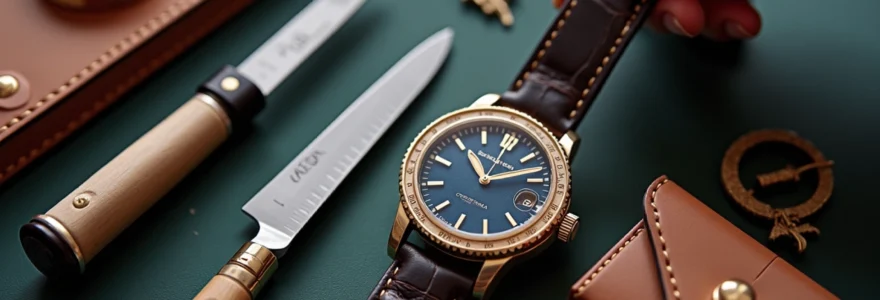
In today’s saturated marketplace, the distinction between mass-produced accessories and those crafted with genuine passion has never been more apparent. When artisans pour their heart, soul, and decades of expertise into creating luxury timepieces, leather goods, or jewellery, the result transcends mere functionality. These passion-driven accessories carry an intangible quality that resonates deeply with consumers, creating lasting emotional connections that mass production simply cannot replicate. The difference manifests in every tactile interaction, every visual detail, and every moment of ownership, transforming everyday accessories into cherished personal statements that reflect both the creator’s dedication and the owner’s discerning taste.
Neuropsychological impact of Emotionally-Driven design in consumer product attachment
The human brain responds remarkably differently to products created with genuine passion compared to those manufactured through purely commercial processes. Neuroscientific research reveals that when consumers interact with passion-crafted accessories, specific neural pathways activate in ways that create profound psychological attachment. This neurological response explains why certain luxury accessories command such devotion and why their owners often describe an inexplicable emotional connection to their possessions.
Dopamine release mechanisms in tactile interaction with artisanal accessories
When you first handle a meticulously crafted leather handbag or run your fingers across a hand-engraved watch case, your brain releases dopamine in response to the superior tactile experience. This neurotransmitter, often called the “reward chemical,” creates feelings of pleasure and satisfaction that mass-produced alternatives rarely achieve. The subtle imperfections and unique characteristics inherent in handcrafted pieces actually enhance this response, as your brain recognises and appreciates the human touch behind the creation.
The texture variations in hand-stitched leather, the slight irregularities in artisanal metalwork, and the individual character marks left by master craftspeople all contribute to dopamine release. Studies indicate that these tactile rewards create stronger memories and deeper product attachment than the uniform surfaces of machine-made accessories. This neurochemical response forms the foundation of why passionate craftsmanship creates such lasting appeal.
Mirror neuron activation through authentic craftsmanship recognition
Your mirror neurons fire when you recognise the skill and dedication embedded in passion-crafted accessories. These specialised brain cells, originally discovered in relation to empathy and social learning, also activate when observing or interacting with objects that clearly demonstrate human expertise and care. When examining a hand-forged watch movement or appreciating the subtle colour variations in naturally dyed leather, your mirror neurons create an empathetic connection to the craftsperson’s experience.
This neurological phenomenon explains why collectors often speak of “feeling the maker’s hands” in exceptional pieces. The recognition of human skill and passion triggers an emotional response that goes beyond aesthetic appreciation, creating a psychological bond that makes the accessory feel personally meaningful rather than merely decorative.
Oxytocin production in Brand-Consumer emotional bonding
Passion-driven brands that emphasise their artisanal heritage and craftspeople’s stories trigger oxytocin release in consumers. Often called the “bonding hormone,” oxytocin typically associates with interpersonal relationships, but recent research shows it also activates when consumers feel genuine connection to brands and their values. This hormonal response creates loyalty that extends far beyond rational purchasing decisions.
When brands share authentic stories about their craftspeople’s dedication, their traditional techniques, or their commitment to excellence, consumers experience oxytocin release that mirrors social bonding. This biochemical response explains why customers of passion-driven accessory brands often become lifetime advocates who feel personally invested in the company’s success and values.
Psychological ownership theory in Passion-Crafted product acquisition
Psychological ownership theory demonstrates that consumers develop stronger feelings of ownership towards products that reflect their identity and values. Passion-crafted accessories, with their emphasis on quality, tradition, and human skill, align perfectly with consumers who value authenticity and craftsmanship. This alignment creates what psychologists term “extended self,” where possessions become integrated into personal identity.
The investment of time, skill, and genuine care that artisans put into their creations translates into enhanced psychological ownership for consumers. When you purchase a passion-crafted watch or handbag, you’re not just acquiring an object; you’re becoming the custodian of someone’s artistic vision and dedication. This responsibility and connection create deeper satisfaction and longer-lasting appreciation than typical consumer purchases.
Material science and artisanal manufacturing processes behind premium accessories
The superior quality that distinguishes passion-crafted accessories stems from both exceptional materials and time-honoured manufacturing processes. Unlike mass production’s focus on speed and cost efficiency, passionate artisans prioritise material integrity and process perfection. This commitment to excellence requires deep understanding of material science principles and generations of accumulated knowledge passed down through traditional craftspeople.
Italian Vegetable-Tanned leather processing in hermès and bottega veneta collections
Italian vegetable tanning represents one of the most labour-intensive and environmentally conscious leather processing methods, requiring up to six months for completion. Master tanners use natural tannins extracted from chestnut, oak, and mimosa trees, creating leather that develops character and beauty over decades of use. This process, unchanged for centuries, produces leather with superior durability, breathability, and aging characteristics that synthetic alternatives cannot match.
The passion behind vegetable-tanned leather extends to every detail: the selection of premium hides, the precise timing of each tanning stage, and the careful monitoring of environmental conditions. Artisans can identify optimal tanning conditions by touch, smell, and visual inspection—skills developed through years of dedicated practice. This intimate knowledge of materials and processes results in leather accessories that improve with age, developing unique patina and character that reflects their owner’s lifestyle.
Japanese damascus steel forging techniques in shun cutlery and global knife manufacturing
Japanese damascus steel forging combines ancient metallurgy with modern precision, creating accessories and tools with exceptional performance characteristics. Master smiths fold steel dozens of times, creating thousands of layers that produce both stunning visual patterns and superior strength. This folding process, known as tsumi-kitae , eliminates impurities while creating a blade structure that maintains razor sharpness far longer than conventional steel.
The passion required for damascus steel work cannot be understated—each blade requires weeks of careful forging, folding, and heat treatment. Smiths must understand the molecular structure of different steel types and how temperature variations affect carbon distribution. This scientific knowledge, combined with intuitive feel for the material, allows master craftsmen to create accessories that perform exceptionally for generations.
Swiss mechanical movement assembly in patek philippe and vacheron constantin timepieces
Swiss mechanical movement assembly represents perhaps the pinnacle of passionate craftsmanship in accessories. Master watchmakers spend years learning to manipulate components measuring fractions of millimetres, developing the steady hands and keen eyesight necessary for precision assembly. Each movement requires hundreds of individually crafted components that must work in perfect harmony to achieve chronometric precision.
The passion evident in Swiss watchmaking extends to finishing techniques invisible to casual observers. Movement plates receive hand-engraved decorations, screws are individually polished, and even hidden components display meticulous attention to detail. This dedication to perfection, regardless of visibility, demonstrates the intrinsic motivation that drives passionate craftspeople to exceed functional requirements in pursuit of absolute excellence.
Murano glass blowing traditions in venetian jewellery and decorative arts
Murano glass artisans maintain techniques developed over seven centuries, creating accessories with colours and patterns impossible to achieve through industrial processes. Master glassblowers must understand the precise temperature requirements for different glass types, the timing necessary for colour integration, and the breathing techniques required to shape molten glass consistently. Each piece requires split-second decisions that determine success or failure, demanding years of practice to develop the necessary intuition.
The passion behind Murano glass extends to secret formulations passed down through family generations. These closely guarded recipes for colours and effects cannot be reverse-engineered, making authentic Murano accessories truly irreplaceable. The combination of traditional knowledge, artistic vision, and technical mastery creates accessories that carry centuries of Venetian cultural heritage in every piece.
Sensory design architecture and haptic feedback engineering
Passionate craftspeople intuitively understand sensory design principles that modern engineers are only beginning to quantify scientifically. The weight distribution of a luxury handbag, the tactile feedback of watch crown rotation, and the acoustic properties of closing mechanisms all contribute to the user experience in ways that mass production typically overlooks. This attention to multisensory design creates accessories that feel as exceptional as they appear, engaging users through multiple sensory channels simultaneously.
Haptic feedback engineering in passion-crafted accessories occurs naturally through the maker’s understanding of how humans interact with objects. A master leather worker knows exactly how thick to make a wallet to provide satisfying heft without bulk, while a watchmaker calibrates crown resistance to provide precise control without excessive force. These intuitive design decisions, refined through years of user feedback and personal experience, create superior ergonomics that enhance daily use.
The acoustic properties of passion-crafted accessories often distinguish them immediately from mass-produced alternatives. The solid click of a quality clasp, the smooth whisper of a zipper, and the subtle tick of a mechanical movement all result from careful material selection and precise manufacturing tolerances. Artisans develop acute sensitivity to these auditory cues, using sound as quality control throughout the creation process. This multisensory attention to detail creates accessories that engage users on subconscious levels, contributing to the overall sense of quality and satisfaction.
The difference between passionate craftsmanship and industrial production becomes immediately apparent through sensory engagement—every touch, sound, and visual detail reflects the maker’s dedication to excellence.
Market differentiation through emotional branding and storytelling methodologies
Brands built around passionate craftsmanship naturally develop compelling narratives that resonate with consumers seeking authentic experiences. These stories—of generational expertise, traditional techniques preserved against modernisation pressures, and individual artisans’ dedication to their craft—create emotional connections that transcend typical marketing approaches. The authenticity of these narratives, grounded in genuine passion and skill, provides sustainable competitive advantages that cannot be easily replicated by mass-market competitors.
The storytelling surrounding passion-crafted accessories often focuses on heritage and continuity, appealing to consumers’ desire for permanence in an increasingly disposable culture. When brands share stories about craftspeople who have dedicated decades to perfecting their skills, or facilities that have maintained traditional methods for centuries, they tap into deep psychological needs for stability and meaning. This emotional positioning allows passion-driven brands to command premium pricing while building intensely loyal customer bases.
Emotional branding for passion-crafted accessories also emphasises the personal relationship between maker and user. Brands successfully communicate how each purchase supports individual artisans and preserves traditional skills, allowing consumers to feel they are participating in cultural preservation. This approach transforms commercial transactions into meaningful exchanges that align with consumers’ values and self-image. The result is customer loyalty that extends far beyond product satisfaction to encompass brand mission and values.
Market differentiation through passionate craftsmanship creates natural barriers to competition from mass-market alternatives. The skills, knowledge, and dedication required to produce truly exceptional accessories cannot be quickly acquired or easily automated. This creates sustainable competitive advantages that allow passionate brands to maintain market position even as new competitors emerge. The combination of superior quality, compelling narratives, and emotional connection provides multiple layers of differentiation that reinforce each other over time.
Quality control standards and durability testing in Passion-Driven manufacturing
Passionate craftspeople implement quality control standards that often exceed formal industry specifications, driven by personal pride rather than external requirements. These artisans understand that their reputation depends on every piece they create, leading to self-imposed standards that prioritise long-term durability and customer satisfaction over short-term profitability. This intrinsic motivation results in accessories that consistently outperform mass-produced alternatives in durability testing and real-world use.
Traditional quality control in passionate manufacturing often involves subjective assessments that cannot be easily automated or standardised. Master craftspeople develop the ability to detect minute flaws through visual inspection, tactile examination, and auditory cues that would escape conventional testing equipment. This human quality control, refined through years of experience, catches issues that might only become apparent after extended use, preventing customer disappointment and returns.
Durability testing in passion-driven manufacturing frequently exceeds industry standards because artisans take personal responsibility for their creations’ longevity. A passionate watchmaker might subject movements to stress tests beyond normal specifications, while a leather craftsperson tests stitching strength far beyond typical requirements. This voluntary over-engineering, motivated by professional pride, creates accessories that perform reliably for decades rather than years.
The quality control standards implemented by passionate craftspeople often become competitive advantages that distinguish their products in the marketplace. When accessories consistently outperform expectations and last significantly longer than alternatives, word-of-mouth recommendations and customer loyalty naturally follow. This reputation for exceptional quality allows passionate brands to maintain premium positioning and attract discerning customers who value durability over initial cost savings.
Consumer behaviour analytics and purchase decision psychology in luxury accessory markets
Consumer psychology in luxury accessory markets reveals fascinating patterns that favour passion-crafted products over mass-produced alternatives. Research indicates that consumers increasingly seek authenticity, craftsmanship, and emotional connection in their purchases, driving demand for accessories created with genuine passion and skill. This shift reflects broader cultural movements towards sustainability, heritage preservation, and personal meaning in consumption choices.
Purchase decision psychology for luxury accessories involves complex emotional and rational factors that passionate brands navigate more successfully than purely commercial competitors. Consumers evaluate not just the product itself but the story behind its creation, the values it represents, and the personal statement it makes. Passion-crafted accessories excel in these psychological dimensions because their authentic narratives and superior quality align with consumers’ desire for meaningful purchases.
Analytics reveal that consumers of passion-crafted accessories exhibit higher satisfaction rates, lower return rates, and greater likelihood to recommend products to others compared to mass-market alternatives. These behavioural patterns reflect the deeper satisfaction that results from owning genuinely exceptional products created with care and skill. The emotional connection fostered by passionate craftsmanship translates into measurable business advantages through customer retention and advocacy.
The psychology of luxury accessory purchases also involves aspirational elements that passionate brands address more effectively than commodity producers. When consumers purchase passion-crafted accessories, they are acquiring not just objects but associations with excellence, tradition, and discernment. This aspirational dimension, combined with superior product quality, creates purchase satisfaction that extends far beyond the initial transaction, establishing foundations for long-term customer relationships and brand loyalty.