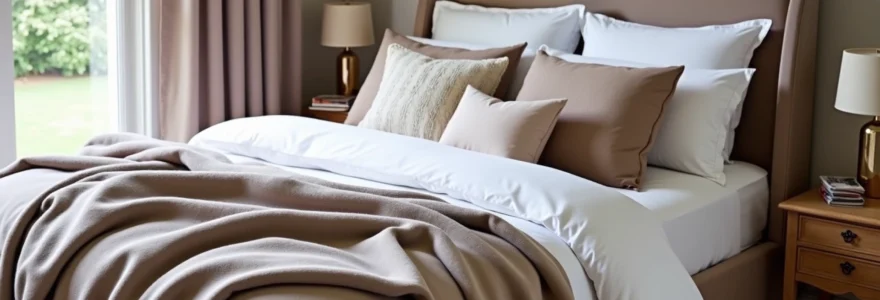
The transformation of a bedroom from functional space to luxurious retreat often hinges on the careful selection of throws and bedspreads. These textile elements serve dual purposes: providing essential warmth and comfort while establishing the aesthetic foundation of your interior design scheme. Whether you’re seeking the sophisticated elegance of cashmere throws or the breathable practicality of cotton bedspreads, understanding the nuances of fabric construction, weave patterns, and seasonal adaptability becomes crucial for creating spaces that reflect both personal style and functional requirements.
Contemporary interior design increasingly recognises the importance of layered textures and carefully curated colour palettes in bedroom styling. The strategic placement of premium throws can instantly elevate the visual appeal of any space, while thoughtfully selected bedspreads provide the foundational backdrop against which other decorative elements can shine. From traditional British textile craftsmanship to innovative synthetic alternatives, today’s market offers an unprecedented range of options for discerning homeowners.
Luxurious cashmere and merino wool throw selection for premium comfort
The epitome of luxury bedding accessories lies in the realm of natural fibres, where cashmere and merino wool reign supreme. These premium materials offer unparalleled thermal regulation properties while maintaining the sophisticated aesthetic that defines high-end interior design. The investment in quality wool throws transcends mere comfort, representing a commitment to sustainable luxury that can transform any bedroom into a five-star hotel experience.
Johnstons of elgin heritage cashmere throws with superior fibre density
Johnstons of Elgin represents the gold standard in Scottish textile manufacturing, with their heritage cashmere throws featuring exceptional fibre density that ensures superior insulation properties. The manufacturing process involves selecting only the finest cashmere fibres, typically measuring less than 19 microns in diameter, which contributes to the characteristic softness and lightweight warmth. These throws undergo a specialised brushing process that creates the distinctive surface texture while maintaining structural integrity.
The colour palette available from Johnstons reflects traditional Scottish sensibilities while accommodating contemporary design preferences. Their signature neutral tones, including warm greys and natural camel shades, provide versatile foundations for seasonal decorating schemes. The investment in a Johnstons cashmere throw typically ranges from £300 to £600, reflecting the premium materials and traditional craftsmanship involved in production.
Bronte by moon merino lambswool collections for enhanced thermal regulation
Bronte by Moon specialises in merino lambswool throws that offer superior thermal regulation compared to synthetic alternatives. The natural crimp structure of merino wool fibres creates microscopic air pockets that provide insulation while allowing moisture vapour to escape, making these throws ideal for year-round use. The lambswool designation indicates wool sourced from sheep under seven months old, resulting in finer, softer fibres with enhanced comfort properties.
The manufacturing process involves careful selection of Grade A merino wool, followed by traditional carding and spinning techniques that preserve the natural elasticity of the fibres. Bronte’s signature herringbone weave pattern not only provides visual interest but also enhances the structural stability of the throws, ensuring they maintain their shape through repeated use and professional cleaning cycles.
The white company ribbed cashmere range for contemporary interior aesthetics
The White Company’s ribbed cashmere collection demonstrates how traditional materials can be adapted for contemporary interior schemes. The ribbed construction technique creates a three-dimensional texture that adds visual depth while maintaining the inherent softness of cashmere fibres. This structural approach also enhances the throw’s ability to drape naturally over furniture, creating the effortless elegance that defines modern luxury styling.
The colour curation within this range focuses on sophisticated neutrals, with particular attention to warm whites and soft greys that complement contemporary colour palettes. The ribbed texture creates subtle shadow lines that add visual interest without overwhelming minimalist design schemes. Price points for these throws typically range from £200 to £400, positioning them as accessible luxury items for discerning consumers.
Begg & co scottish cashmere throws with traditional arran weaving techniques
Begg & Co maintains traditional Arran weaving techniques that have been refined over two centuries of Scottish textile production. Their cashmere throws feature complex weave structures that create distinctive surface patterns while maintaining the lightweight properties essential for comfortable use. The traditional craftsmanship involves hand-finishing techniques that ensure each throw meets exacting quality standards.
The design philosophy emphasises subtle pattern integration, with traditional Scottish motifs adapted for contemporary interiors. The weaving process creates natural stretch properties that allow the throws to conform to body contours while maintaining their original dimensions. This combination of traditional techniques and modern design sensibilities results in throws that serve as both functional textiles and decorative art pieces.
The finest cashmere throws represent more than mere luxury accessories; they embody centuries of textile craftsmanship refined to create objects of enduring beauty and exceptional comfort.
Cotton and linen bedspread applications for Year-Round temperature control
Natural fibre bedspreads offer unparalleled versatility for temperature regulation throughout changing seasons. Cotton and linen construction techniques directly influence thermal properties, with percale weaves providing enhanced breathability for summer months while matelassé structures offer additional insulation during cooler periods. Understanding these technical distinctions enables informed selection based on specific climate requirements and personal comfort preferences.
Percale weave cotton bedspreads for enhanced breathability and moisture wicking
Percale weave construction represents the optimal choice for enhanced breathability in cotton bedspreads. The plain weave structure, characterised by a one-over-one thread pattern, creates maximum airflow opportunities while maintaining structural integrity. This weaving technique produces bedspreads with crisp, hotel-quality aesthetics while delivering superior moisture-wicking properties essential for comfortable sleep during warmer months.
The thread count specifications for quality percale bedspreads typically range from 200 to 300 threads per square inch, with higher counts potentially compromising the breathability that defines this weave type. Premium percale construction utilises long-staple cotton fibres, such as Pima or Supima varieties, which contribute to enhanced durability and improved surface smoothness. The finishing process involves careful singeing to remove surface fibres and mercerisation to enhance lustre and strength.
Colour retention in percale bedspreads benefits from the open weave structure, which allows for deeper dye penetration during manufacturing. This characteristic ensures that colours remain vibrant through repeated washing cycles while maintaining the crisp appearance that distinguishes quality percale textiles. The natural draping properties of percale weaves create elegant bed styling with minimal effort required for daily maintenance.
Belgian linen coverlets from libeco for superior durability and natural texture
Belgian linen represents the pinnacle of European textile craftsmanship, with Libeco maintaining traditional production methods that have been refined over generations. Their coverlets feature authentic Belgian flax fibres processed using time-honoured techniques that preserve the natural characteristics responsible for linen’s legendary durability. The manufacturing process involves careful selection of flax plants harvested at optimal maturity levels, ensuring maximum fibre strength and characteristic lustre.
The stone-washing process employed by Libeco creates the relaxed texture that defines contemporary linen aesthetics while maintaining structural integrity. This technique involves washing finished textiles with natural pumice stones, which break down surface fibres to create the soft, lived-in appearance that improves with each subsequent wash. The result is linen coverlets that offer immediate comfort without the extended breaking-in period associated with untreated linen products.
Libeco’s colour development process utilises plant-based dyes wherever possible, creating colours that complement the natural variation inherent in linen fibres. The irregular yarn structure characteristic of linen creates subtle colour variations that add visual depth while disguising normal wear patterns. This natural camouflage effect contributes to the longevity of appearance that makes Belgian linen an excellent investment for bedroom styling.
Pima cotton matelassé bedspreads with jacquard weaving for dimensional surface detail
Matelassé construction techniques create raised surface patterns that add dimensional interest while providing enhanced thermal properties through air pocket formation. The jacquard weaving process enables complex pattern integration during manufacture, eliminating the need for printed designs that may fade or wear over time. Pima cotton fibres, recognised for their exceptional length and strength, provide the ideal foundation for matelassé construction due to their ability to maintain tension during the complex weaving process.
The manufacturing process involves programming computerised jacquard looms to create specific pattern repeats while maintaining consistent thread tension throughout production. This precision ensures that the raised patterns remain uniform while the base fabric maintains its structural integrity. The resulting bedspreads offer superior durability compared to printed alternatives while providing the visual interest essential for sophisticated bedroom styling.
Care requirements for Pima cotton matelassé bedspreads remain minimal due to the natural properties of long-staple cotton fibres. The raised pattern structure actually benefits from regular washing, as the process enhances the dimensional effect while maintaining colour vibrancy. Professional pressing services can restore the crisp appearance of matelassé patterns, though many contemporary designs are specifically created to embrace the relaxed appearance that develops through normal use.
Stone-washed french linen collections for relaxed contemporary bedroom styling
French linen manufacturing maintains distinct characteristics that differentiate it from other European linen traditions. The stone-washing process employed in French linen production creates immediately comfortable textiles that embody the relaxed elegance associated with contemporary interior design. This finishing technique involves controlled abrasion using natural pumice stones, which removes surface irregularities while preserving the inherent strength of linen fibres.
The colour palette typically associated with French linen emphasises muted tones that reflect the natural variation found in flax fibres. These subtle colour variations create depth and interest without overwhelming contemporary design schemes. The natural wrinkle resistance of properly stone-washed linen eliminates the maintenance concerns traditionally associated with linen textiles, making these collections practical choices for busy households.
Sizing options within French linen collections accommodate various bed dimensions while maintaining proportional relationships that enhance overall bedroom aesthetics. The natural draping properties of linen create elegant styling with minimal arrangement required, contributing to the effortless sophistication that defines contemporary bedroom design approaches.
Textural velvet and faux fur throws for statement interior design
Luxurious textural elements transform ordinary bedrooms into sophisticated retreats through strategic deployment of velvet and faux fur accessories. These statement pieces serve dual functions as both comfort providers and visual focal points, with their tactile properties engaging multiple senses to create immersive interior experiences. The manufacturing advances in synthetic alternatives now offer ethical luxury options that rival natural materials in both appearance and performance characteristics.
Contemporary velvet production utilises advanced weaving techniques that create pile heights optimised for specific applications. Cut pile velvets provide the classic smooth finish ideal for formal settings, while uncut loop constructions offer enhanced durability for frequently handled throws. The fibre composition significantly influences both appearance and maintenance requirements, with cotton velvets providing breathability while synthetic blends offer enhanced stain resistance and colour retention properties.
Faux fur technology has evolved dramatically, with modern production methods creating synthetic alternatives that closely mimic the appearance and texture of natural fur while offering superior care convenience. Advanced polymer fibres enable the creation of realistic hair-like structures with natural variation in length and colour distribution. These innovations address ethical concerns while providing luxury aesthetics that enhance contemporary interior design schemes.
The colour range available in textural throws encompasses both traditional neutrals and bold contemporary options. Deep jewel tones in velvet creates dramatic focal points while maintaining sophistication, while faux fur collections often feature natural colour gradations that add visual complexity. The interaction between pile texture and lighting conditions creates dynamic visual effects that change throughout the day, adding temporal interest to bedroom environments.
Textural throws function as sculptural elements within bedroom design, their three-dimensional qualities creating visual depth that transforms flat surfaces into engaging tactile landscapes.
Quilted and padded bedspread construction techniques for enhanced comfort
Quilted bedspread construction represents sophisticated textile engineering that combines aesthetic appeal with enhanced comfort properties. Traditional quilting techniques involve three distinct layers: a decorative top fabric, an insulating middle layer, and a supportive backing material. Modern manufacturing processes have refined these traditional methods while introducing innovative materials that improve thermal regulation and durability characteristics.
The selection of filling materials significantly influences both comfort levels and maintenance requirements. Natural down alternatives, created from advanced synthetic fibres, provide excellent loft characteristics while offering hypoallergenic properties essential for sensitive users. These synthetic fills maintain their insulating properties through repeated washing cycles while avoiding the clumping issues traditionally associated with natural down products. The distribution pattern of filling materials affects both appearance and performance, with channel construction preventing shifting while maintaining uniform thickness across the bedspread surface.
Machine quilting techniques enable complex pattern integration while ensuring consistent stitch density throughout the construction process. Computer-controlled quilting systems create precise geometric patterns or flowing organic designs while maintaining the structural integrity essential for long-term durability. The thread selection for quilting operations influences both appearance and longevity, with polyester threads providing superior strength while cotton options offer better dye compatibility for colour-matched construction.
Contemporary padded bedspread designs often incorporate zoned construction techniques that vary filling density based on intended use patterns. Higher density areas provide enhanced durability in high-wear zones while lighter sections maintain the draping characteristics essential for aesthetic appeal. This engineering approach maximises both comfort and longevity while maintaining the unified appearance that defines quality bedspread construction.
Care considerations for quilted bedspreads depend heavily on construction techniques and material selections. Machine-washable options utilise synthetic materials throughout construction, enabling convenient home care while maintaining appearance standards. Professional cleaning services remain recommended for bedspreads featuring natural materials or complex decorative elements that may be damaged by home washing processes. Proper storage techniques, including breathable fabric bags and climate-controlled environments, preserve the structural integrity of quilted construction during seasonal storage periods.
Colour psychology and pattern coordination for optimal bedroom ambience
The psychological impact of colour selections in bedroom textiles extends far beyond mere aesthetic considerations, influencing sleep quality, mood regulation, and overall well-being within personal spaces. Scientific research demonstrates that specific colour wavelengths trigger neurological responses that either promote relaxation or stimulate alertness, making informed colour selection crucial for creating optimal sleep environments. Understanding these psychological principles enables strategic deployment of throws and bedspreads to achieve desired atmospheric effects.
Neutral palette integration using pantone colour matching systems
Professional colour matching systems, particularly Pantone’s comprehensive colour libraries, provide precise tools for creating harmonious neutral palettes that maintain visual coherence across textile selections. The integration of multiple neutral tones requires careful consideration of undertones, which can shift dramatically under different lighting conditions. Warm neutrals, characterised by yellow or red undertones, create cosy, inviting atmospheres ideal for relaxation, while cool neutrals with blue or grey undertones promote feelings of calm and spaciousness.
The layering of neutral tones involves strategic variation in saturation levels to prevent monotonous appearances while maintaining sophisticated subtlety. Base tones typically utilise lower saturation levels to create foundational calm, while accent pieces incorporate slightly higher saturation to provide visual interest without overwhelming the space. The successful integration of metallic accents within neutral schemes requires careful consideration of metal tones, with brass and gold complementing warm neutrals while silver and platinum enhance cool palette selections.
Texture variation becomes particularly crucial within neutral colour schemes, as the absence of bold colour contrasts requires alternative methods for creating visual interest. The interplay between matte and lustrous surfaces within neutral palettes creates subtle depth while maintaining the serene atmosphere that defines sophisticated bedroom design. Professional colour matching ensures consistency across different textile types, preventing the slight colour variations that can disrupt carefully planned neutral schemes.
Botanical and geometric print selection for contemporary interior schemes
Contemporary print design balances traditional motifs with modern sensibilities, creating patterns that enhance rather than overwhelm bedroom environments. Botanical prints draw inspiration from natural forms while utilising stylised interpretations that complement contemporary furniture and architectural elements. The scale relationships within botanical patterns significantly influence their suitability for different room sizes, with larger patterns creating bold focal points in spacious rooms while smaller repeats maintain visual proportion in intimate spaces.
Geometric patterns offer mathematical precision that appeals to contemporary design aesthetics while providing visual structure that complements modern architectural elements. The psychological effects of geometric patterns vary significantly based on line orientation and angle relationships, with horizontal elements promoting relaxation while vertical patterns create energy and movement. Angular geometrics tend to stimulate alertness, making them more suitable for accent pieces rather than primary bedspread applications in sleep-focused environments.
The colour distribution within printed patterns influences both visual impact and practical considerations such as stain visibility and colour coordination flexibility. Patterns featuring multiple colours within similar
saturation ranges provide versatility for seasonal updates while patterns with stark colour contrasts require more careful coordination with existing décor elements.
The integration of mixed-scale patterns within bedroom environments requires understanding of visual weight distribution and focal point creation. Large-scale botanical or geometric patterns naturally draw attention and function effectively as primary focal points, while smaller coordinating patterns serve as supporting elements that enhance rather than compete. Professional interior designers often employ the 60-30-10 rule for pattern distribution, with dominant patterns covering 60% of textile surfaces, secondary patterns accounting for 30%, and accent patterns comprising the remaining 10%.
Tonal layering techniques with complementary textile combinations
Sophisticated tonal layering involves the strategic deployment of colours within the same family to create depth and visual interest without disrupting the harmonious atmosphere essential for bedroom environments. This technique requires understanding of colour temperature relationships and the interaction between different fabric textures under various lighting conditions. Successful tonal layering typically incorporates three to five closely related colours, with each tone differentiated by subtle variations in saturation or brightness levels.
The foundation of effective tonal layering begins with identifying a dominant colour that establishes the overall mood and atmosphere of the space. Secondary tones should complement this foundation colour while providing sufficient contrast to prevent visual monotony. The selection of accent colours requires particular attention to undertone compatibility, as conflicting undertones can create discord even within closely related colour families. Natural lighting conditions significantly influence tonal relationships, with north-facing rooms requiring warmer tones to counteract cool natural light while south-facing spaces benefit from cooler tones to balance warm sunlight.
Textile texture plays a crucial role in tonal layering success, as different fabric constructions reflect and absorb light in varying ways that can dramatically alter colour perception. Smooth surfaces like satin or percale cotton reflect more light, making colours appear brighter and more saturated, while textured surfaces such as bouclé or nubby weaves absorb light and create deeper, more muted colour appearances. The strategic combination of smooth and textured surfaces within the same colour family creates dynamic visual depth while maintaining colour harmony essential for restful bedroom environments.
Professional colour matching becomes particularly important when sourcing textiles from different manufacturers, as slight variations in dye lots can disrupt carefully planned tonal schemes. Digital colour matching systems enable precise coordination across different textile types and production sources, ensuring consistency that maintains the sophisticated appearance of professional interior design. The investment in colour-matched textiles pays dividends in creating cohesive appearances that enhance property values while providing long-term satisfaction for homeowners.
Seasonal fabric weight classification and care instructions for longevity
Understanding seasonal fabric weight classifications enables optimal comfort throughout changing weather conditions while maximising the lifespan of textile investments. The weight classification system, measured in grams per square metre (GSM), provides standardised methods for comparing thermal properties across different fabric types and construction methods. Lightweight fabrics, typically ranging from 100-200 GSM, offer breathability essential for summer comfort, while heavyweight options exceeding 400 GSM provide the insulation required for winter warmth.
Spring and summer textiles benefit from lower fabric weights that promote air circulation and moisture management. Cotton percale bedspreads and linen throws, typically weighing between 120-180 GSM, provide ideal thermal regulation for warmer months while maintaining the durability required for frequent washing. The open weave structures characteristic of lightweight fabrics facilitate rapid moisture evaporation, preventing the heat retention that can disrupt comfortable sleep during humid conditions. Bamboo-blend textiles offer exceptional moisture-wicking properties while maintaining antimicrobial characteristics that enhance hygiene during active use periods.
Autumn and winter fabric selections require higher weights and different construction techniques to provide adequate insulation while maintaining breathability. Merino wool throws, typically weighing 250-350 GSM, offer superior thermal regulation through natural fibre properties that adapt to body temperature fluctuations. Down-alternative filled bedspreads provide excellent insulation properties while avoiding the allergy concerns associated with natural down products. The fill power measurement system enables comparison of insulating efficiency across different synthetic fills, with higher numbers indicating superior loft and thermal performance.
Professional cleaning requirements vary significantly based on fabric composition and construction techniques, with natural fibres often requiring specialised care to maintain their structural integrity and appearance characteristics. Wool textiles benefit from professional cleaning services that utilise appropriate solvents and controlled temperature processes to prevent shrinkage and maintain colour vibrancy. Cotton and linen textiles generally accommodate home washing with appropriate water temperatures and gentle detergent formulations, though professional pressing services can restore the crisp appearance that defines quality natural fibre textiles.
Proper care and seasonal rotation of bedroom textiles not only ensures optimal comfort throughout the year but also preserves the investment value of quality fabrics while maintaining the sophisticated appearance that defines well-appointed interiors.
Storage considerations become particularly important for seasonal textile rotation, as improper storage can result in permanent damage to expensive natural fibres. Climate-controlled environments prevent the moisture fluctuations that encourage mildew growth while maintaining stable temperatures that preserve fibre integrity. Cedar-lined storage containers provide natural pest deterrence while allowing air circulation essential for maintaining fabric freshness during storage periods. Regular inspection and professional cleaning before storage prevents the accumulation of oils and residues that can attract insects and cause permanent staining over time.
The investment in quality seasonal textiles requires understanding of replacement cycles and maintenance costs to ensure long-term satisfaction with bedroom styling choices. Premium natural fibres, when properly maintained, can provide decades of service while maintaining their luxurious appearance and comfort properties. Synthetic alternatives often offer more convenient care requirements at lower initial costs, though they may require more frequent replacement to maintain appearance standards. The calculation of total cost of ownership should include both initial purchase prices and ongoing maintenance expenses to determine the most economical approach for individual circumstances and usage patterns.