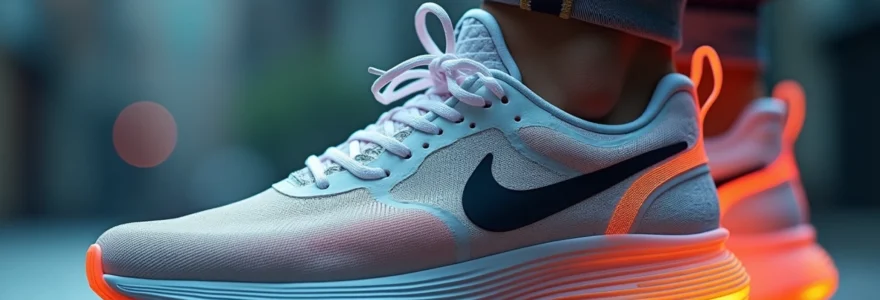
The art and science of exceptional shoe design represents a sophisticated fusion of engineering precision, material innovation, and aesthetic mastery. Modern footwear creation demands an intricate understanding of biomechanics, advanced manufacturing processes, and cutting-edge technologies that transform raw concepts into performance-driven products. Today’s shoe designers navigate complex challenges involving human anatomy, environmental sustainability, and technological integration whilst maintaining the delicate balance between form and function. This multifaceted discipline requires expertise spanning from molecular-level material science to macro-scale ergonomic considerations, creating products that must simultaneously protect, perform, and please the human foot.
Biomechanical engineering principles in footwear architecture
The foundation of exceptional shoe design lies in understanding the complex biomechanical relationship between the human foot and ground contact forces. Modern footwear architects employ sophisticated engineering principles to create shoes that work in harmony with natural foot function, rather than simply encasing the foot in rigid structures. This approach requires deep knowledge of kinetic chains, force distribution patterns, and the dynamic nature of human locomotion.
Plantar pressure distribution analysis and last development
Advanced pressure mapping technologies enable designers to visualise exactly how forces distribute across the plantar surface during various activities. These detailed analyses reveal pressure hotspots, load transition patterns, and temporal force variations that inform critical design decisions. Modern pressure plates capture data at frequencies exceeding 1000Hz, providing millisecond-level insights into foot behaviour during heel strike, midstance, and toe-off phases.
The development of shoe lasts—the foot-shaped forms around which shoes are constructed—relies heavily on this biomechanical data. Contemporary last design incorporates three-dimensional scanning of thousands of feet, creating statistically accurate representations of target demographics. Parametric last design allows for rapid customisation based on specific pressure distribution requirements, enabling designers to optimise fit for different activities and foot types.
Gait cycle integration through dynamic flex zones
Understanding the gait cycle’s four distinct phases enables designers to create shoes that facilitate rather than hinder natural movement patterns. The initial contact phase requires specific heel geometry to manage impact forces, whilst the loading response phase demands controlled pronation support. Mid-stance stability requirements differ dramatically from the propulsive needs of terminal stance and pre-swing phases.
Dynamic flex zone placement represents a critical design element that directly impacts gait efficiency. Strategic positioning of flexibility channels in the forefoot region—typically at 30% and 65% of total shoe length—allows for natural metatarsophalangeal joint articulation. These zones must balance flexibility requirements with structural integrity, often utilising graduated stiffness transitions rather than abrupt material changes.
Anatomical foot mapping for custom orthotic integration
Modern shoe design increasingly accommodates the integration of custom orthotic devices, requiring detailed understanding of foot anatomy variations and pathological conditions. Designers must consider the volumetric requirements of conditions such as pes planus, pes cavus, and hallux valgus when developing internal shoe architecture. This involves creating adjustable volume systems and removable components that maintain structural integrity whilst accommodating therapeutic interventions.
Three-dimensional foot scanning technologies now enable the creation of personalised shoe geometries that account for individual anatomical variations. These systems capture not only static foot dimensions but also dynamic deformation patterns, enabling the design of shoes that adapt to changing foot shapes throughout the day and across different activities.
Material science applications in midsole compression technology
The midsole represents the primary energy management system in modern footwear, requiring sophisticated understanding of polymer science and mechanical engineering principles. Ethylene-vinyl acetate (EVA) foams remain prevalent due to their excellent energy return characteristics and processing versatility, though advanced thermoplastic polyurethane (TPU) systems offer superior durability and temperature stability.
Contemporary midsole design employs variable density configurations that provide targeted support and cushioning zones. Dual-density construction typically features firmer medial sections for motion control and softer lateral regions for impact absorption. Advanced manufacturing techniques enable the creation of gradient density systems where compression characteristics vary continuously across the midsole volume, optimising force distribution patterns.
Advanced material selection and performance engineering
Material selection in exceptional shoe design extends far beyond aesthetic considerations, encompassing complex performance requirements that must satisfy durability, comfort, and functional demands. Modern footwear materials represent the culmination of decades of polymer science research, textile engineering advancement, and sustainable innovation initiatives. The integration of these materials requires sophisticated understanding of their mechanical properties, environmental behaviour, and long-term performance characteristics under various stress conditions.
Gore-tex membrane integration techniques for waterproof construction
Gore-Tex membrane technology represents a paradigm shift in waterproof footwear construction, utilising microporous polytetrafluoroethylene (PTFE) structures that permit vapour transmission whilst blocking liquid water penetration. The membrane contains approximately 9 billion pores per square inch, each measuring roughly 20,000 times smaller than a water droplet yet 700 times larger than a water vapour molecule.
Successful Gore-Tex integration demands precise lamination techniques that maintain membrane integrity throughout the manufacturing process. The construction typically involves a three-layer system: outer fabric, Gore-Tex membrane, and inner lining, with each layer requiring specific bonding protocols. Seam sealing technologies ensure complete waterproof performance by eliminating potential leak points at material interfaces.
Vibram outsole compound formulation and tread pattern design
Vibram’s rubber compound formulations represent sophisticated polymer chemistry optimised for specific performance characteristics. The company’s proprietary compounds balance competing requirements of grip, durability, and weight through careful selection of base polymers, carbon black content, and specialised additives. Arctic Grip technology, for instance, incorporates specially designed tread geometries combined with unique rubber compounds that maintain flexibility at sub-zero temperatures.
Tread pattern design involves complex considerations of contact patch geometry, void ratios, and directional grip characteristics. Modern computational fluid dynamics modelling helps predict tread performance across various surface conditions, whilst finite element analysis optimises tread block geometries for maximum grip and minimal wear patterns. Multi-directional lug arrangements provide superior traction during both acceleration and deceleration phases of movement.
Primeknit and flyknit upper construction methodologies
Engineered knit uppers represent a revolutionary approach to footwear construction, utilising sophisticated textile technologies to create seamless, form-fitting structures with targeted performance characteristics. Primeknit and Flyknit technologies employ computer-controlled knitting machines that can vary yarn types, tensions, and stitch patterns within single construction processes.
These methodologies enable the creation of zoned performance characteristics within upper constructions, providing stretch in areas requiring flexibility whilst maintaining support in critical structural regions. The elimination of traditional cut-and-sew construction reduces waste by up to 60% whilst creating lighter, more comfortable footwear with superior fit characteristics.
Carbon fibre plate technology in performance running shoes
Carbon fibre plate integration in running shoes represents a significant advancement in energy return technology, utilising the material’s exceptional strength-to-weight ratio and elastic properties. These plates, typically measuring 0.8-1.2mm in thickness, are strategically positioned within midsole constructions to create a lever effect that enhances propulsive efficiency.
The geometry of carbon fibre plates requires precise engineering to balance energy return with natural foot flex patterns. Curved plate designs follow the natural arc of the foot during toe-off, whilst variable thickness profiles optimise stiffness characteristics across different regions. Recent innovations include segmented plate designs that maintain energy return benefits whilst allowing for improved lateral flexibility.
Sustainable Bio-Based material innovation including piñatex and mycelium
The footwear industry’s sustainability initiatives have driven remarkable innovations in bio-based materials that offer comparable performance to traditional synthetic alternatives. Piñatex, derived from pineapple leaf waste, provides a leather-like material with excellent durability characteristics whilst utilising agricultural byproducts that would otherwise be discarded.
Mycelium-based materials represent perhaps the most exciting development in sustainable footwear materials, utilising fungal root structures to create leather-like substances with customisable properties. These materials can be grown to specific density and flexibility requirements, offering unprecedented design freedom whilst maintaining completely biodegradable characteristics. Biofabrication processes enable the creation of materials with embedded performance characteristics that traditional manufacturing cannot achieve.
Manufacturing process optimisation and quality control systems
Modern footwear manufacturing represents a sophisticated integration of traditional craftsmanship techniques with advanced automation technologies. The pursuit of exceptional shoe design quality demands precise control over every manufacturing parameter, from material preparation through final assembly processes. Contemporary production facilities employ statistical process control methodologies, real-time monitoring systems, and advanced quality assurance protocols to ensure consistent product excellence whilst optimising production efficiency and minimising waste generation.
Injection moulding precision for sole unit assembly
Injection moulding processes for sole unit production require extremely precise control over temperature, pressure, and timing parameters to achieve consistent material flow and dimensional accuracy. Modern injection moulding machines employ closed-loop control systems that monitor cavity pressure, melt temperature, and injection velocity in real-time, making microsecond adjustments to maintain optimal processing conditions.
The complexity of multi-density sole construction demands sophisticated mould designs incorporating sequential injection capabilities and precise material distribution systems. Hot runner technologies eliminate material waste whilst ensuring uniform temperature distribution throughout the injection process. Advanced mould materials and coatings extend tool life whilst maintaining the precise surface finishes required for high-quality footwear production.
Cement construction versus blake stitch welding techniques
The choice between cement construction and Blake stitch welding techniques significantly impacts both production efficiency and final product characteristics. Cement construction utilises advanced polyurethane adhesive systems that create permanent molecular bonds between upper and sole components, offering excellent water resistance and production flexibility. Modern adhesive formulations incorporate nano-scale fillers that enhance bond strength whilst reducing environmental impact.
Blake stitch construction employs sophisticated sewing machinery capable of penetrating multiple material layers with consistent stitch formation and tension control. This technique offers superior repairability and traditional aesthetic appeal, though requiring more skilled operator intervention. Automated stitching systems now incorporate vision guidance and force feedback systems that ensure consistent stitch quality whilst accommodating material thickness variations.
Automated cutting technology for upper pattern accuracy
Contemporary cutting technologies have revolutionised upper material preparation through the implementation of computer-controlled cutting systems that achieve sub-millimetre accuracy whilst optimising material utilisation. Laser cutting systems provide exceptional edge quality and dimensional precision, particularly beneficial for synthetic materials and technical textiles that require clean, sealed edges.
Water jet cutting technology offers advantages for natural leather materials, providing clean cuts without heat-affected zones that could compromise material integrity. Advanced nesting algorithms optimise pattern placement to achieve material utilisation rates exceeding 85%, whilst maintaining grain direction requirements and minimising defect inclusion. Vision-guided cutting systems can automatically avoid natural leather defects whilst maintaining optimal pattern orientation.
Heat press bonding protocols for seamless construction
Heat press bonding techniques enable the creation of seamless footwear constructions that eliminate traditional stitching requirements whilst providing superior comfort and aesthetic appeal. These processes require precise control over temperature profiles, pressure distribution, and dwell times to achieve consistent bond formation without material degradation.
Modern heat press systems employ programmable temperature controllers with multiple zone heating capabilities, enabling optimised thermal profiles for different material combinations. Pressure distribution systems utilise pneumatic or hydraulic actuation with real-time force monitoring to ensure consistent bonding results. Thermoplastic film adhesives provide excellent bond strength whilst maintaining flexibility characteristics essential for footwear applications.
Iconic design case studies and technical innovation analysis
Examining landmark footwear designs reveals the intricate relationship between technical innovation and market success, demonstrating how exceptional shoe design emerges from the synthesis of engineering excellence and aesthetic vision. The Nike Air Max series exemplifies this principle, with its visible air cushioning system representing both a technological breakthrough and a bold design statement that redefined consumer expectations. The development required years of material science research to create transparent polyurethane films capable of containing pressurised gas whilst maintaining optical clarity and structural integrity.
The Adidas Boost technology represents another paradigm shift in footwear design, utilising thermoplastic polyurethane foam beads that provide exceptional energy return characteristics. This innovation required the development of entirely new manufacturing processes involving steam chest moulding techniques adapted from automotive industry applications. The distinctive aesthetic of exposed Boost material has become synonymous with performance excellence, demonstrating how technical innovation can drive visual identity.
Converse Chuck Taylor All-Stars showcase how timeless design principles can transcend technological advancement, with the fundamental design remaining largely unchanged for over half a century. The shoe’s enduring appeal lies in its perfect balance of simplicity, functionality, and cultural significance. The vulcanised construction technique, whilst technologically straightforward, provides durability and flexibility characteristics that continue to satisfy contemporary requirements. This design demonstrates that exceptional footwear doesn’t always require cutting-edge technology—sometimes it requires perfect execution of fundamental principles.
The most exceptional shoe designs successfully integrate multiple layers of innovation: technical performance, manufacturing efficiency, aesthetic appeal, and cultural relevance.
Recent innovations in 3D printing technology have opened entirely new possibilities for footwear design and customisation. Adidas Futurecraft 4D represents a significant advancement in this field, utilising Digital Light Synthesis technology to create midsole structures with complex internal geometries impossible to achieve through traditional manufacturing. The process enables the creation of lattice structures optimised for specific performance characteristics whilst maintaining unprecedented design freedom.
Digital design tools and prototyping technologies
The integration of advanced digital design tools has fundamentally transformed the footwear development process, enabling designers to visualise, test, and refine concepts with unprecedented precision and efficiency. Computer-aided design (CAD) systems specifically developed for footwear applications incorporate sophisticated last libraries, material property databases, and manufacturing constraint parameters that guide designers toward feasible solutions whilst maintaining creative freedom.
Parametric design software enables rapid iteration of design concepts through the modification of key dimensional and aesthetic parameters. These systems can automatically generate multiple design variations whilst maintaining critical fit and performance characteristics. Generative design algorithms can explore thousands of potential solutions based on specified performance criteria, revealing innovative approaches that might not emerge through traditional design processes.
Virtual reality (VR) and augmented reality (AR) technologies are increasingly employed for design visualisation and consumer feedback collection. These tools enable designers to experience footwear designs in realistic contexts before physical prototypes are created, significantly reducing development time and costs. Advanced haptic feedback systems allow designers to “feel” virtual materials and assess texture characteristics that influence both performance and aesthetic appeal.
Rapid prototyping technologies have evolved beyond simple 3D printing to encompass sophisticated multi-material systems capable of producing functional footwear prototypes with realistic material properties. Selective laser sintering (SLS) systems can process flexible thermoplastic materials that closely replicate final production characteristics, whilst multi-jet fusion (MJF) technology offers superior surface finish quality and dimensional accuracy.
Digital design tools haven’t replaced human creativity in footwear design—they’ve amplified it, enabling designers to explore possibilities that were previously impossible to visualise or test.
Ergonomic testing protocols and performance validation methods
Comprehensive ergonomic testing protocols form the cornerstone of exceptional shoe design validation, ensuring that innovative concepts translate into real-world performance benefits. Modern testing methodologies employ sophisticated instrumentation systems that capture biomechanical data with laboratory precision whilst maintaining ecological validity through realistic testing conditions. These protocols must balance the controlled environment requirements necessary for repeatable measurements with the dynamic, variable conditions that characterise actual footwear usage.
Gait analysis laboratories utilise force plates, motion capture systems, and pressure mapping technologies to quantify the biomechanical effects of different footwear designs. High-speed cameras operating at frame rates exceeding 1000 Hz capture minute details of foot-shoe interaction during various locomotion phases. Electromyography (EMG) systems monitor muscle activation patterns to assess how different footwear designs influence movement efficiency and fatigue development. These integrated measurement systems generate comprehensive datasets that inform design optimisation decisions.
Durability testing protocols simulate extended usage conditions through accelerated testing procedures that compress months of typical wear into days of laboratory evaluation. Flexing machines subject footwear to millions of controlled flex cycles whilst monitoring structural integrity and performance degradation. Environmental testing chambers expose prototypes to extreme temperature, humidity, and chemical conditions to validate material selection and construction techniques under challenging conditions.
Comfort assessment requires subjective evaluation methodologies that capture user perceptions whilst maintaining statistical rigour. Standardised comfort rating
protocols incorporate multiple assessment phases including initial fitting evaluation, short-term wear trials, and extended usage studies. Trained panels of test subjects represent diverse demographic groups to ensure broad applicability of comfort findings. Statistical analysis techniques such as analysis of variance (ANOVA) help identify significant differences between design variations whilst controlling for individual subject variability.
Performance validation extends beyond laboratory testing to include field studies conducted in real-world environments. Professional athletes and recreational users provide valuable feedback regarding footwear performance under competitive conditions. GPS tracking systems and wearable sensors monitor movement patterns, energy expenditure, and injury occurrence rates to establish correlations between footwear design characteristics and performance outcomes. These longitudinal studies provide insights that laboratory testing alone cannot capture.
Standardised testing protocols such as ASTM International and ISO specifications ensure consistent evaluation methodologies across different manufacturers and research facilities. These standards define specific test procedures for characteristics such as slip resistance, abrasion resistance, and flex fatigue performance. Comparative testing protocols enable objective assessment of design improvements and competitive positioning within market segments.
The most valuable performance validation combines quantitative laboratory measurements with qualitative user feedback, creating a comprehensive understanding of how design innovations translate into real-world benefits.
Machine learning algorithms increasingly support the analysis of complex biomechanical datasets, identifying patterns and correlations that traditional statistical methods might overlook. These systems can predict performance outcomes based on design parameters, enabling more efficient optimisation processes. Artificial intelligence applications in gait analysis can identify subtle movement patterns associated with injury risk or performance limitations, guiding design modifications that enhance both safety and effectiveness.