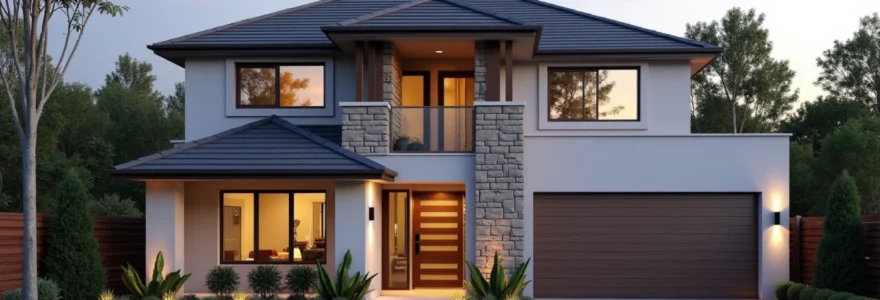
The exterior of your home serves as more than just a protective shell – it’s the first impression visitors receive and a reflection of your personal style and values. In today’s competitive property market, exceptional exterior design has become increasingly crucial for homeowners seeking to enhance both their living experience and property value. From the careful selection of materials and colours to the thoughtful integration of architectural elements, every design decision contributes to creating a cohesive and visually striking façade.
Modern exterior design transcends mere aesthetics, encompassing sustainability, functionality, and regional vernacular considerations. Whether you’re planning a complete renovation or subtle enhancements, understanding the fundamental principles of exceptional exterior design enables you to make informed decisions that will benefit your property for decades to come. The interplay between architectural elements, material choices, and landscape integration creates opportunities to transform even the most modest home into an architectural statement.
Architectural design principles that define exceptional exterior aesthetics
The foundation of exceptional exterior design rests upon timeless architectural principles that have guided builders and designers for centuries. These fundamental concepts serve as the backbone for creating visually harmonious and structurally sound façades that stand the test of time. Understanding these principles enables homeowners to make design decisions that enhance both the immediate visual impact and long-term appeal of their properties.
Successful exterior design requires careful consideration of how individual elements work together to create a unified whole. The relationship between windows and walls, the proportion of solid to void, and the rhythm created by repeating elements all contribute to the overall aesthetic success of a building’s exterior. These relationships are not arbitrary but follow mathematical principles that have been refined over millennia of architectural development.
Golden ratio applications in façade proportioning and window placement
The golden ratio, approximately 1.618 to 1, appears throughout nature and has been utilised in architecture since ancient times to create visually pleasing proportions. In exterior design, this mathematical relationship can be applied to window sizing, door placement, and overall façade proportions to achieve a sense of natural harmony. When windows are sized according to golden ratio principles, they appear neither too large nor too small, creating an inherent sense of balance that the human eye finds appealing.
Professional architects often employ golden ratio principles when determining the relationship between building height and width, or when spacing architectural elements across a façade. For example, if your home’s primary windows are 1.2 metres wide, positioning them 1.944 metres apart (1.2 × 1.618) creates a pleasing rhythm. This mathematical approach to design ensures that modifications or additions to your home maintain visual coherence with existing elements.
Symmetrical versus asymmetrical composition strategies for visual balance
Symmetrical design creates formal balance through mirror-image arrangements of architectural elements, offering a sense of stability and grandeur that works particularly well with traditional and classical architectural styles. Georgian and Victorian homes exemplify symmetrical composition, with centrally placed front doors flanked by evenly spaced windows of identical proportions. This approach creates an immediate sense of order and permanence that many homeowners find appealing.
Asymmetrical composition, however, can create more dynamic and contemporary visual interest whilst maintaining overall balance through careful weight distribution of architectural elements. A large window on one side of a façade might be balanced by a group of smaller windows on the other, or by a projecting bay or balcony. This approach requires more sophisticated design understanding but can result in more personalised and visually engaging exteriors that reflect modern living patterns.
Scale and mass relationships in contemporary residential architecture
The relationship between a building’s scale and its surrounding environment significantly impacts its visual success and integration with the neighbourhood context. Contemporary residential architecture often employs varying scales within a single façade to create visual interest whilst maintaining human scale at critical interaction points such as entrances and ground-floor windows. This technique allows for dramatic architectural statements whilst ensuring the building remains welcoming and appropriately sized for residential use.
Mass relationships refer to how different portions of a building relate to each other in terms of visual weight and prominence. A well-designed exterior carefully balances solid walls against glazed openings, projecting elements against recessed areas, and heavy materials against lighter ones. These relationships can be manipulated to emphasise certain architectural features, create focal points, or direct attention toward important elements such as main entrances.
Rhythm and repetition techniques through material and structural elements
Architectural rhythm is created through the repetition of elements at regular or irregular intervals across a façade, much like musical rhythm creates patterns in time. Window spacing, material changes, or structural elements such as pilasters or buttresses can establish rhythm that guides the eye across the building’s surface. Regular rhythm creates calm, predictable patterns, whilst irregular rhythm can generate more dynamic and contemporary visual effects.
Material repetition serves both aesthetic and practical functions in exterior design. Repeating materials creates visual continuity whilst often providing cost efficiencies through bulk purchasing and simplified installation processes. However, successful material repetition requires careful attention to proportion and spacing to avoid monotony. Introducing subtle variations in texture, colour, or application method can maintain visual interest whilst preserving the benefits of material consistency.
Material selection and performance specifications for premium exterior finishes
The choice of exterior materials fundamentally shapes both the aesthetic character and long-term performance of your home’s façade. Premium exterior finishes represent a significant investment that, when properly selected and installed, can provide decades of low-maintenance service whilst enhancing your property’s visual appeal and market value. Modern material technologies offer unprecedented combinations of beauty, durability, and environmental responsibility.
Contemporary exterior material selection must balance multiple considerations including initial cost, maintenance requirements, thermal performance, and aesthetic longevity. Performance specifications have become increasingly sophisticated, with materials now rated for specific climate conditions, pollution resistance, and energy efficiency contributions. Understanding these specifications enables informed decision-making that aligns material choices with both immediate design goals and long-term property stewardship objectives.
Natural stone cladding systems: limestone, granite, and sandstone applications
Natural stone cladding represents the pinnacle of premium exterior finishes, offering unparalleled durability, timeless aesthetic appeal, and significant property value enhancement. Limestone provides a refined, elegant appearance with natural variation in colour and texture that develops attractive patina over time. Its relatively soft composition makes it easier to work with during installation, though it requires proper sealing in areas prone to acid rain or industrial pollution.
Granite offers superior durability and weather resistance, making it particularly suitable for harsh climate conditions or high-traffic areas around entrances and ground-floor applications. Its crystalline structure provides rich colour depth and distinctive grain patterns that cannot be replicated in manufactured materials. However, granite’s hardness requires specialised cutting and installation techniques, typically increasing project costs compared to softer stone options.
Sandstone bridges the gap between limestone’s workability and granite’s durability, offering excellent weather resistance with moderate hardness that facilitates custom cutting and shaping. Its natural stratification creates distinctive horizontal banding that can emphasise architectural lines and enhance the visual proportions of façade elements. Regional sandstone varieties often provide opportunities to connect new construction with local architectural traditions and geological character.
High-performance render systems and textured coating technologies
Modern render systems have evolved far beyond traditional lime-based applications, incorporating advanced polymer technologies that provide superior adhesion, flexibility, and weather resistance. High-performance renders can achieve smooth, contemporary finishes or highly textured surfaces that rival natural materials in visual interest whilst offering advantages in application speed and cost efficiency. These systems often include integrated insulation properties that contribute to overall building energy performance.
Textured coating technologies enable extensive creative possibilities, from subtle aggregate finishes that add visual depth to bold sculptural effects that create dramatic shadow play across façade surfaces. Silicone-based renders offer exceptional water resistance whilst maintaining breathability that prevents moisture buildup within wall systems. These advanced formulations resist algae growth, maintain colour stability under UV exposure, and can be formulated to self-clean during rain events.
Composite materials: fibre cement, UPVC, and engineered wood solutions
Fibre cement has emerged as a leading choice for homeowners seeking the appearance of natural materials with enhanced durability and reduced maintenance requirements. These composite panels can convincingly replicate wood grain, stone texture, or smooth contemporary finishes whilst providing fire resistance, pest immunity, and dimensional stability that natural materials cannot match. Quality fibre cement systems include comprehensive warranties that can extend beyond 30 years when properly installed and maintained.
UPVC applications have expanded beyond traditional window frames to include sophisticated cladding systems that offer excellent thermal performance and virtually maintenance-free service life. Modern UPVC formulations resist colour fading, chalking, and impact damage whilst providing excellent insulation properties. However, design considerations must account for thermal expansion characteristics and the material’s limited ability to be repaired if damaged.
Engineered wood solutions combine natural wood fibres with protective resins and additives to create materials that retain wood’s aesthetic warmth whilst addressing its traditional vulnerabilities to moisture, insects, and dimensional instability. These innovative products often incorporate recycled wood content, supporting sustainable building practices whilst delivering performance characteristics superior to traditional timber cladding.
Metal façade systems including zinc, copper, and aluminium composite panels
Metal façade systems offer exceptional longevity and distinctive aesthetic character that develops and improves over time. Zinc naturally develops a protective patina that provides corrosion resistance whilst creating an attractive matte grey finish that complements both contemporary and traditional architectural styles. Pre-weathered zinc products are available for homeowners who prefer consistent appearance from installation, though many choose natural zinc specifically for its evolving character.
Copper cladding provides unmatched longevity with a dramatic aesthetic transformation from bright metallic finish to distinctive verdigris patina that can take decades to fully develop. This natural aging process creates a unique exterior finish that cannot be replicated through artificial means, making copper-clad homes truly distinctive within their neighbourhoods. Modern copper installation techniques include standing seam and batten systems that accommodate thermal movement whilst maintaining weather-tight performance.
Metal façade systems represent a significant upfront investment but can provide centuries of service life with minimal maintenance requirements, making them exceptionally cost-effective over the building’s lifespan.
Colour psychology and exterior paint schemes for enhanced kerb appeal
Colour selection for exterior surfaces involves far more than personal preference, encompassing psychological impacts, neighbourhood context, architectural appropriateness, and long-term maintenance considerations. Colour psychology research demonstrates that specific hues can influence both residents’ emotional wellbeing and visitors’ perceptions of property value, making informed colour choices a powerful tool for enhancing your home’s appeal and market position.
Professional colour consultation considers multiple factors including natural lighting conditions throughout the day, seasonal variations in surrounding landscape colours, and the interplay between different exterior materials. Successful colour schemes often employ a primary colour for large surfaces, secondary colours for trim and architectural details, and accent colours for features such as front doors or shutters. This hierarchical approach creates visual depth whilst maintaining overall cohesion across the façade.
Regional considerations play crucial roles in exterior colour selection, with certain hues performing better in specific climate conditions and fitting more appropriately within local architectural traditions. Northern exposures receive cooler light that can make warm colours appear muted, whilst southern exposures’ intense light can cause colours to appear washed out or overly vibrant. Understanding these environmental factors prevents costly colour mistakes and ensures your chosen scheme maintains its intended appearance throughout varying lighting conditions.
The longevity of exterior colour schemes depends heavily on pigment quality and UV resistance characteristics of chosen paint formulations. Premium exterior paints incorporate advanced UV-blocking technologies and fade-resistant pigments that maintain colour integrity for 15-20 years under normal exposure conditions. However, darker colours and certain pigment types are inherently more susceptible to fading, requiring more frequent repainting to maintain optimal appearance. Lighter colours generally offer superior longevity whilst also providing energy efficiency benefits through reduced heat absorption.
Landscape integration and hardscape design for cohesive property aesthetics
The boundary between architecture and landscape has become increasingly blurred in contemporary design, with successful exterior schemes requiring careful integration of built and planted elements to create cohesive property aesthetics. Landscape integration extends far beyond simple plant selection, encompassing drainage management, outdoor living spaces, lighting design, and the creation of visual connections between interior and exterior environments.
Hardscape elements such as driveways, pathways, retaining walls, and patio areas must be designed as integral components of the overall exterior scheme rather than afterthoughts added to meet functional requirements. The materials, colours, and proportions of these elements should complement and enhance the architectural character of the home whilst providing practical benefits such as improved drainage, extended outdoor living spaces, and enhanced accessibility.
Permeable paving solutions and Resin-Bound surfacing applications
Permeable paving technologies address both aesthetic and environmental concerns by allowing surface water to infiltrate through hardscape surfaces rather than running off into storm drainage systems. These systems can significantly reduce flooding risks whilst creating attractive surface treatments that complement contemporary architectural styles. Permeable concrete, porous asphalt, and interlocking permeable pavers offer varying aesthetic characteristics and performance levels to suit different applications and budgets.
Resin-bound surfacing creates seamless, decorative surfaces using natural aggregates bound with clear resin systems that allow the stone colour and texture to predominate. These surfaces offer excellent durability, low maintenance requirements, and extensive design flexibility through aggregate selection and pattern creation. Installation quality is critical for resin-bound systems, with proper surface preparation and weather conditions during application determining long-term performance characteristics.
Retaining wall systems using gabion, block, and natural stone construction
Retaining walls serve essential functional purposes whilst offering opportunities to create dramatic architectural features that enhance property aesthetics and provide additional outdoor living spaces. Gabion systems use wire mesh containers filled with stone to create walls that combine structural efficiency with natural material aesthetics. These systems offer excellent drainage characteristics and can be designed to incorporate planting pockets for integrated landscape effects.
Engineered block systems provide cost-effective solutions for significant grade changes whilst offering extensive design flexibility through varying block sizes, colours, and textures. Modern block systems often include integrated drainage features and connection systems that ensure structural integrity under challenging soil conditions. Natural stone retaining walls represent premium solutions that provide unmatched aesthetic appeal and longevity, though they require skilled craftsmanship and typically involve higher initial investment costs.
Lighting design integration: LED strip systems and architectural uplighting
Exterior lighting design has evolved from purely functional applications to sophisticated systems that enhance architectural features, improve security, and extend outdoor living capabilities. LED technology enables energy-efficient lighting solutions with exceptional longevity and control flexibility that was impossible with traditional lighting systems. Architectural uplighting can dramatically transform the nighttime appearance of your home by highlighting texture, creating shadow effects, and emphasising important design elements.
Strip lighting systems integrated into hardscape features, building edges, and landscape elements create continuous lines of light that can define spaces, improve safety, and add contemporary aesthetic character. These systems require careful planning during construction phases to ensure proper waterproofing and accessibility for maintenance. Smart lighting controls enable homeowners to adjust intensity, colour temperature, and timing to suit different activities and seasons.
Water feature integration and sustainable drainage system implementation
Water features serve multiple functions in exterior design, providing aesthetic focal points, cooling effects, and opportunities for sustainable water management integration. Modern water feature design often incorporates rainwater harvesting, grey water recycling, or integration with sustainable drainage systems that manage surface water runoff whilst creating attractive landscape elements. These multifunctional approaches maximise the environmental and aesthetic benefits of water feature investments.
Sustainable drainage systems (SuDS) can be designed as attractive landscape features that manage surface water whilst enhancing property aesthetics. Rain gardens, bioswales, and constructed wetlands provide effective water management whilst supporting biodiversity and creating seasonal visual interest through appropriate plant selection. These systems often qualify for environmental incentives and can contribute to planning permission approval in areas with stringent drainage requirements.
Integration of water features with sustainable drainage systems represents forward-thinking design that addresses environmental responsibilities whilst creating distinctive property features that enhance both aesthetic appeal and functionality.
Property value enhancement through strategic exterior design investment
Strategic exterior design investment consistently delivers among the highest returns of any home improvement category, with quality enhancements often recovering 70-90% of their initial cost upon resale whilst providing immediate enjoyment benefits throughout ownership. The key to maximising return on investment lies in understanding which improvements deliver the greatest impact relative to their cost and ensuring that all enhancements work together to create cohesive property transformation rather than piecemeal updates.
Market research consistently demonstrates that well-designed exteriors create powerful first impressions that influence potential buyers’ perceptions of overall property quality and maintenance standards. Properties with exceptional exterior design typically sell faster and command premium prices compared to similar homes with standard or poorly maintained exteriors. This premium reflects not only the immediate aesthetic appeal but also buyers’ assumptions about the care and attention invested in less visible property aspects.
Furthermore, the psychological benefits of living in a beautifully designed environment contribute to overall quality of life, making exterior design investments valuable beyond purely financial considerations. Homes with thoughtfully designed exteriors often provide greater pride of ownership, improved neighbourhood relationships, and enhanced daily satisfaction that justifies investment costs through lifestyle improvements alone.
Professional appraisers consistently recognise quality exterior design as a key factor in property valuation, with specific improvements carrying different weight depending on local market conditions and architectural context. Front entrance enhancements, window replacements, and high-quality cladding installations typically deliver the strongest returns, whilst more personalised features such as custom water features or unique architectural elements may appeal to specific buyer segments without guaranteeing broad market appreciation.
Regional design vernacular and planning permission considerations across UK counties
Understanding regional design vernacular is essential for creating exterior designs that harmonise with local architectural traditions whilst meeting contemporary performance standards. Each UK county has developed distinctive architectural characteristics shaped by local materials, climate conditions, and historical building practices that continue to influence planning permission decisions and community acceptance of new developments. Vernacular architecture reflects the practical wisdom accumulated over centuries of local building experience, offering valuable guidance for modern exterior design decisions.
Planning permission requirements vary significantly across different local authorities, with conservation areas, listed building designations, and Article 4 directions imposing specific constraints on exterior modifications. The Cotswolds, for example, maintains strict requirements for local stone usage and traditional construction methods, whilst areas of outstanding natural beauty often restrict colour palettes and material choices to preserve landscape character. Understanding these requirements early in the design process prevents costly redesigns and ensures compliance with local planning policies.
Contemporary exterior design must balance respect for regional character with modern performance requirements such as energy efficiency, accessibility, and sustainable construction practices. This challenge requires sophisticated design solutions that achieve planning approval whilst delivering the functional benefits that modern homeowners expect. Many successful projects employ traditional materials and proportions whilst incorporating subtle contemporary elements that enhance performance without compromising historical authenticity.
The emergence of climate change considerations in planning policy is reshaping exterior design requirements across the UK, with many authorities now requiring sustainable drainage systems, renewable energy integration, and heat pump installations that must be carefully integrated with architectural design. These evolving requirements create opportunities for innovative design solutions that address environmental responsibilities whilst enhancing property aesthetics and performance.
Successful exterior design in the UK context requires deep understanding of local planning policies, architectural heritage, and community expectations, ensuring that contemporary improvements enhance rather than compromise regional character whilst delivering modern performance standards.
Working with experienced local architects and planning consultants familiar with regional requirements significantly improves the likelihood of achieving planning permission for ambitious exterior design projects. These professionals understand the subtle balance between innovation and tradition that planning committees expect, and can navigate complex approval processes whilst ensuring design integrity is maintained throughout the development process.
The future of UK exterior design lies in developing increasingly sophisticated approaches that honour regional architectural traditions whilst embracing technological innovations and environmental responsibilities. This evolution requires ongoing dialogue between designers, planners, and communities to ensure that new developments contribute positively to the built environment whilst meeting the evolving needs of modern living. Through careful attention to regional context, material selection, and design integration, exceptional exterior design can enhance both individual properties and the broader architectural landscape for future generations.