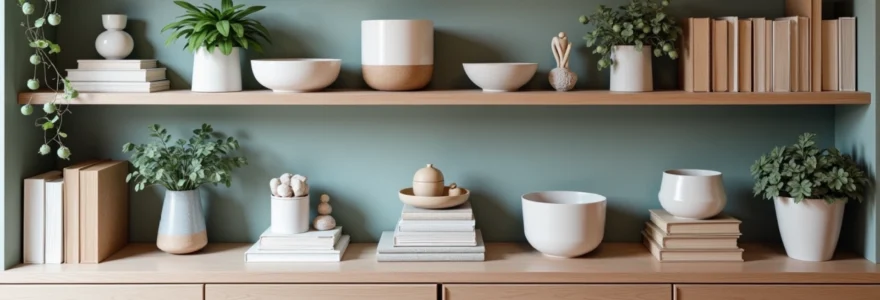
The art of shelf styling has evolved far beyond simply arranging books and decorative objects in neat rows. Today’s most compelling interior spaces feature thoughtfully curated displays that function as visual narratives, where each carefully positioned accessory contributes to a larger story about the inhabitant’s journey, interests, and aesthetic sensibilities. This sophisticated approach to shelf curation transforms ordinary storage solutions into dynamic galleries that reflect personal history whilst maintaining visual harmony and design excellence.
Modern homeowners increasingly recognise that meaningful curation requires more than aesthetic appeal—it demands a deep understanding of visual composition principles, strategic storytelling techniques, and the delicate balance between personal expression and professional design standards. Whether styling a grand library wall or intimate floating shelves, the goal remains consistent: creating displays that captivate viewers whilst revealing authentic glimpses into the curator’s personality and experiences.
Foundational principles of narrative shelf styling
Successful shelf curation begins with understanding the fundamental design principles that govern visual perception and emotional response. These foundational concepts serve as the invisible framework upon which compelling displays are built, ensuring that personal storytelling elements enhance rather than compromise the overall aesthetic impact.
Visual weight distribution techniques for balanced compositions
Visual weight distribution forms the cornerstone of effective shelf styling, determining how the eye travels across your display and where attention naturally settles. Objects possess varying degrees of visual weight based on their size, colour intensity, texture, and positioning within the composition. Dark, large, or highly textured items carry more visual weight than their lighter, smaller, or smoother counterparts, requiring strategic placement to achieve equilibrium.
Professional designers employ the triangle composition method when distributing visual weight across shelving systems. This technique involves positioning the heaviest visual elements in a triangular pattern, creating natural anchor points that guide the viewer’s gaze through the display. For instance, placing a substantial ceramic vase on the left lower shelf, a medium-sized sculpture on the upper right, and a collection of books in the centre creates a stable visual foundation that supports lighter accent pieces throughout the remaining space.
Golden ratio applications in asymmetrical accessory arrangements
The golden ratio, approximately 1:1.618, appears frequently in nature and art, creating proportions that feel inherently pleasing to the human eye. When applied to shelf styling, this mathematical principle guides the placement of objects and the division of space, resulting in arrangements that feel both dynamic and harmonious. Rather than centring objects or dividing shelves into equal sections, positioning key elements at golden ratio points creates more engaging and sophisticated compositions.
Consider a long floating shelf where you’re arranging books, plants, and decorative objects. Instead of placing the most significant piece directly in the centre, position it approximately two-thirds along the shelf’s length. This creates natural tension and visual interest whilst providing ample space for supporting elements that enhance the narrative without competing for attention. The remaining third becomes ideal for displaying smaller, complementary pieces that echo the main element’s themes or colours.
Colour psychology integration through strategic object placement
Colour psychology profoundly influences how viewers perceive and emotionally respond to curated displays. Understanding colour temperature, saturation, and psychological associations enables you to craft shelf arrangements that evoke specific moods whilst supporting your personal narrative. Warm colours like terracotta, amber, and deep greens create feelings of comfort and intimacy, making them ideal for displays featuring family memorabilia or travel keepsakes from meaningful journeys.
Cool colours such as blues, greys, and whites promote feelings of calm and sophistication, perfectly suited to professional achievement displays or minimalist aesthetic statements. The strategic use of accent colours can highlight specific narrative elements—a vibrant red journal from a transformative trip, or a golden award that represents a career milestone—whilst maintaining overall visual cohesion through careful colour temperature matching.
Scale progression methods for dynamic visual interest
Scale progression involves the deliberate variation of object sizes to create rhythm and movement within shelf displays. Rather than grouping items of similar dimensions, effective scale progression employs a mix of large anchor pieces, medium supporting elements, and small detail objects that add texture and personality to the overall composition. This variation prevents visual monotony whilst creating opportunities to highlight different aspects of your personal story.
Begin with substantial pieces that can support the narrative weight of your display—perhaps a large coffee table book showcasing your professional field or a significant piece of pottery from a memorable trip. Surround these anchors with medium-scale items like framed photographs or small sculptures that provide context and depth. Finally, incorporate tiny details such as interesting stones, small figurines, or unique vintage finds that invite closer examination and reward attentive viewers with intimate glimpses into your interests and experiences.
Thematic curation strategies for personal storytelling
Effective personal storytelling through shelf curation requires identifying the key themes and experiences that define your unique narrative. Rather than displaying objects randomly or purely for aesthetic purposes, thematic curation creates coherent visual stories that invite viewers to understand your journey, values, and aspirations through carefully selected and positioned accessories.
Travel memoir collections: incorporating vintage maps and cultural artefacts
Travel-inspired shelf displays offer rich opportunities for meaningful storytelling, allowing you to showcase transformative experiences whilst creating visually compelling arrangements. Vintage maps serve as excellent backdrop elements, either framed and positioned behind other objects or rolled and casually placed alongside travel journals and cultural artefacts. These cartographic elements provide geographical context whilst adding texture and historical depth to your display.
Cultural artefacts require particularly thoughtful curation, balancing respect for their origins with effective visual presentation. Small textiles, traditional pottery, or handcrafted items work beautifully when grouped with related books, photographs, or maps from the same region. Consider displaying a hand-woven basket from Morocco alongside a photography book featuring North African landscapes, creating connections that enhance understanding whilst celebrating cultural appreciation and personal growth through travel.
Literary heritage displays using first edition books and antique bookends
Literary collections provide sophisticated foundations for scholarly and intellectual narratives, particularly when featuring first editions or books with personal significance. Antique bookends not only serve practical purposes but also add architectural elements that frame literary groupings whilst contributing historical weight to the display. The patina and craftsmanship of vintage bookends create visual dialogue with aged book spines, establishing temporal connections that enhance the overall narrative depth.
When curating literary displays, consider the intellectual journey represented by your book selection. Group volumes by theme, time period, or personal significance rather than simply by size or colour. A collection featuring early environmental writing might include Rachel Carson’s “Silent Spring” alongside contemporary climate change texts, creating a visual timeline that demonstrates both historical awareness and ongoing intellectual engagement with important issues.
Family legacy presentations through heirloom photography and inherited pieces
Family legacy displays require delicate balance between honouring heritage and maintaining contemporary aesthetic appeal. Heirloom photographs work best when presented in a mix of frame styles and sizes, creating visual variety whilst maintaining thematic coherence. Consider combining formal family portraits with candid snapshots, creating a more complete narrative that celebrates both tradition and spontaneous family moments.
Inherited pieces such as vintage china, family jewellery, or handmade textiles can be displayed alongside contemporary objects that reflect your personal style evolution. This juxtaposition demonstrates respect for family history whilst asserting individual identity. A grandmother’s crystal vase might be displayed with modern flowers, or antique books inherited from a scholarly relative could be positioned alongside your own professional publications, creating visual conversations between generations.
Professional journey narratives via industry awards and milestone commemoratives
Professional achievement displays require sophisticated handling to avoid appearing boastful whilst still celebrating legitimate accomplishments. Industry awards and milestone commemoratives work best when integrated with objects that provide context about your professional evolution and values. Consider pairing awards with books that influenced your career development, or displaying professional recognition alongside tools or objects that represent your daily work life.
The key to effective professional displays lies in storytelling rather than mere trophy presentation. A journalism award might be displayed with a vintage typewriter and first edition of a book by a admired writer, creating a narrative about craft appreciation and professional aspiration. This approach transforms achievement display into intellectual autobiography, inviting viewers to understand your professional values and inspirations rather than simply noting your successes.
Advanced layering techniques for Three-Dimensional depth
Creating visual depth transforms flat shelf displays into dynamic, gallery-quality presentations that reward close examination whilst maintaining impact from across the room. Advanced layering techniques employ principles from photography and fine art composition, using foreground, middleground, and background elements to create sophisticated three-dimensional arrangements that feel both intentional and naturally evolved.
Foreground, middleground, and background object positioning
Professional layering begins with understanding how different positional planes interact to create depth perception. Foreground elements, positioned at the shelf’s edge, should be relatively small and visually interesting, drawing viewers into the display whilst providing scale reference for elements positioned further back. These might include small sculptures, interesting stones, or delicate objects that invite close examination without overwhelming the composition.
Middleground elements form the compositional heart of your display, typically featuring your most significant narrative pieces. Books, medium-sized decorative objects, and framed photographs work excellently in this zone, providing substantial visual weight whilst maintaining accessibility for examination. Background elements, positioned against the wall or shelf back, might include larger framed artworks, tall vases, or architectural objects that provide vertical emphasis and compositional stability.
Vertical stacking methods using books as pedestals
Books serve dual purposes in sophisticated shelf displays, functioning both as narrative elements and practical pedestals for elevating smaller objects. Horizontal book stacking creates varied height levels that add visual interest whilst providing stable platforms for displaying delicate or small items that might otherwise be overlooked. This technique proves particularly effective for showcasing collections of small objects such as vintage cameras, minerals, or handcrafted items.
When employing books as pedestals, consider both aesthetic and practical factors. Larger, stable volumes work best as bases, whilst the subjects or colours of book covers can enhance the narrative coherence of objects displayed upon them. A stack of photography books might support a vintage camera, creating thematic resonance whilst solving the practical problem of giving a small object sufficient visual prominence within a larger shelf composition.
Negative space manipulation for visual breathing room
Negative space—the empty areas between objects—plays crucial roles in sophisticated shelf curation, preventing visual overwhelm whilst creating opportunities for the eye to rest and process individual elements. Professional designers understand that strategic emptiness often proves as important as object placement, particularly in contemporary design approaches that value restraint and intentionality over abundance.
Effective negative space manipulation requires understanding the relationship between object scale and surrounding emptiness. Larger objects typically require more breathing room to maintain their visual impact, whilst smaller items can be grouped more closely without creating visual chaos. Consider how negative space creates visual pathways that guide viewer attention through your display, ensuring that each element receives appropriate emphasis within the overall composition.
Textural contrast pairing: smooth ceramics with rough natural elements
Textural contrast adds sophisticated complexity to shelf displays, creating tactile interest that enhances visual appeal whilst supporting narrative development. The juxtaposition of smooth, refined objects with rough, natural elements creates dynamic tension that prevents displays from appearing too precious or untouchable. This balance between refinement and earthiness often reflects the human experience of seeking beauty whilst remaining grounded in natural reality.
Consider pairing polished ceramic vases with raw crystals or driftwood, creating dialogue between human craftsmanship and natural formation. Smooth leather-bound books might be displayed alongside woven textiles or rough stone objects, creating textural conversations that add depth and authenticity to your personal narrative. These contrasts prevent displays from becoming too homogeneous whilst celebrating both refined taste and appreciation for natural beauty.
Professional styling tools and materials for shelf curation
Professional-quality shelf curation requires specific tools and materials that enable precise positioning, proper support, and long-term preservation of displayed items. Understanding these professional resources elevates amateur attempts into polished presentations worthy of high-end interior design magazines.
Museum-quality display materials prove essential for valuable or delicate items. Archival foam supports provide stable, non-damaging bases for books, photographs, and fragile objects, preventing deterioration whilst maintaining proper positioning. Clear acrylic risers and stands offer invisible support that elevates objects without visual interference, particularly useful for creating layered displays where background elements must remain visible.
Professional lighting considerations extend beyond basic illumination to encompass colour temperature, shadow creation, and highlighting specific elements within your display. LED strip lighting with dimming capabilities allows for adjustable ambiance that can emphasise different aspects of your collection depending on time of day or specific viewing occasions. Battery-operated picture lights provide focused illumination for artwork or special objects without requiring electrical modifications to existing shelving systems.
The difference between amateur and professional shelf styling often lies not in the objects displayed, but in the quality of supporting materials and attention to technical details that ensure longevity and visual precision.
Conservation materials become crucial when displaying valuable books, photographs, or documents. UV-filtering glass or acrylic protects against light damage, whilst acid-free materials prevent chemical deterioration over time. Temperature and humidity monitoring devices help maintain optimal conditions for sensitive items, ensuring that your personal narrative objects remain preserved for future enjoyment and potential family inheritance.
Seasonal rotation protocols for dynamic storytelling evolution
Sophisticated shelf curation embraces change as an opportunity for narrative evolution and visual refreshment. Seasonal rotation protocols prevent displays from becoming static whilst allowing for the incorporation of new experiences, acquired objects, and shifting personal priorities. This dynamic approach keeps your personal narrative current whilst maintaining the foundational design principles that ensure visual coherence.
Establish rotation schedules that align with natural seasonal changes, personal anniversaries, or professional milestones. Spring rotations might emphasise renewal and growth themes, incorporating fresh elements that reflect new beginnings or recent travels. Autumn changes could highlight harvest themes, family gatherings, or academic achievements, depending on your personal calendar and priorities.
Document your displays through photography before making changes, creating a visual archive of your curation evolution. This practice serves both practical and emotional purposes—providing reference for successful arrangements whilst creating a meta-narrative about your development as a curator and individual. Over time, this documentation becomes part of your personal story, showing how your aesthetic preferences, life experiences, and display confidence have evolved.
Seasonal rotation transforms shelf displays from static decoration into living narratives that grow and change alongside their curator’s journey through life.
Storage solutions for rotated items require careful consideration to prevent damage during transition periods. Climate-controlled storage protects sensitive items, whilst proper labelling and cataloguing systems ensure easy retrieval when seasonal changes arrive. Consider creating themed storage boxes that group related items together, making rotation more efficient whilst protecting objects from dust and damage.
Maintenance and preservation strategies for curated collections
Long-term preservation of curated shelf displays requires understanding both general conservation principles and specific care requirements for different material types. Proper maintenance ensures that your personal narrative objects remain beautiful and meaningful for years to come, whilst preventing costly damage that could compromise both aesthetic appeal and sentimental value.
Regular dusting schedules prevent accumulation of particles that can cause gradual deterioration, particularly for books, textiles, and electronic items. Use appropriate cleaning tools for different materials—soft brushes for books, microfibre cloths for smooth surfaces, and specialised cleaners for specific materials like metals or ceramics. Establish weekly light cleaning routines and monthly deep maintenance sessions that allow for thorough inspection and care of all displayed items.
Environmental monitoring proves crucial for valuable collections, particularly in homes without climate control systems. Simple humidity meters help identify problematic conditions that could promote mould growth or material deterioration. Understanding seasonal humidity fluctuations in your home enables proactive responses that protect sensitive materials during challenging weather periods.
The most beautiful shelf display loses its impact if poor maintenance allows deterioration to compromise the quality and condition of displayed objects.
Insurance documentation becomes important when displaying valuable items, whether monetary or sentimental worth. Photograph items individually and maintain records of provenance, purchase prices, or appraisal values. This documentation serves practical insurance purposes whilst creating another layer of personal narrative about the acquisition and significance of objects within your collection.
Professional conservation consultation may be warranted for particularly valuable or historically significant items. Understanding when amateur care proves insufficient protects irreplaceable objects whilst ensuring that your display standards remain appropriate for the level of items being presented. This professional guidance often reveals preservation techniques that enhance both object longevity and display quality, elevating your entire curation practice to museum-standard levels.