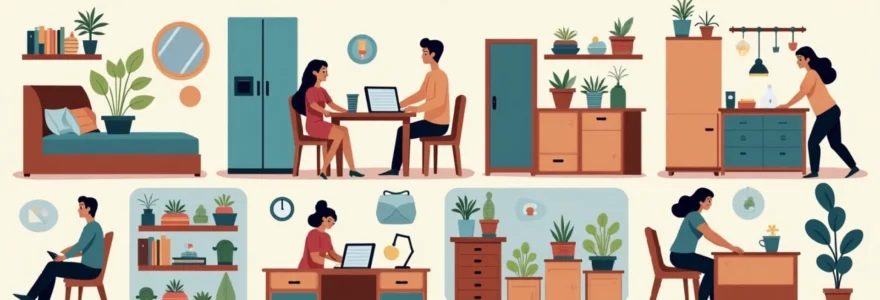
Living spaces continue to shrink while our belongings seem to multiply exponentially. Modern households face an increasingly complex challenge: how to maintain organised, functional homes without sacrificing style or comfort. The solution lies not in acquiring more space, but in maximising the potential of every square inch through innovative storage strategies . These creative approaches transform cluttered environments into streamlined sanctuaries where everything has its designated place, making daily routines smoother and more efficient.
Research indicates that the average home contains over 300,000 items, yet most people use only 20% of their belongings regularly. This stark reality highlights the importance of implementing strategic storage solutions that not only accommodate our possessions but also enhance accessibility and visual appeal. The key to successful home organisation lies in understanding that storage doesn’t have to be purely functional—it can be beautiful, innovative, and seamlessly integrated into your living space.
Multi-functional furniture systems for Space-Conscious living
The evolution of furniture design has responded brilliantly to contemporary space constraints by creating pieces that serve multiple purposes without compromising aesthetics. Multi-functional furniture represents the perfect marriage between form and function, offering storage solutions that blend seamlessly into your existing décor while maximising utility. These innovative pieces eliminate the need for separate storage units, freeing up valuable floor space and creating cleaner, more organised environments.
Ottoman storage solutions with hidden compartments
Ottoman storage units have revolutionised the concept of hidden storage, offering generous compartment space beneath upholstered surfaces that provide comfortable seating or footrests. These versatile pieces typically feature hydraulic hinges that allow easy access to internal storage areas measuring between 15-30 cubic feet, depending on the model. The beauty of ottoman storage lies in its ability to accommodate everything from seasonal blankets and cushions to children’s toys and office supplies, all while maintaining the appearance of elegant furniture.
Modern ottoman designs incorporate sophisticated mechanisms such as soft-close hinges and removable dividers, allowing for customised organisation based on your specific needs. Many feature waterproof linings, making them suitable for storing delicate items or documents. The external design options are virtually limitless, from leather finishes that complement traditional décor to contemporary fabric options that enhance modern living spaces.
Bed frame designs with integrated drawer systems
Platform beds with built-in storage drawers represent one of the most efficient uses of bedroom space, transforming the area beneath your mattress into a comprehensive storage system. These innovative bed frames typically incorporate 4-6 deep drawers that glide on commercial-grade tracks, providing access to approximately 40-60 cubic feet of storage space. This approach eliminates the need for additional dressers or wardrobes, creating more spacious bedroom environments.
Contemporary storage bed designs feature engineered wood construction with reinforced joints to support both mattress weight and stored items. Many models include specialised compartments for different item types, such as shallow drawers for clothing and deeper sections for bulky items like comforters or seasonal clothing. The integration is so seamless that these storage solutions remain virtually invisible, maintaining the bedroom’s aesthetic integrity while dramatically increasing organisational capacity.
Modular seating units with Built-In storage capacity
Modular seating systems have transformed living room organisation by incorporating storage directly into individual seat units, creating flexible arrangements that adapt to changing needs. Each module typically provides 8-12 cubic feet of internal storage, accessible through lift-top mechanisms or removable seat cushions. This configuration allows homeowners to create custom seating arrangements while maintaining consistent storage access throughout the living area.
The modular approach offers particular advantages for families, as individual units can be reconfigured to accommodate different activities or group sizes. Many systems include corner units with larger storage capacities and connecting hardware that ensures stability regardless of arrangement. The internal storage compartments often feature ventilation systems to prevent moisture buildup and protect stored items from environmental damage.
Coffee tables featuring Lift-Top storage mechanisms
Lift-top coffee tables have evolved from simple storage boxes to sophisticated furniture pieces featuring pneumatic lifting systems and multiple compartment configurations. These tables typically provide 15-25 cubic feet of storage space while maintaining full functionality as surface areas for drinks, books, or decorative items. The lift-top mechanism creates an elevated work surface perfect for laptop use or dining while watching television.
Advanced models incorporate dual-level storage systems with shallow compartments for frequently accessed items and deeper areas for bulky storage. Many feature soft-close mechanisms that prevent slamming and protect both the furniture and stored contents. The internal organisation often includes removable dividers and specialised sections for remote controls, magazines, and electronic accessories, keeping living room essentials organised and easily accessible.
Vertical space optimisation techniques for maximum storage efficiency
Vertical storage represents the most underutilised dimension in home organisation, offering exponential increases in storage capacity without requiring additional floor space. The strategic use of wall-mounted systems, overhead storage, and door-mounted solutions can dramatically transform storage potential while maintaining accessibility and visual appeal. These techniques are particularly valuable in smaller homes where every square foot counts, but they benefit any space by creating more organised, efficient environments.
Wall-mounted shelving systems with adjustable components
Contemporary wall-mounted shelving systems utilise modular designs that allow infinite customisation based on storage needs and room dimensions. These systems typically support 30-50 pounds per shelf while extending floor-to-ceiling, creating vertical storage columns that maximise wall space utilisation. The adjustable nature means shelving heights can accommodate items ranging from books and decorative objects to storage baskets and electronic equipment.
Professional-grade mounting systems ensure safety and stability, with track-based designs distributing weight evenly across multiple wall studs. Many systems incorporate integrated lighting options that illuminate stored items while adding ambient lighting to rooms. The aesthetic flexibility allows these systems to function as both storage solutions and decorative elements, displaying items attractively while maintaining organised functionality.
Over-door organisers for bathroom and pantry applications
Over-door storage systems transform the back surfaces of doors into functional storage areas without requiring permanent installation or wall modification. These organisers typically add 12-20 compartments of varying sizes, accommodating everything from toiletries and cleaning supplies to pantry items and office materials. The hook-style mounting system allows easy installation and removal, making them ideal for rental properties or frequently changing storage needs.
Specialised over-door systems feature clear pocket designs for pantry applications, allowing easy identification of stored items while maximising space efficiency. Bathroom versions often include towel bars and hooks alongside storage pockets, creating comprehensive organisation systems. The slim profiles ensure doors can close properly while providing substantial storage capacity that would otherwise require separate cabinet installations.
Ceiling-suspended storage solutions for seasonal items
Ceiling-mounted storage platforms utilise overhead space that typically remains completely unused, providing secure storage for seasonal items, holiday decorations, and infrequently accessed belongings. These systems typically support 200-400 pounds when properly installed across ceiling joists, creating substantial storage capacity approximately 4-8 feet above floor level. The elevated position keeps items safe from moisture and pests while freeing up valuable closet and basement space.
Modern ceiling storage systems incorporate pulley mechanisms that allow easy raising and lowering of storage platforms, eliminating the need for ladders during access. Many feature weatherproof construction suitable for garage installations, with lockable designs providing security for valuable items. The platforms often include integrated tie-down points and divider systems for organising different categories of stored materials.
Behind-door storage panels with customisable configurations
Behind-door storage panels maximise the hidden space between doors and walls, creating customised storage solutions that remain completely concealed when doors are closed. These panels typically measure 12-18 inches deep and can extend the full height of standard doors, providing 15-30 cubic feet of additional storage space. The narrow profile makes them ideal for storing flat items like cleaning supplies, craft materials, or office documents.
Installation systems vary from simple hook arrangements to sophisticated track-mounted panels that slide smoothly during door operation. Many panels feature adjustable shelving and hook systems that can be reconfigured as storage needs change. The concealed nature makes them perfect for maintaining clean aesthetic lines while providing substantial organisational capacity in areas like utility rooms, home offices, or children’s bedrooms.
Innovative container storage methods for household organisation
Container-based storage systems have evolved far beyond basic bins and boxes to encompass sophisticated organisational solutions that streamline household management. Modern container systems utilise stackable designs , transparent materials, and modular configurations that adapt to changing storage requirements while maintaining visual coherence throughout the home. These systems excel at creating designated spaces for specific item categories, reducing clutter and improving accessibility.
The key to successful container storage lies in selecting appropriate sizes and configurations for different applications. Research shows that households using systematic container storage reduce time spent searching for items by up to 40%, while maintaining higher levels of organisation consistency. The visual uniformity created by matching container systems also contributes to more attractive storage areas that can remain visible without detracting from room aesthetics.
Vacuum-sealed storage containers represent a revolutionary advancement in space-efficient storage, reducing the volume of stored items by 60-80% through air removal. These containers are particularly effective for seasonal clothing, linens, and bulky items that occupy disproportionate storage space. The airtight seals also protect contents from moisture, insects, and odours, making them ideal for long-term storage applications.
Modular container systems allow for infinite customisation, with individual units that stack, nest, or connect to create storage configurations tailored to specific spaces and requirements. Many systems incorporate labeling solutions and colour-coding options that facilitate easy identification and organisation maintenance. The standardised dimensions ensure efficient space utilisation while providing flexibility for future reconfiguration as storage needs evolve.
Professional organisers consistently recommend transparent containers for frequently accessed items, as visual identification reduces handling time and maintains organisation systems more effectively than opaque alternatives.
Under-utilised space conversion strategies for hidden storage
The most effective storage solutions often emerge from identifying and converting spaces that traditionally serve no functional purpose. These hidden storage opportunities exist throughout every home, waiting to be transformed into valuable organisational assets. The conversion of under-utilised spaces requires creative thinking and sometimes minor modifications, but the results dramatically increase storage capacity while maintaining clean, uncluttered living environments.
Under-stair storage cubby installation techniques
The triangular space beneath staircases represents one of the most significant missed storage opportunities in multi-level homes. This area typically provides 20-40 cubic feet of potential storage space that can accommodate everything from cleaning supplies and seasonal items to children’s toys and sporting equipment. Professional installation involves creating access points through removable panels or hinged doors while ensuring structural integrity remains uncompromised.
Modern under-stair conversions often incorporate pull-out drawer systems that maximise accessibility to deep storage areas. These installations typically feature soft-close mechanisms and full-extension slides that allow complete access to stored items. Lighting integration ensures visibility in these naturally dark spaces, while ventilation systems prevent moisture buildup that could damage stored belongings.
Beneath-bed rolling drawer systems
The space beneath standard bed frames provides an often-overlooked storage opportunity that can be activated through rolling drawer installations. These systems typically provide 15-25 cubic feet of storage space while maintaining easy access through smooth-rolling mechanisms. Unlike built-in bed storage, rolling drawer systems can be added to existing furniture, making them ideal for rental situations or temporary storage needs.
Professional-grade rolling systems utilise heavy-duty casters that support substantial weight while operating quietly during access. Many systems feature divided compartments for organising different item categories, with dust-proof covers that protect contents from accumulation. The low profile ensures compatibility with most bed frame heights while providing substantial storage capacity for items like seasonal clothing, shoes, or linens.
Cabinet Toe-Kick storage compartment integration
The toe-kick area beneath kitchen and bathroom cabinets represents valuable storage space that typically remains completely unused. This narrow area, usually 4 inches high and extending the full width of cabinet runs, can be converted into discrete storage for flat items like baking sheets, cutting boards, or cleaning supplies. The integration requires minimal modification to existing cabinetry while providing surprisingly substantial storage capacity.
Modern toe-kick storage systems incorporate spring-loaded mechanisms that allow easy access while maintaining flush appearances when closed. These systems often feature magnetic latches and soft-close operation that prevents slamming or accidental opening. The concealed nature makes them ideal for storing items that are frequently used but better kept out of sight, maintaining clean kitchen aesthetics while improving functionality.
Hollow furniture base storage implementation
Many furniture pieces feature hollow bases that can be converted into functional storage areas without compromising structural integrity or appearance. This technique is particularly effective with items like entertainment centres, dining room buffets, or bedroom dressers that often contain unused internal space. The conversion typically involves creating access panels and installing internal organisation systems that maximise the available volume.
Professional implementations often incorporate sliding tray systems that provide easy access to stored items while maintaining organisation. These installations frequently include divider systems and labeling solutions that facilitate efficient use of the converted space. The external appearance remains unchanged, preserving furniture aesthetics while dramatically increasing storage functionality.
Interior design experts estimate that the average home contains between 200-400 cubic feet of convertible under-utilised space, representing storage potential equivalent to several large closets.
Digital organisation tools for physical space management
The integration of digital tools with physical storage systems has revolutionised household organisation, providing unprecedented levels of inventory control and space optimisation. Modern applications and digital systems enable homeowners to track stored items, optimise space utilisation, and maintain organisation systems with minimal effort. These technological solutions bridge the gap between physical storage and digital efficiency, creating comprehensive organisation systems that adapt to changing needs.
Inventory management applications allow users to photograph and catalogue stored items, creating searchable databases that eliminate time wasted searching for specific belongings. Many applications incorporate barcode scanning capabilities and location tracking features that provide instant access to item information and storage locations. This digital approach is particularly valuable for seasonal items, archived documents, or collections that might otherwise become difficult to locate.
Smart storage systems increasingly incorporate sensor technology that monitors storage conditions and alerts users to potential issues like moisture accumulation or temperature fluctuations. These systems often connect to smartphone applications, providing remote monitoring capabilities and maintenance reminders. The integration of digital tools with physical storage creates more intelligent, responsive organisation systems that maintain themselves more effectively than traditional approaches.
Digital space planning tools enable users to visualise storage solutions before implementation, reducing costly mistakes and ensuring optimal space utilisation. Many applications feature augmented reality capabilities that overlay storage solutions onto existing spaces, allowing users to experiment with different configurations and arrangements. This technological approach to storage planning ensures more effective implementations while reducing the time and effort required for organisation projects.
Studies indicate that households using digital organisation tools maintain organised spaces 65% longer than those relying solely on traditional methods, while reducing time spent on maintenance activities by approximately 30%.
The integration of voice-controlled systems with storage management represents the cutting edge of organised living, allowing users to access inventory information and control storage systems through simple voice commands. These systems often integrate with existing smart home platforms, creating seamless organisation experiences that require minimal user intervention. The hands-free operation is particularly valuable when dealing with storage areas that might otherwise require interrupting activities to access information or make adjustments.