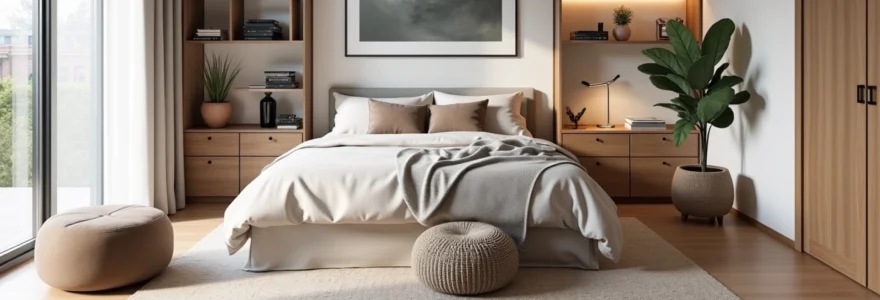
Living in a compact space doesn’t mean compromising on style or functionality. With the right approach, even the smallest homes can feel spacious, organised, and beautifully designed. Modern urban living has sparked a revolution in space-efficient design, with interior professionals developing innovative solutions that transform cramped quarters into havens of comfort and sophistication.
The key to successful small space living lies in understanding how to manipulate visual perception whilst maximising every square inch available. Through clever storage solutions, strategic colour choices, and multi-functional furniture, you can create an environment that feels significantly larger than its actual footprint. These techniques have become increasingly relevant as property prices continue to rise and more people embrace minimalist lifestyles.
Whether you’re working with a studio flat in central London, a compact cottage, or simply want to optimise a particular room, the principles remain consistent. Smart design decisions can dramatically alter how space feels and functions, creating homes that are both practical and visually appealing. The following strategies will help you unlock your home’s potential without requiring major structural changes or substantial investment.
Maximising vertical space through strategic storage solutions
When floor space is limited, the solution often lies in looking upward. Vertical storage represents one of the most underutilised opportunities in small homes, offering substantial capacity without encroaching on valuable living areas. This approach transforms walls from mere boundaries into functional storage systems that can accommodate everything from books and decorative items to clothing and household essentials.
The psychology of vertical storage extends beyond mere practicality. When storage solutions draw the eye upward, they create an illusion of height that makes rooms feel more spacious. This visual trick is particularly effective in rooms with standard ceiling heights, where every inch of perceived space matters. Professional designers frequently employ this technique to create dramatic focal points whilst solving storage challenges simultaneously.
Floor-to-ceiling shelving systems using IKEA billy and hemnes units
The Swedish furniture giant has revolutionised affordable storage with modular systems that can be customised to fit virtually any space. The Billy bookcase series, when stacked to ceiling height, creates impressive storage walls at a fraction of the cost of bespoke joinery. These units can be enhanced with additional shelves, doors, and lighting systems to create sophisticated storage solutions.
Hemnes units offer a more traditional aesthetic whilst maintaining the same practical benefits. The key to success with these systems lies in proper anchoring to walls and careful consideration of weight distribution. Adding crown moulding or painting units to match wall colours creates a built-in appearance that elevates the overall design.
Under-stair storage compartments with custom joinery techniques
The space beneath staircases represents prime real estate that’s often wasted or poorly utilised. Custom joinery solutions can transform this awkward area into highly functional storage that seamlessly integrates with the home’s design. Pull-out drawers, wine storage, or even a compact home office can be cleverly concealed within this space.
Modern techniques include installing sliding panels that provide access to deep storage areas, or creating a series of graduated compartments that follow the staircase’s natural slope. These solutions require careful planning and often professional installation, but the return on investment in terms of storage capacity and home value is substantial.
Wall-mounted floating shelves with concealed bracket systems
Floating shelves offer a minimalist approach to vertical storage that doesn’t overwhelm small spaces. The concealed bracket system ensures a clean, streamlined appearance whilst providing robust support for books, plants, and decorative objects. These shelves work particularly well in bathrooms, kitchens, and living areas where traditional bookcases might feel too bulky.
The installation technique involves routing channels into the back of shelves to accommodate hidden brackets, creating the illusion that shelves are magically suspended. This approach works best with solid wood shelves that can accommodate the routing without compromising structural integrity.
Overhead storage zones above doorways and windows
These often-forgotten areas represent valuable storage opportunities that don’t interfere with daily activities. Installing shelving or cabinets above doorways creates space for items used less frequently, whilst maintaining easy access when needed. The area above windows can accommodate decorative storage that doesn’t block natural light.
Success with overhead storage requires careful consideration of ceiling height and visual weight. Lighter colours and open shelving prevent these installations from feeling oppressive, whilst strategic lighting can highlight stored items as part of the room’s decorative scheme.
Optical illusion techniques using mirrors and reflective surfaces
Mirrors serve as one of interior design’s most powerful tools for spatial manipulation, capable of doubling apparent space whilst enhancing natural light distribution. The strategic placement of reflective surfaces can transform cramped areas into seemingly expansive rooms through careful consideration of sight lines and light sources. This technique has been employed by designers for centuries, yet many homeowners underestimate its transformative potential.
Beyond traditional wall-mounted mirrors, modern applications include mirrored furniture, reflective tiles, and even mirror film applied to existing surfaces. These solutions work by creating visual depth that confuses the eye’s perception of boundaries, making walls appear to recede and spaces feel more open. The key lies in understanding how different types of reflective surfaces interact with natural and artificial light sources throughout the day.
Strategic mirror placement opposite natural light sources
Positioning large mirrors directly opposite windows creates a dramatic doubling effect that maximises natural light distribution whilst creating the illusion of additional windows. This technique is particularly effective in narrow rooms or spaces with limited natural light, where the reflected light can significantly brighten the entire area.
The size and style of mirror should complement the room’s proportions and aesthetic. Floor-to-ceiling mirrors create maximum impact, whilst a series of smaller mirrors can be arranged to create interesting geometric patterns that serve both functional and decorative purposes.
Mirrored wardrobe doors and sliding panel systems
Bedroom storage presents unique challenges in small homes, where traditional hinged wardrobe doors can dominate floor space. Mirrored sliding doors eliminate the swing radius issue whilst creating the illusion of expanded space. These systems can be customised to include different mirror finishes, from clear reflection to antiqued or tinted options.
Modern sliding systems operate on smooth tracks that require minimal maintenance, and many include soft-close mechanisms for quiet operation. The mirrors can be segmented or installed as large panels, depending on the desired aesthetic and practical considerations such as safety and cleaning accessibility.
Reflective backsplashes in kitchens using subway tiles
Kitchen backsplashes offer excellent opportunities to incorporate reflective surfaces that enhance both light distribution and spatial perception. Glossy subway tiles provide classic styling whilst reflecting light from both natural sources and task lighting, making compact kitchens feel more open and bright.
Installation techniques focus on minimising grout lines and ensuring perfectly smooth surfaces that maximise reflective properties. LED strip lighting installed beneath upper cabinets creates beautiful reflections that highlight the backsplash whilst providing excellent task illumination for food preparation.
Large format mirrors creating false perspectives
Oversized mirrors can create dramatic perspective shifts that fundamentally alter how spaces are perceived. When positioned at the end of hallways or in dining areas, these mirrors can create the illusion of extended space that makes homes feel significantly larger than their actual dimensions.
The framing and mounting of large mirrors requires careful consideration of both aesthetics and safety. Heavy mirrors need robust wall anchoring systems, whilst the frame style should complement the room’s design without overwhelming the space. Frameless options often work best in contemporary settings, whilst ornate frames can add character to traditional interiors.
Multi-functional furniture integration for space efficiency
The evolution of furniture design has produced remarkable innovations that address the specific challenges of compact living. Multi-functional pieces serve dual or triple purposes, maximising utility whilst minimising footprint. This approach represents a fundamental shift from traditional furniture concepts, where each piece served a single function and required dedicated space allocation.
Modern multi-functional furniture combines sophisticated engineering with thoughtful design to create pieces that seamlessly transition between different uses. These solutions are particularly valuable in studio apartments or open-plan living areas where furniture must adapt to changing needs throughout the day. The investment in quality multi-functional pieces often proves more economical than purchasing multiple single-purpose items.
Ottoman storage benches with hidden compartments
Storage ottomans represent perfect examples of form meeting function, providing comfortable seating whilst concealing substantial storage capacity. These pieces work exceptionally well in living areas where they can serve as coffee tables, extra seating for guests, and storage for blankets, games, or seasonal items.
Modern designs include hydraulic hinges that allow easy access to storage compartments, whilst maintaining the structural integrity necessary for seating. Upholstery options range from durable fabrics to leather finishes that can withstand regular use whilst complementing existing décor schemes.
Extendable dining tables with butterfly leaf mechanisms
Dining spaces in small homes require careful planning to accommodate both daily meals and occasional entertaining. Butterfly leaf mechanisms allow compact tables to expand significantly when needed, then fold away to preserve floor space for daily activities. These systems represent sophisticated engineering that enables smooth operation whilst maintaining table stability.
The selection of extendable tables should consider both minimum and maximum sizes required, along with the frequency of extension use. Some mechanisms are designed for occasional use, whilst others can withstand regular expansion and contraction without compromising structural integrity.
Murphy bed systems with integrated desk solutions
Wall-mounted fold-down beds have evolved far beyond basic designs to include integrated desk systems that create complete home office solutions. When the bed is folded up, a functional workspace emerges, complete with shelving and task lighting. This transformation is particularly valuable in studio apartments where sleeping and working areas must share the same footprint.
Modern Murphy bed systems include spring-assisted mechanisms that make operation effortless, whilst safety features prevent accidental closure. The surrounding cabinetry can be customised to include additional storage and workspace accessories that enhance functionality.
Modular seating with Built-In storage compartments
Modular seating systems offer ultimate flexibility for small spaces, allowing configurations to be adjusted based on specific needs or occasions. Individual modules often include storage compartments that can accommodate everything from bedding to entertainment equipment, whilst maintaining comfortable seating dimensions.
The beauty of modular systems lies in their adaptability. Pieces can be reconfigured for entertaining, separated for individual use, or combined to create larger seating areas when space permits. Quality systems include durable connection mechanisms that ensure stability in various configurations whilst allowing easy reconfiguration.
Light colour palettes and paint techniques for spatial expansion
Colour psychology plays a fundamental role in spatial perception, with lighter hues reflecting more light and creating an inherent sense of openness. The strategic use of paint represents one of the most cost-effective methods for transforming small spaces, offering dramatic results with minimal investment. Professional colour consultants understand that successful small space palettes extend beyond simply choosing white, encompassing sophisticated approaches that create depth whilst maintaining brightness.
Contemporary approaches to colour in small spaces have evolved to include subtle variations within light palettes that create interest without overwhelming limited square footage. Techniques such as colour drenching , where walls, ceilings, and trim are painted in similar light tones, can make boundaries disappear and create a sense of infinite space. The key lies in understanding how different lighting conditions throughout the day will affect chosen colours and adjusting selections accordingly.
Texture plays an equally important role in light colour success. Matte finishes absorb light and can make colours appear darker, whilst satin or semi-gloss finishes reflect light and enhance the brightness of pale tones. The choice of paint finish should align with both aesthetic preferences and practical considerations such as cleanability and durability in high-traffic areas.
Accent walls in small spaces require careful consideration to avoid creating visual barriers that make rooms feel smaller. When executed properly, a single accent wall in a deeper tone can actually enhance the perception of space by creating depth, but the colour must be carefully selected to complement rather than contrast harshly with the surrounding palette. Warm neutrals often work better than stark whites in creating welcoming environments that still feel spacious.
The most successful small space colour schemes create a sense of flow between areas, using variations of light tones to define different zones without creating visual barriers that fragment the space.
Sliding door systems and Space-Saving hardware solutions
Traditional hinged doors require substantial clearance arcs that consume precious floor space in compact homes. Sliding door systems eliminate this spatial penalty whilst providing complete privacy and sound control when needed. These solutions have evolved from basic track systems to sophisticated hardware that operates silently and smoothly, suitable for both interior and exterior applications.
The variety of sliding door styles available today encompasses everything from minimalist glass panels to decorative barn doors that serve as architectural features. Soft-close mechanisms prevent slamming whilst magnetic or friction-based hold-open systems keep doors positioned where needed. The track systems can be ceiling-mounted to avoid floor obstructions or wall-mounted for easier installation.
Bi-fold doors offer another space-saving alternative that allows doors to fold back against walls rather than swinging into rooms. These systems work particularly well for closets, pantries, or room dividers where full access to openings is required. Modern bi-fold hardware includes bottom-guided tracks that prevent doors from swaying whilst maintaining smooth operation.
Pocket doors represent the ultimate space-saving solution, disappearing completely into wall cavities when open. Installation requires specific wall construction or modification, but the spatial benefits can be substantial in areas where every square foot matters. These systems work best in new construction or major renovations where wall framing can be modified to accommodate the door pocket.
The selection of door hardware should consider both functional requirements and aesthetic preferences. Minimalist track designs maintain clean lines that won’t overwhelm small spaces, whilst decorative hardware can serve as architectural features that enhance overall design schemes. Quality hardware ensures smooth operation and longevity, making the investment in premium systems worthwhile for frequently used applications.
Decluttering strategies using marie kondo and minimalist principles
Effective decluttering forms the foundation of successful small space living, creating the physical and mental clarity necessary for implementing other design strategies. The KonMari method, developed by organising consultant Marie Kondo, provides a systematic approach to evaluating possessions based on whether they “spark joy” rather than their perceived utility. This emotional approach often proves more effective than practical considerations alone in creating lasting organisational changes.
The minimalist movement offers complementary principles that focus on intentional living and the careful curation of possessions. Rather than simply reducing quantity, minimalism emphasises quality and purpose, encouraging investment in fewer, better items that serve multiple functions or bring significant value to daily life. This philosophy aligns perfectly with small space requirements where every item must justify its spatial footprint.
Digital decluttering has become increasingly important as technology allows many physical items to be replaced with electronic alternatives. Document scanning, digital music and book collections, and cloud-based photo storage can eliminate substantial physical storage requirements whilst maintaining access to important information and entertainment. The transition to digital alternatives requires initial time investment but provides long-term spatial benefits.
Storage system implementation should follow decluttering rather than preceding it. Many people attempt to organise their way out of clutter problems rather than addressing the root issue of owning too many items for their available space. Successful small space living requires honest assessment of actual needs versus perceived needs, followed by systematic removal of excess possessions.
The most effective decluttering approaches focus on creating systems that prevent re-accumulation rather than simply addressing current excess, ensuring long-term success in maintaining organised small spaces.
Seasonal rotation strategies allow small spaces to accommodate items needed at different times of year without maintaining year-round storage for everything. Off-season clothing, sports equipment, and holiday decorations can be stored in less accessible areas or off-site locations, freeing prime storage areas for items in current use. This approach requires planning and organisation but can effectively double available storage capacity.
The psychology of decluttering often proves more challenging than the physical process itself. Attachment to possessions can stem from emotional associations, fear of future need, or perceived financial investment. Addressing these psychological barriers through gradual processes and celebrating small victories helps build momentum for larger decluttering projects. Professional organising services can provide objective perspectives and accountability for those struggling with emotional attachment to possessions.