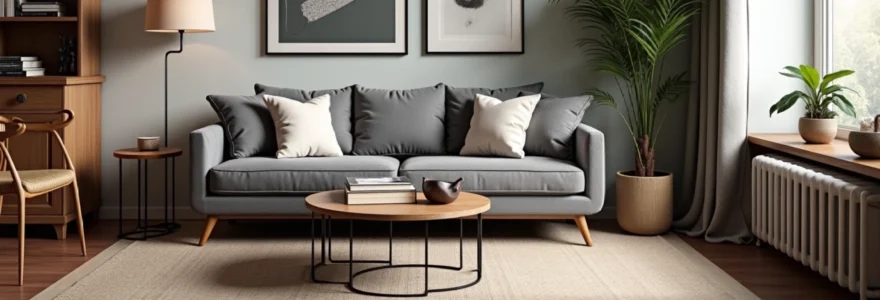
The sophisticated interplay between vintage charm and contemporary design has become the cornerstone of exceptional interior styling, creating spaces that resonate with both historical depth and modern functionality. This timeless approach transforms houses into homes that tell compelling stories, where carefully curated antique pieces dance harmoniously alongside sleek contemporary furnishings. The practice extends far beyond simple juxtaposition—it requires a nuanced understanding of design principles, colour theory, and spatial relationships to achieve that coveted balance between old-world character and cutting-edge aesthetics. When executed with precision, this mixing methodology produces interiors that feel both grounded in heritage and refreshingly current, avoiding the sterile perfection of showroom displays whilst maintaining sophisticated visual appeal.
Establishing visual hierarchy through scale and proportion principles
The foundation of successful vintage-modern integration lies in mastering the delicate balance of scale and proportion, where each piece occupies its rightful position within the visual hierarchy. Professional designers understand that scale relationships between furniture pieces can make or break the harmony of a mixed-era space. The key principle involves creating visual anchors through strategic placement of larger contemporary pieces, which then provide a stable backdrop for introducing characterful vintage elements.
Golden ratio applications in furniture arrangement and room layout
The golden ratio, approximately 1.618:1, serves as an invaluable tool when arranging mixed-era furniture collections. This mathematical principle appears naturally pleasing to the human eye and creates inherent balance within interior compositions. When positioning a vintage armoire against a contemporary sofa, the proportional relationship should echo this ratio—if your modern sectional measures 2.4 metres, complementary vintage pieces should ideally measure approximately 1.5 metres to maintain visual harmony. This principle extends to vertical relationships as well, where ceiling heights, artwork placement, and furniture heights work together to create proportional coherence .
Strategic placement of statement pieces: chesterfield sofas with acrylic coffee tables
The juxtaposition of a traditional Chesterfield sofa with a transparent acrylic coffee table exemplifies how contrasting materials and forms can create striking visual dialogue. The substantial presence of the leather-upholstered Chesterfield, with its distinctive button tufting and rolled arms, provides the necessary visual weight to anchor the seating arrangement. The acrylic table’s transparency allows the sofa’s form to remain unobstructed whilst introducing contemporary minimalism. This pairing demonstrates how material transparency can bridge temporal gaps, allowing both pieces to maintain their individual character whilst contributing to a cohesive whole.
Balancing ornate victorian mirrors with minimalist scandinavian lighting
Victorian mirrors, with their elaborate carved frames and substantial presence, require careful balance with contemporary lighting solutions. Scandinavian pendant lights, characterised by clean lines and functional beauty, provide the perfect counterpoint to ornate Victorian detailing. The positioning becomes crucial—hanging a simple geometric pendant light adjacent to an ornate gilded mirror creates tension that energises the space. The warm metallic tones of Victorian brass or gold leaf find harmony with the brushed copper or matte black finishes common in contemporary Scandinavian design, creating metallic continuity across different periods.
Asymmetrical composition techniques for Mixed-Era gallery wall displays
Gallery walls featuring both vintage and contemporary artwork require sophisticated compositional strategies to avoid visual chaos. Asymmetrical arrangements work particularly well when mixing periods, as they prevent the formal rigidity that symmetrical layouts can impose. Begin by establishing a central focal point using either a significant vintage piece or a large contemporary work, then build outward with smaller pieces that create visual balance through weight distribution rather than mirrored placement. Colour echoing becomes essential—selecting frames that share similar tones or finishes helps unify disparate pieces whilst maintaining their individual character.
Colour theory applications for cohesive Vintage-Modern integration
Colour serves as the invisible thread that weaves vintage and modern elements into a cohesive narrative, transcending temporal boundaries to create unified interior schemes. Professional colour strategies rely on understanding both the inherent patina of aged pieces and the pristine finishes of contemporary items. The challenge lies in creating harmony without sacrificing the distinct character that makes each era appealing. Successful colour integration requires considering not just surface colours, but also the undertones, saturation levels, and how different materials reflect and absorb light throughout various times of day.
Monochromatic schemes: pairing Mid-Century teak with contemporary charcoal textiles
Monochromatic colour schemes provide an elegant solution for bridging the gap between mid-century warmth and contemporary sophistication. The rich honey tones of authentic teak furniture find perfect companionship with charcoal grey textiles, creating depth through tonal variation rather than contrasting hues. This approach allows the natural beauty of aged wood grain to take centre stage whilst contemporary upholstery provides visual grounding. The key lies in selecting charcoal textiles with subtle warm undertones that echo the amber notes in aged teak, creating chromatic harmony that feels both intentional and effortless.
Complementary palette strategies using farrow & ball heritage colours
Heritage paint collections offer sophisticated colour solutions that naturally complement both vintage and contemporary pieces. Farrow & Ball’s complex colour formulations contain multiple pigments that create depth and richness, allowing them to work harmoniously with the patinated surfaces of antique furniture whilst providing appropriate backdrop for contemporary pieces. Colours like Estate Emulsion in Pavilion Gray or Modern Emulsion in Cornforth White possess the complexity to support mixed-era styling, offering neutral foundations that enhance rather than compete with furniture collections. These carefully formulated colours contain subtle undertones that shift throughout the day, creating dynamic colour relationships that keep spaces feeling alive and evolving.
Neutral base development with benjamin moore classic greys and warm whites
Establishing a sophisticated neutral foundation requires understanding the subtle differences between cool and warm undertones in grey and white paint selections. Benjamin Moore’s classic colours like Revere Pewter or Cloud White provide the complexity necessary for supporting mixed-era furniture collections. These colours avoid the stark coldness that can make vintage pieces feel out of place whilst maintaining the clean backdrop that contemporary pieces require. The secret lies in selecting colours with balanced undertones—neither too yellow nor too blue—that complement both the aged patina of vintage woods and metals and the pristine finishes of modern materials. This undertone harmony creates cohesion without sacrificing the individual character of each piece.
Accent colour implementation through vintage kilim rugs and modern ceramics
Accent colours introduced through textiles and decorative objects provide opportunities to create visual connections between vintage and contemporary elements. Vintage kilim rugs, with their complex colour palettes developed through natural dyes and traditional weaving techniques, offer rich inspiration for accent colour schemes. These colours can be echoed through contemporary ceramic vessels, throw pillows, or artwork, creating rhythmic colour repetition throughout the space. The aged, slightly muted tones of vintage textiles pair beautifully with the saturated colours of modern ceramics, creating colour dialogue that bridges temporal boundaries whilst maintaining visual interest.
Material and texture juxtaposition methodologies
The thoughtful contrast of materials and textures forms the tactile foundation of successful vintage-modern styling, creating spaces that engage multiple senses whilst maintaining visual coherence. Understanding how different materials age and interact becomes crucial when combining pieces from different eras. Vintage materials often carry the patina of time—softened woods, tarnished metals, and worn fabrics—whilst contemporary pieces typically feature pristine finishes and engineered perfection. The art lies in creating dialogue between these contrasting states, allowing each material to enhance the others through thoughtful juxtaposition.
Reclaimed wood integration with polished concrete and steel elements
Reclaimed wood brings warmth and historical narrative to contemporary industrial materials like polished concrete and steel. The weathered texture and varied grain patterns of aged timber create beautiful contrast against the smooth, uniform surfaces of modern materials. When incorporating reclaimed wood elements—whether as dining tables, shelving, or accent walls—consider the interplay between rough and smooth textures. The imperfections and character marks in reclaimed wood tell stories of previous use, whilst polished concrete and steel represent precision and contemporary craftsmanship. This textural dichotomy creates visual interest whilst grounding modern elements with organic warmth.
Layering natural fibres: jute, linen, and wool against synthetic surfaces
Natural fibre textiles provide essential textural contrast when working with contemporary synthetic surfaces like lacquered furniture or engineered stone countertops. The irregular weave of jute rugs, the relaxed drape of linen curtains, and the soft texture of wool throws introduce organic imperfection that balances the precision of modern manufacturing. These natural materials age gracefully, developing character over time that echoes the patina found in vintage pieces. The key lies in selecting natural fibres that complement rather than compete with existing vintage textiles, creating layered authenticity that feels both sophisticated and lived-in.
Metallic finish coordination: brass hardware with brushed stainless steel
Mixing metallic finishes requires understanding how different metals interact visually and how their surfaces reflect light differently. Aged brass hardware from vintage pieces carries warm, golden tones with natural patination, whilst contemporary brushed stainless steel offers cool, silver reflections with consistent surface texture. Rather than matching metals exactly, successful integration involves creating intentional contrast whilst maintaining tonal harmony. Introducing bridge metals—such as brushed brass or antique silver—helps create transition between distinctly different metallic families. This approach prevents the space from feeling disjointed whilst allowing each metallic element to maintain its temporal authenticity .
Patina development techniques for authentic age contrast
Understanding and preserving the natural patination of vintage pieces whilst introducing contemporary elements requires careful consideration of surface treatments. Authentic patina develops through decades of use, exposure, and natural oxidation processes that cannot be replicated convincingly through artificial aging techniques. When introducing contemporary pieces alongside heavily patinated vintage items, consider selecting finishes that will age gracefully over time rather than attempting to artificially match existing patination. Natural materials like solid wood, stone, and untreated metals will develop their own character marks, creating temporal layering that adds authenticity to mixed-era compositions.
Lighting design strategies for Period-Appropriate ambience
Lighting serves as both functional necessity and stylistic bridge in vintage-modern interiors, capable of dramatically altering the perception and mood of mixed-era spaces. The challenge lies in creating illumination schemes that honour the character of vintage pieces whilst meeting contemporary lighting standards for comfort and efficiency. Period-appropriate ambience doesn’t require strict historical accuracy, but rather thoughtful consideration of how different lighting sources interact with various materials, finishes, and spatial arrangements. Understanding the interplay between warm and cool light temperatures, direct and indirect illumination, and decorative versus functional fixtures becomes essential for creating cohesive lighting narratives.
Vintage furniture often benefits from warm, diffused lighting that enhances the natural patina and rich textures that develop over time. Traditional incandescent bulbs, or contemporary LED alternatives with warm colour temperatures around 2700K, complement the golden undertones found in aged woods and brass fixtures. Contemporary pieces, particularly those with sleek finishes and geometric forms, can handle cooler lighting temperatures and more direct illumination without losing their sophisticated appeal. The strategic layering of ambient, task, and accent lighting allows you to highlight the best features of both vintage and modern pieces whilst creating flexible illumination for different times of day and various activities.
Statement lighting fixtures provide excellent opportunities for creating focal points that bridge temporal boundaries. A vintage chandelier suspended above a contemporary dining table creates immediate visual dialogue between eras, whilst modern pendant lights flanking an antique console table establish balanced composition. The key lies in ensuring that lighting fixtures complement rather than compete with surrounding furniture pieces. Consider the scale relationships carefully—an oversized contemporary fixture can overwhelm delicate vintage furniture, whilst undersized vintage pieces may appear insignificant alongside substantial modern furniture. Proportional harmony in lighting selection contributes significantly to overall spatial balance.
Table and floor lamps offer versatile solutions for creating intimate lighting zones whilst showcasing individual pieces. Pairing vintage lamp bases with contemporary shades, or conversely, placing modern lamp designs on antique side tables, creates interesting textural and stylistic contrasts. These smaller-scale lighting elements allow for easy adjustment and seasonal changes, enabling you to refresh the vintage-modern balance without major spatial reorganisation. The warm pools of light created by table lamps help define conversational areas whilst highlighting the unique characteristics of nearby furniture pieces through strategic directional illumination .
Spatial flow optimisation through strategic furniture placement
Creating natural movement patterns through mixed-era spaces requires understanding how furniture placement affects both visual flow and physical navigation. Vintage pieces often feature different proportions and footprints compared to their contemporary counterparts, making strategic arrangement crucial for maintaining spatial harmony. The goal involves creating clear pathways whilst establishing intimate conversation areas that encourage interaction with both vintage and modern elements. Successful spatial flow considers not only the physical dimensions of furniture pieces but also their visual weight and how they direct attention throughout the room.
Anchor points created by substantial vintage pieces provide excellent starting positions for developing spatial arrangements. A large antique armoire or vintage dining table naturally becomes a focal point around which other elements can be arranged. These significant pieces often work best when positioned against solid walls or in corners where their substantial presence feels grounded and intentional. Contemporary furniture with lighter visual weight can then float within the space, creating dynamic relationships whilst maintaining clear circulation paths. This approach allows vintage gravitas to establish spatial hierarchy whilst contemporary pieces provide flexibility and movement.
Conversation groupings benefit from thoughtful mixing of seating options from different eras, creating varied heights, textures, and visual interest whilst maintaining functional comfort. A vintage Chesterfield sofa paired with contemporary accent chairs establishes clear social focal points whilst accommodating different seating preferences. The arrangement should encourage natural interaction whilst providing visual variety that keeps the space feeling dynamic. Consider how different seat heights and depths affect conversation dynamics—mixing higher vintage seating with lower contemporary pieces creates engaging visual rhythm whilst accommodating various users comfortably.
Traffic flow through vintage-modern spaces requires particular attention to clearance around pieces with different footprints and proportions. Vintage furniture often features more substantial dimensions and decorative elements that extend beyond basic silhouettes, requiring additional clearance space. Contemporary pieces, whilst potentially larger in overall scale, often feature streamlined profiles that require less surrounding space. Planning circulation paths that accommodate these differences whilst maintaining visual balance requires careful consideration of both physical navigation and aesthetic composition. The most successful arrangements create natural discovery moments where vintage and contemporary pieces can be appreciated individually whilst contributing to overall spatial harmony.
Textile and soft furnishing curation for temporal harmony
Textiles serve as the connective tissue in vintage-modern interiors, providing opportunities to introduce colour, pattern, and texture whilst bridging stylistic gaps between different eras. The careful curation of soft furnishings allows you to experiment with temporal mixing on a smaller scale, testing combinations and seasonal changes without major furniture investments. Understanding how different textile weights, weaves, and fibres interact becomes essential for creating cohesive schemes that feel both sophisticated and comfortable. The patination and softening that occurs naturally in vintage textiles provides beautiful contrast against the crispness of contemporary fabrics.
Vintage rugs offer exceptional opportunities for grounding mixed-era furniture arrangements whilst introducing complex colour palettes and traditional craftsmanship. Persian, kilim, and other handwoven rugs carry the subtle colour variations and natural irregularities that complement both aged and contemporary furniture pieces. These textiles often feature sophisticated colour combinations developed through traditional dyeing techniques that work harmoniously with both vintage wood tones and modern neutral palettes. The scale and placement of vintage rugs should consider both the furniture footprint and the desired visual impact—larger rugs can unify entire seating arrangements whilst smaller pieces create intimate zones within larger spaces.
Contemporary textiles introduce fresh colour and modern pattern sensibilities whilst providing practical benefits like stain resistance and easy maintenance. When selecting modern fabrics to complement vintage furniture, consider textures and weaves that echo traditional craftsmanship without attempting exact replication. Linen blends, wool bouclés, and cotton velvets bridge the gap between historical authenticity and contemporary performance. The key lies in selecting contemporary textiles with enough character and texture to hold their own alongside pieces with natural patination whilst maintaining the clean sophistication that modern pieces require.
Layering strategies for throw pillows, blankets, and window treatments create opportunities for seasonal updates whilst maintaining overall vintage-modern harmony. Mixing pillow covers in various scales and patterns—perhaps combining a vintage suzani with contemporary geometric prints—creates visual interest whilst allowing for easy updates. The layering approach works particularly well when maintaining a consistent colour palette whilst varying textures and scales. This methodology provides flexibility for adjusting the vintage-modern balance through accessible changes whilst maintaining the
foundational aesthetic continuity that prevents jarring transitions between vintage and contemporary elements.Window treatments provide substantial opportunities for integrating vintage and modern sensibilities whilst controlling light and privacy. Vintage-inspired fabrics with traditional patterns can be tailored into contemporary curtain styles, creating temporal fusion that feels both familiar and fresh. Conversely, contemporary fabrics in classic silhouettes honour traditional window treatment proportions whilst introducing modern colour palettes and performance features. The hardware selection becomes crucial—vintage curtain rods and finials paired with contemporary fabrics, or sleek modern hardware supporting traditional textiles, create interesting material dialogues that enhance the overall vintage-modern narrative.Seasonal textile rotation allows for dynamic adjustment of the vintage-modern balance whilst maintaining core furniture arrangements. Summer months might emphasise lighter contemporary linens and cottons that complement vintage furniture without overwhelming delicate patination, whilst winter seasons can introduce richer vintage textiles and heavier contemporary wools that create cosy sophistication. This approach acknowledges that successful vintage-modern styling evolves throughout the year, responding to changing light conditions and lifestyle needs whilst maintaining fundamental design principles.The curation process requires understanding how textiles age and develop character over time. Contemporary fabrics will gradually soften and develop subtle wear patterns that begin to echo the natural patination found in vintage pieces. Rather than viewing this aging as deterioration, embrace it as part of the temporal layering process that adds authenticity to mixed-era interiors. Quality contemporary textiles made from natural fibres will age gracefully, developing earned patination that contributes to the overall narrative of a space that honours both past and present design sensibilities.