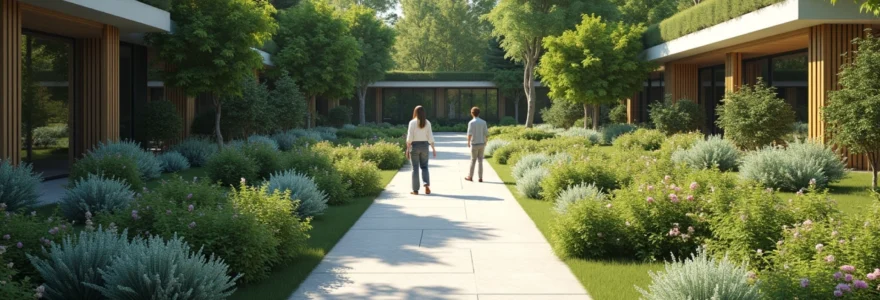
Creating a harmonious outdoor environment through strategic plant arrangement represents one of the most sophisticated aspects of contemporary landscape design. The delicate balance between form, function, and aesthetic appeal requires a deep understanding of both natural systems and design principles that have evolved over centuries of horticultural practice.
Modern landscape architects and garden designers recognise that successful plant composition extends far beyond simple aesthetic considerations. Today’s approach integrates ecological science with traditional design wisdom, creating outdoor spaces that not only captivate the eye but also support biodiversity, enhance microclimatic conditions, and provide sustainable solutions for environmental challenges.
The art of plant arrangement involves understanding complex relationships between species, spatial dynamics, seasonal variations, and human interaction patterns. Whether designing a small urban garden or a large estate landscape, the principles remain consistent: every plant placement decision should contribute to an overarching vision whilst respecting the natural characteristics and requirements of each species involved.
Fundamental principles of plant composition and spatial hierarchy
Professional landscape design relies heavily on established principles that govern visual perception and spatial relationships. These fundamental concepts form the foundation upon which all successful plant arrangements are built, ensuring that each element contributes to a cohesive and balanced whole.
Implementing the golden ratio in garden layout design
The golden ratio, approximately 1:1.618, appears frequently in nature and has been employed by designers for millennia to create visually pleasing compositions. When applied to garden design, this mathematical principle helps determine optimal spacing between focal points, the proportions of different planting areas, and the relationship between various garden zones. For instance, if you’re designing a herbaceous border that measures 10 metres in length, positioning the primary focal point at approximately 6.18 metres from one end creates a naturally balanced composition that feels inherently harmonious to observers.
Contemporary garden designers often utilise the golden ratio to establish the proportions between different plant groupings. A large specimen tree might occupy roughly 38% of a designated area, with supporting plantings filling the remaining 62%, creating a dynamic yet stable visual arrangement. This approach works particularly well when designing mixed borders where multiple layers of vegetation need to work together harmoniously.
Establishing visual weight through specimen tree placement
Specimen trees serve as the architectural backbone of any landscape design, providing vertical interest and establishing the fundamental structure around which all other plantings are organised. The concept of visual weight in tree placement involves considering not just the physical size of the tree, but also factors such as foliage density, colour intensity, and seasonal characteristics. A mature copper beech, for example, carries significantly more visual weight than a birch of similar height due to its dense, dark foliage and substantial trunk.
Strategic placement of specimen trees requires careful consideration of viewing angles and circulation patterns within the garden. Trees positioned to frame important views or create natural gathering spaces enhance the functional aspects of the landscape whilst contributing to its aesthetic appeal. The spacing between major specimens should follow natural rhythms rather than rigid geometric patterns, allowing each tree sufficient room to develop its characteristic form whilst contributing to the overall composition.
Creating depth perception with layered canopy structures
Successful landscape design creates the illusion of depth through careful manipulation of plant heights and canopy structures. This technique, borrowed from traditional landscape painting, involves establishing clear foreground, middle ground, and background elements within the planting scheme. Low-growing perennials and groundcovers occupy the foreground, medium-height shrubs and small trees form the middle ground, and tall specimen trees create the background framework.
The layering principle extends beyond simple height considerations to include textural contrasts and colour variations. Fine-textured grasses in the foreground might be backed by bold-leaved hostas in the middle ground, with the delicate foliage of birches providing a light backdrop. This approach creates visual complexity whilst maintaining clarity of composition, ensuring that each layer remains distinct whilst contributing to the overall harmony of the planting scheme.
Applying rule of thirds to mixed border arrangements
The rule of thirds, fundamental to photographic composition, proves equally valuable in garden design. This principle involves dividing any space into nine equal sections using two horizontal and two vertical lines, then placing important elements along these lines or at their intersections. When designing mixed borders, positioning key plants or features at these intersection points creates dynamic, engaging compositions that draw the eye naturally through the landscape.
This technique works particularly well when designing seasonal displays within herbaceous borders. Spring bulbs might be concentrated in the lower third of the border, summer perennials in the middle third, and autumn-flowering plants in the upper third, ensuring continuous interest whilst maintaining visual balance throughout the growing season. The rule of thirds also helps determine the proportional relationships between different plant groups, preventing any single element from dominating the composition.
Horticultural matrix theory for microclimate optimisation
Modern landscape design increasingly embraces scientific understanding of plant interactions and environmental relationships. The concept of horticultural matrix theory recognises that gardens function as complex ecosystems where every plant influences and is influenced by its neighbours through various biological and physical processes.
Transpiration rate management in dense planting schemes
Dense planting schemes, whilst visually appealing and ecologically beneficial, require careful management of transpiration rates to prevent water stress and maintain optimal growing conditions. Plants with high transpiration rates, such as large-leaved hostas or tree ferns, should be positioned where they can benefit from natural moisture retention or supplemental irrigation systems. Conversely, plants with lower water requirements can tolerate more exposed positions and help create microclimatic diversity within the garden.
Understanding transpiration patterns allows designers to create self-sustaining plant communities that require minimal external inputs. Grouping plants with similar water requirements reduces irrigation needs whilst ensuring that each species receives appropriate moisture levels. This approach proves particularly valuable in contemporary sustainable garden design, where water conservation and ecological resilience are primary considerations.
Root zone competition dynamics in polyculture systems
Successful polyculture systems require careful attention to below-ground interactions between different plant species. Root zone competition can significantly impact plant health and vigour, particularly in intensive planting schemes where space is limited. Shallow-rooted annuals can coexist successfully with deep-rooted perennials, whilst plants with similar root architectures may compete directly for nutrients and water resources.
Modern garden design incorporates understanding of allelopathic relationships, where certain plants release chemicals that inhibit the growth of competing species. Walnut trees, for example, produce juglone, which can suppress many other plant species within their root zone. Recognising these relationships enables designers to create compatible plant communities that enhance rather than compete with each other, resulting in healthier, more resilient landscapes.
Photosynthetic efficiency through canopy stratification
Maximising photosynthetic efficiency across different canopy layers requires understanding how light penetration varies throughout the garden structure. Sun-loving plants should occupy the upper canopy positions, whilst shade-tolerant species thrive in the understory. This vertical organisation not only optimises growing conditions for individual plants but also maximises the overall productivity and ecological value of the garden space.
Canopy stratification also influences air circulation patterns, temperature regulation, and humidity levels throughout the garden. Dense upper canopies create cooler, more humid conditions below, perfect for woodland understory plants, whilst more open arrangements allow greater air movement and maintain moderate moisture levels suitable for a broader range of species.
Allelopathic interactions in companion planting protocols
Companion planting extends beyond traditional vegetable garden practices to encompass sophisticated understanding of chemical interactions between ornamental plants. Some combinations prove mutually beneficial, with one species providing nutrients, pest deterrence, or growth stimulation for its neighbours. Marigolds, for instance, release compounds that suppress certain soil-borne pathogens, making them valuable companions for susceptible plant species.
Understanding allelopathic relationships enables the creation of plant communities that function as integrated ecosystems, where individual species support and enhance the overall health and resilience of the entire planting scheme.
Seasonal succession planning and phenological synchronisation
Creating gardens that maintain interest and beauty throughout the year requires careful orchestration of seasonal changes and plant development patterns. Phenological synchronisation involves timing the emergence, flowering, fruiting, and dormancy of different species to create continuous displays whilst avoiding periods of visual emptiness or overwhelming abundance.
Coordinating bloom sequences in herbaceous perennial borders
The art of succession planting in herbaceous borders demands precise timing and spatial planning to ensure continuous flowering displays from early spring through late autumn. Early spring bulbs such as crocuses and daffodils occupy spaces that will later be filled by emerging perennial foliage, creating efficient use of garden space whilst maintaining seasonal interest. As spring progresses, these early bloomers naturally fade as summer perennials begin their growing cycle.
Successful bloom sequence coordination requires understanding the flowering periods of different species and their growth habits. Plants with brief but spectacular flowering periods, such as peonies or irises, should be positioned near species with attractive foliage or later flowering times to maintain visual interest after their peak display period ends. This approach ensures that every area of the border contributes to the overall composition throughout the growing season.
Orchestrating autumn colour transitions in deciduous specimens
Autumn colour displays require advance planning to achieve the dramatic effects that make gardens memorable during the transitional seasons. Different tree and shrub species change colour at varying times and rates, allowing skilled designers to create extended autumn displays that evolve gradually rather than appearing and disappearing suddenly. Early autumn colour might begin with dogwoods and sumacs, progress through maples and oak species, and conclude with the golden displays of ginkgo and birch trees.
The intensity and duration of autumn colour depend not only on species selection but also on environmental conditions and cultural practices. Trees experiencing moderate water stress often produce more intense autumn colours, whilst excessive nitrogen fertilisation can delay colour development and reduce intensity. Understanding these relationships allows designers to influence and enhance autumn displays through appropriate cultural management.
Winter structure maintenance through evergreen framework design
Winter interest relies heavily on evergreen plants that maintain their visual presence throughout the dormant season. The framework of evergreen trees and shrubs provides structure and continuity when deciduous plants have lost their leaves, preventing the garden from appearing empty or undefined during the coldest months. Strategic placement of evergreens creates shelter for wildlife whilst maintaining visual anchors that define garden spaces year-round.
Evergreen selection should consider not only winter appearance but also how these plants integrate with seasonal displays throughout the year. Conifers with interesting bark textures, unusual growth habits, or colourful new growth contribute to spring and summer displays whilst providing essential winter structure. The proportion of evergreen to deciduous plants typically ranges from 30-40% in temperate climate gardens, ensuring adequate winter interest without overwhelming seasonal changes.
Spring emergence timing in bulb naturalisation projects
Naturalising bulbs requires understanding their emergence patterns and growth requirements to create displays that appear naturally evolved rather than artificially planted. Different bulb species emerge at varying times in spring, allowing for extended displays that begin with snowdrops and crocuses and progress through daffodils, tulips, and finally alliums and camassias. Proper spacing and depth placement ensure that naturalised bulbs can multiply and spread over time, creating increasingly impressive displays with minimal ongoing maintenance.
The success of bulb naturalisation projects depends largely on choosing species appropriate for the specific growing conditions and allowing them sufficient space to develop natural colonies. Bulbs planted too closely together may exhaust soil nutrients and decline over time, whilst those given adequate space and appropriate growing conditions will increase annually, creating the mature, established appearance that characterises the finest naturalised gardens.
Species-specific placement strategies for ecosystem integration
Modern landscape design increasingly emphasises ecological integration, recognising that gardens function most successfully when they work in harmony with natural processes and support local ecosystems. This approach requires detailed understanding of how different plant species interact with their environment and with each other, creating opportunities for wildlife whilst maintaining the aesthetic and functional requirements of designed landscapes.
Native plant integration forms a crucial component of ecosystem-focused garden design, but success requires more than simply choosing indigenous species. Understanding the natural habitat preferences and community associations of native plants enables designers to create authentic plant communities that support local wildlife whilst requiring minimal ongoing maintenance. Woodland edge species, for example, thrive in transitional areas between full sun and deep shade, making them ideal for naturalising around existing tree canopies or creating buffer zones between formal garden areas and wild spaces.
Wildlife corridors created through strategic plant placement can significantly enhance the ecological value of designed landscapes. Continuous plantings that provide food, shelter, and nesting opportunities for birds, butterflies, and beneficial insects create functional habitat networks that support biodiversity whilst contributing to garden beauty. Berry-producing shrubs positioned near shelter plantings provide food sources during critical periods, whilst native flowering plants supply nectar and pollen throughout the growing season.
Pollinator-friendly garden design has gained significant attention in recent years as awareness of declining pollinator populations has increased. Creating gardens that support bees, butterflies, and other pollinators requires understanding their specific needs throughout their life cycles. Different pollinator species are active at different times of the season, necessitating plant selections that provide continuous nectar and pollen sources from early spring through late autumn. Additionally, many pollinator species require specific host plants for reproduction, making native plant inclusion essential for supporting complete life cycles.
The most successful ecosystem integration occurs when designed landscapes function as extensions of natural systems, supporting wildlife whilst meeting human needs for beauty, recreation, and environmental benefits.
Professional installation techniques and maintenance protocols
The transition from design concept to thriving landscape requires professional installation techniques that ensure plant establishment success and long-term garden health. Proper soil preparation, plant handling, and installation timing significantly influence the ultimate success of any planting scheme, regardless of how well-designed the original concept might be.
Soil preparation represents the foundation of successful plant establishment, yet it is often overlooked or inadequately addressed in amateur installations. Professional techniques involve comprehensive soil testing to determine pH levels, nutrient content, drainage characteristics, and organic matter content. Based on these results, appropriate soil amendments can be incorporated to create optimal growing conditions for the intended plant community. Clay soils may require drainage improvements and organic matter incorporation, whilst sandy soils benefit from additions of compost or other organic materials that improve water retention and nutrient availability.
Plant installation timing varies significantly depending on species characteristics and local climate conditions. Cool-season plants generally establish more successfully when planted during autumn or early spring, whilst warm-season species may benefit from late spring or early summer installation when soil temperatures have warmed sufficiently. Understanding these preferences and timing installations accordingly significantly improves establishment success rates and reduces the need for supplemental care during the critical establishment period.
Proper planting techniques ensure that plants can develop healthy root systems and establish quickly in their new locations. Hole preparation should create openings approximately twice the width of the root ball but no deeper than the original growing depth. Root ball preparation may involve scoring or teasing roots that have become circled or girdled in containers, encouraging them to grow outward into the surrounding soil rather than continuing their circular growth pattern.
Post-installation care protocols must be established and maintained throughout the critical establishment period, typically lasting one to two years depending on plant size and species. Watering schedules should provide deep, infrequent irrigation that encourages deep root development whilst avoiding overwatering that can lead to root rot or other establishment problems. Mulching applications help retain soil moisture, moderate soil temperatures, and suppress weed competition, but must be applied properly to avoid creating conditions that favour pest or disease development.
Troubleshooting common balance disruptions in established landscapes
Even well-designed and properly installed landscapes can develop balance problems over time as plants mature, environmental conditions change, or maintenance practices prove inadequate for long-term garden health. Identifying and addressing these issues requires understanding the underlying causes and implementing appropriate corrective measures that restore balance without compromising the overall design integrity.
Overgrown plantings represent one of the most common balance disruptions in established landscapes. Plants that exceeded their expected mature size can overwhelm neighbouring specimens, block important views, or create maintenance challenges that compromise garden health. Addressing overgrowth requires careful evaluation of each plant’s contribution to the overall composition and its potential for successful pruning or relocation. Some species respond well to rejuvenation pruning that restores appropriate scale, whilst others may require complete removal and replacement with more suitable alternatives.
Seasonal imbalances often develop when certain plants perform differently than expected or when environmental changes alter their growth patterns. Climate variations, changes in surrounding vegetation, or alterations to drainage patterns can significantly affect plant performance and disrupt carefully planned seasonal displays. Successful correction involves identifying the underlying causes of performance changes and implementing appropriate modifications to restore intended seasonal progression.
Pest and disease pressures can rapidly alter the balance and appearance of established plantings, particularly when environmental stress weakens plant resistance or when new pests become established in the area. Integrated pest management approaches that combine cultural, biological, and chemical control methods when necessary can restore plant health whilst maintaining ecological balance within the garden ecosystem. Prevention through proper plant selection
and environmental compatibility remains the most effective long-term strategy for maintaining garden balance.
Soil degradation over time can fundamentally alter the growing conditions that supported the original plant selection, leading to declining performance and visual imbalance. Compaction from foot traffic, nutrient depletion from intensive plantings, or changes in soil chemistry from nearby construction activities can significantly impact plant health. Regular soil testing and appropriate amendment programmes help maintain optimal growing conditions, whilst strategic pathway design and plant protection measures prevent ongoing degradation. Understanding how different maintenance practices affect soil health enables garden managers to implement preventive measures rather than reactive treatments.
Competition dynamics between established plants can shift dramatically as specimens reach maturity, creating imbalances that weren’t apparent during the initial growing years. Aggressive spreaders may overwhelm more delicate neighbours, whilst some plants may decline due to increased shade or root competition from expanding tree canopies. Selective removal or strategic pruning can restore appropriate balance, but timing these interventions requires careful consideration of flowering periods, wildlife dependencies, and overall garden aesthetics. The goal is to maintain the intended character of the planting whilst accommodating natural growth patterns and succession processes.
Microclimate changes within established gardens often develop gradually, making them difficult to detect until significant plant stress becomes apparent. New buildings, mature tree growth, or changes to surrounding landscapes can alter wind patterns, moisture levels, and light availability throughout the garden. Plants that thrived in the original conditions may struggle as microclimates shift, requiring either environmental modification or plant replacement to restore garden balance. Monitoring these changes and adapting management strategies accordingly ensures continued garden success despite evolving conditions.
Successful long-term garden management requires understanding that landscapes are dynamic systems where change is inevitable, and the art lies in guiding that change to maintain beauty, function, and ecological integrity whilst allowing natural processes to continue.
Professional assessment techniques can help identify underlying causes of balance disruption before they become critical problems. Regular garden health evaluations should examine plant vigour, growth patterns, flowering performance, and signs of stress or disease. Environmental monitoring might include soil testing, drainage assessment, and microclimate documentation to track changes over time. Early intervention based on systematic assessment proves far more effective and economical than emergency responses to severe problems that have already compromised garden integrity.
When restoration becomes necessary, the most successful approaches work with natural systems rather than against them. Understanding plant succession patterns and ecological relationships enables garden managers to guide change in beneficial directions whilst maintaining design integrity. This might involve gradually transitioning from sun-loving pioneer species to shade-tolerant climax vegetation as tree canopies mature, or adapting planting schemes to accommodate changing drainage patterns caused by root growth or settling soil. The key lies in recognising these natural processes and channelling them to support rather than undermine the overall garden vision.