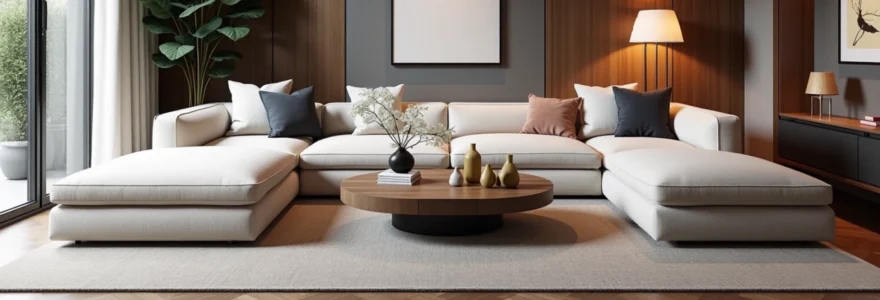
Contemporary interior design has witnessed a dramatic shift towards maximalist expressions, with oversized decorative elements becoming the cornerstone of sophisticated residential and commercial spaces. The strategic implementation of large-scale furniture, lighting fixtures, and artistic installations represents more than mere aesthetic choices—these elements fundamentally transform spatial perception and emotional experience within interior environments. Modern homeowners and designers increasingly recognise that bold, oversized pieces serve as powerful anchoring points that define room character whilst establishing visual hierarchies that guide occupant movement and attention.
The psychology behind oversized decor extends beyond traditional design principles, tapping into our inherent human response to scale and proportion. When executed thoughtfully, these statement pieces create immersive environments that challenge conventional spatial boundaries, making rooms feel simultaneously more intimate and expansive. This apparent contradiction lies at the heart of successful oversized decor implementation—the ability to manipulate perception through careful consideration of proportion, placement, and contextual relationship with surrounding architectural elements.
Strategic scale implementation in contemporary interior architecture
Understanding the fundamental principles of scale implementation requires a comprehensive approach that considers both mathematical precision and intuitive design sensibilities. The relationship between oversized elements and their surrounding environment operates on multiple levels, influencing everything from traffic flow patterns to psychological comfort zones within domestic and commercial spaces.
Proportion theory and the golden ratio in oversized furniture selection
The golden ratio, mathematically expressed as 1:1.618, provides an invaluable framework for determining appropriate scale relationships when incorporating oversized furniture pieces. This ancient proportion appears throughout nature and classical architecture, offering designers a scientifically-backed approach to achieving visual harmony. When selecting oversized seating arrangements, storage solutions, or decorative elements, the golden ratio helps establish pleasing proportional relationships that feel inherently balanced to the human eye.
Contemporary furniture manufacturers increasingly incorporate these proportional principles into their design processes, creating pieces that naturally complement standard ceiling heights and room dimensions. For instance, when positioning an oversized sectional sofa within a living space, the ideal relationship between sofa length and wall length often approximates the golden ratio, creating a sense of purposeful placement rather than overwhelming dominance.
Spatial dynamics and visual weight distribution principles
Visual weight distribution represents a critical consideration when implementing oversized decor elements, as these pieces inherently carry significant gravitational pull within interior compositions. Understanding how different materials, colours, and textures contribute to perceived weight allows designers to create balanced environments that feel stable and harmonious rather than lopsided or overwhelming.
Dense materials such as solid wood, natural stone, or metal fixtures carry substantial visual weight, requiring careful counterbalancing through lighter elements or strategic negative space allocation. Conversely, lighter materials like glass, acrylic, or pale fabrics can accommodate larger dimensions without creating overwhelming visual density. This principle becomes particularly important when incorporating multiple oversized elements within a single space, where cumulative visual weight can quickly exceed comfortable thresholds.
Anthropometric considerations for Large-Scale decorative elements
Human-centered design principles play a fundamental role in determining appropriate scale relationships for oversized decorative elements. Anthropometric data reveals that most individuals feel most comfortable when surrounding objects relate proportionally to average human dimensions, creating subconscious connections that enhance spatial comfort and usability.
Research indicates that oversized elements should maintain clear sight lines and circulation paths that accommodate standard human movement patterns. This consideration becomes particularly crucial when positioning large artwork, sculptural pieces, or furniture arrangements that might impede natural traffic flow or create visual barriers that fragment spatial continuity.
Architectural ceiling height requirements for statement pieces
Ceiling height directly influences the maximum scale potential for oversized decorative elements, with standard 2.4-meter ceilings requiring more strategic approach than expansive 3.5-meter or higher spaces. The relationship between vertical clearance and furniture height follows specific proportional guidelines that ensure comfortable spatial relationships whilst maximising visual impact.
Professional designers typically recommend maintaining minimum clearance ratios of 1:3 between furniture height and ceiling height for optimal visual balance. This guideline prevents oversized pieces from appearing cramped or oppressive whilst ensuring adequate breathing room that allows the eye to appreciate both the decorative element and its architectural context.
Statement lighting fixtures and Large-Scale illumination design
Lighting design represents one of the most transformative applications of oversized decor principles, with large-scale fixtures serving dual purposes as functional illumination sources and dramatic sculptural elements. The strategic implementation of statement lighting creates powerful focal points whilst addressing practical illumination requirements across diverse interior environments.
Chandelier proportions using the tom dixon beat series methodology
The Tom Dixon Beat series exemplifies sophisticated approaches to chandelier proportioning, demonstrating how mathematical precision can guide installation decisions for maximum visual and functional impact. This methodology emphasises the relationship between pendant cluster diameter and room dimensions, typically recommending chandelier diameters that equal approximately half the room’s width in feet, converted to inches.
Contemporary chandelier installations benefit from this proportional approach, which prevents both underwhelming scale choices and overwhelming dominance that can compromise spatial balance. The Beat series methodology also addresses height considerations, recommending minimum clearances of 2.1 metres above floor level for residential applications, with adjustments based on ceiling height and furniture placement beneath the fixture.
Pendant light clustering techniques from west elm collections
West Elm’s approach to pendant light clustering demonstrates effective strategies for creating visual impact through grouped installations rather than single oversized fixtures. This technique allows designers to achieve bold statements whilst maintaining flexibility for different ceiling heights and spatial configurations. Clustering typically involves odd-numbered groupings—three, five, or seven pendants—arranged at varying heights to create dynamic visual compositions.
The clustering methodology addresses practical considerations such as task lighting distribution whilst creating sculptural installations that serve as room centerpieces. Effective clustering requires careful attention to cord length variations, ensuring that individual pendants create cohesive compositions without appearing randomly placed or poorly coordinated.
Floor lamp integration with oversized artemide tolomeo systems
The Artemide Tolomeo system represents sophisticated engineering approaches to oversized floor lamp design, incorporating adjustable arm mechanisms that allow for dramatic scale whilst maintaining functional flexibility. These systems demonstrate how technical innovation can support bold design statements without compromising usability or spatial efficiency.
Integration of Tolomeo-style systems requires consideration of both extended and compressed configurations, ensuring adequate clearance for full articulation whilst preventing interference with circulation patterns or furniture placement. The substantial base requirements for these systems also necessitate careful floor planning to accommodate their footprint without creating obstacles or visual disruption.
LED strip applications for accent wall illumination
LED strip lighting applications offer innovative approaches to creating oversized lighting effects through continuous illumination rather than discrete fixture placement. These systems allow designers to create dramatic wall washes, cove lighting, or architectural highlighting that transforms entire surfaces into luminous features.
Modern LED strip installations incorporate sophisticated control systems that enable dynamic colour temperature adjustment, dimming capabilities, and programmable sequences that can transform the character of oversized illuminated surfaces throughout daily cycles. The linear nature of strip lighting particularly suits contemporary interior aesthetics whilst providing energy-efficient alternatives to traditional accent lighting approaches.
Sculptural furniture integration and scale harmonisation
Sculptural furniture represents the intersection of functional design and artistic expression, requiring sophisticated understanding of scale relationships to achieve successful integration within residential and commercial environments. These pieces often challenge conventional furniture categories, demanding innovative approaches to placement, proportion, and contextual relationship with surrounding elements.
Sectional sofa positioning using restoration hardware cloud series
The Restoration Hardware Cloud series exemplifies contemporary approaches to oversized seating design, featuring substantial dimensions that require strategic positioning to maximise both comfort and visual impact. These pieces typically measure 3-4 metres in length, necessitating careful room planning to ensure adequate circulation whilst creating inviting conversation areas.
Successful Cloud series positioning involves understanding the relationship between seating depth—often exceeding standard dimensions by 30-40%—and coffee table placement, ensuring comfortable reach distances whilst maintaining visual balance. The substantial cushioning and frame construction of these pieces also requires consideration of sight line impacts, particularly in open-plan environments where oversized seating might fragment spatial flow.
Dining table dimensioning with Live-Edge slab configurations
Live-edge slab dining tables represent powerful examples of oversized furniture that celebrates natural material characteristics whilst creating dramatic focal points within dining environments. These pieces often feature substantial thickness—typically 7.5-15 centimetres—and lengths that can exceed 4 metres, requiring specialised installation and support considerations.
The organic edges characteristic of live-edge slabs introduce irregular dimensions that challenge traditional rectangular room planning approaches. Successful integration requires understanding how these irregular boundaries interact with chair placement, lighting positioning, and circulation patterns to create functional dining environments that showcase the table’s natural beauty.
Storage solutions through modular shelving systems
Modular shelving systems offer versatile approaches to creating oversized storage solutions that can adapt to changing functional requirements whilst maintaining strong visual presence. These systems typically feature substantial depth and height dimensions that allow for both practical storage and decorative display opportunities.
Contemporary modular systems emphasise structural integrity whilst accommodating substantial loads, enabling the creation of floor-to-ceiling installations that serve as room dividers or architectural features. The modular nature of these systems allows for graduated scaling that can address different ceiling heights and spatial requirements whilst maintaining design coherence.
Ottoman and coffee table scale relationships
The relationship between ottomans and coffee tables in oversized furniture arrangements requires careful consideration of proportional harmony and functional accessibility. Traditional guidelines recommend coffee table lengths that equal approximately two-thirds of accompanying sofa length, but oversized arrangements often benefit from more substantial coffee table dimensions that can visually anchor enlarged seating areas.
Ottoman integration within oversized seating arrangements provides opportunities for creating flexible furniture groupings that can accommodate various social configurations whilst maintaining visual coherence. The ability to cluster multiple ottomans or incorporate oversized single pieces offers design flexibility that supports both formal and casual entertaining scenarios.
Artwork curation and gallery wall composition techniques
Oversized artwork represents one of the most accessible and impactful methods for creating bold interior statements, offering opportunities to introduce dramatic visual elements without permanent architectural modifications. The scale and placement of large-format art pieces can fundamentally transform spatial perception whilst reflecting personal aesthetic preferences and cultural interests.
Contemporary artwork curation increasingly embraces oversized formats that challenge traditional gallery proportions, with pieces measuring 2-3 metres in width or height becoming standard elements in residential and commercial environments. These substantial dimensions allow for immersive viewing experiences that engage viewers on emotional and intellectual levels whilst serving as powerful anchoring elements within broader interior compositions.
The placement of oversized artwork requires careful consideration of viewing distances and angles to ensure optimal appreciation whilst avoiding overwhelming effects that might dominate surrounding elements. Professional curators recommend viewing distances equal to approximately 1.5-2 times the diagonal measurement of the artwork, ensuring comfortable engagement whilst allowing viewers to appreciate both overall composition and detailed elements.
Successful oversized artwork integration depends more on proportional relationships and contextual harmony than absolute dimensions, allowing for dramatic visual impact whilst maintaining spatial balance and functional accessibility.
Gallery wall compositions incorporating oversized elements benefit from careful attention to visual weight distribution and colour harmony across multiple pieces. The substantial presence of large-format artwork can effectively anchor collections of smaller pieces whilst creating dynamic compositions that evolve as viewing perspectives change throughout the space.
Lighting considerations for oversized artwork become particularly critical, as inadequate illumination can diminish visual impact whilst excessive lighting might create glare or colour distortion. Professional installation often incorporates adjustable track lighting or wall-mounted fixtures that provide even illumination whilst accommodating artwork rotation or seasonal adjustments.
Textile applications and oversized soft furnishing integration
Textile applications in oversized decor extend beyond traditional upholstery and window treatments to encompass dramatic soft furnishing installations that can transform spatial character through texture, colour, and scale. Contemporary textile design increasingly incorporates substantial dimensions that allow for immersive material experiences whilst addressing practical considerations such as maintenance and durability.
Large-format textile installations benefit from careful material selection that considers both visual impact and practical performance characteristics. Natural fibres such as wool, linen, and cotton offer textural richness and environmental benefits, whilst synthetic alternatives provide enhanced durability and maintenance advantages for high-traffic applications or challenging environmental conditions.
The draping characteristics of oversized textiles require consideration of weight distribution and support systems to achieve desired visual effects whilst ensuring structural stability. Contemporary installation techniques often incorporate hidden support systems that allow textiles to appear effortlessly suspended whilst providing necessary structural integrity for long-term performance.
Oversized area rugs represent particularly effective applications of textile-based bold statements, offering opportunities to define spatial zones whilst introducing substantial colour and pattern elements. Modern rug design increasingly embraces larger dimensions—often 3×4 metres or larger—that allow for complete furniture grouping integration rather than traditional perimeter placement approaches.
The layering potential of oversized textiles enables sophisticated compositions that combine multiple materials and patterns whilst maintaining visual coherence. This approach allows designers to create complex textural landscapes that engage multiple senses whilst providing practical benefits such as acoustic dampening and thermal insulation. Custom sizing options for contemporary textile applications enable precise integration with specific spatial requirements whilst ensuring optimal visual and functional performance.
Colour psychology and visual anchoring through bold decor elements
Colour psychology plays a fundamental role in the successful implementation of oversized decor elements, as substantial scale amplifies colour impact and emotional response within interior environments. Understanding how different colour choices interact with large-scale applications enables designers to create environments that support desired emotional responses whilst maintaining visual harmony and psychological comfort.
Research in environmental psychology demonstrates that oversized colour applications can significantly influence mood, productivity, and social interaction patterns within interior spaces. Warm colours such as rich reds, deep oranges, and golden yellows tend to create intimate, energising environments when applied to large surfaces, whilst cool colours including blues, greens, and purples promote calm and contemplative atmospheres suitable for relaxation or concentrated work activities.
The concept of visual anchoring becomes particularly important when implementing bold colour choices in oversized applications, as these elements often serve as primary reference points that influence perception of all surrounding colours and materials. Successful colour anchoring requires understanding complementary and analogous colour relationships whilst considering how natural and artificial lighting conditions will affect colour perception throughout daily and seasonal cycles.
Bold colour applications in oversized decor elements create emotional resonance that extends beyond mere visual impact, influencing physiological responses and behavioural patterns within interior environments.
Contemporary colour trend analysis reveals increasing preference for sophisticated neutral palettes that incorporate subtle colour variations rather than dramatic contrasts, allowing oversized elements to create impact through texture and form rather than colour intensity. This approach enables greater flexibility for seasonal updates and personal preference evolution whilst maintaining timeless appeal that supports long-term investment in substantial decor pieces.
The interaction between colour temperature and oversized material applications requires careful consideration of how different surfaces reflect and absorb light wavelengths. Matte finishes tend to absorb light and create more intimate colour experiences, whilst glossy or metallic surfaces reflect light and can amplify colour intensity in ways that might overwhelm smaller spaces or sensitive occupants.
Pattern integration within oversized colour applications offers opportunities to create complex visual experiences that maintain interest over extended viewing periods whilst avoiding monotony that might result from large expanses of solid colour. Geometric patterns, organic motifs, and abstract compositions each offer different psychological associations and can be selected to support specific functional requirements or aesthetic preferences within particular interior environments.