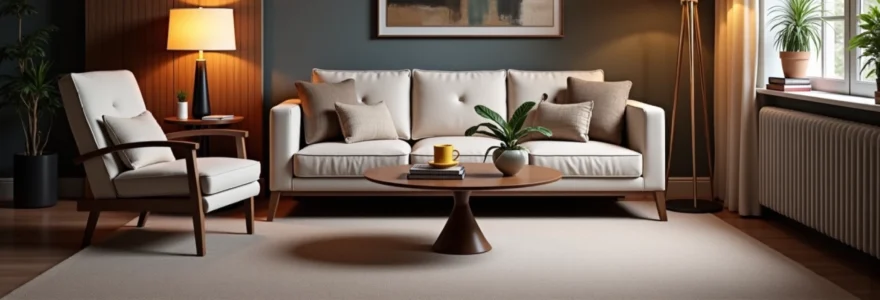
Designer lighting represents one of the most transformative elements in contemporary interior design, capable of completely reimagining how spaces feel, function, and flow. Beyond mere illumination, expertly chosen designer lamps serve as architectural elements that sculpt space through light and shadow, creating dramatic focal points whilst establishing the emotional tone of every room. The strategic implementation of premium lighting fixtures can instantly elevate modest interiors to sophisticated design statements, proving that thoughtful illumination choices often yield the most significant visual impact per pound invested. Modern homeowners increasingly recognise that lighting design functions as the invisible infrastructure supporting successful interior transformations, making the difference between spaces that merely exist and environments that truly inspire daily living.
Strategic lighting design principles for residential interior transformation
Successful residential lighting transformation begins with understanding fundamental design principles that govern how light interacts with architectural elements and human psychology. The most effective lighting schemes create visual hierarchy through carefully orchestrated brightness levels, directing attention toward key features whilst maintaining comfortable ambient conditions throughout the space. Professional designers typically allocate 60% of their lighting budget to ambient sources, 30% to task-specific fixtures, and 10% to accent elements, creating balanced illumination that serves both functional and aesthetic purposes.
Scale and proportion considerations prove crucial when selecting designer fixtures, as oversized statement pieces can overwhelm modest rooms whilst undersized fixtures disappear in expansive spaces. The general rule suggests that chandelier diameter in inches should equal room length plus width in feet, though contemporary design increasingly embraces bold scale contrasts for dramatic effect. Spatial flow becomes enhanced when lighting transitions smoothly between adjacent areas, using consistent colour temperatures and complementary fixture styles to maintain design cohesion throughout the home.
Layered illumination techniques: ambient, task, and accent lighting integration
Layered lighting represents the cornerstone of sophisticated interior illumination, combining three distinct categories to create depth, functionality, and visual interest. Ambient lighting provides overall room illumination through ceiling-mounted fixtures, recessed downlights, or large-scale pendants that wash walls and surfaces with gentle, diffused light. This foundational layer typically requires 20-50 lumens per square foot, depending on room function and ceiling height, establishing comfortable baseline visibility for daily activities.
Task lighting addresses specific functional requirements through focused illumination that prevents eye strain during detailed work. Kitchen under-cabinet LEDs, reading lamps beside seating areas, and vanity lighting in bathrooms exemplify effective task lighting applications. These fixtures typically produce 50-100 lumens per square foot in concentrated beams, positioned to eliminate shadows whilst avoiding glare that could compromise visual comfort during extended use.
Accent lighting creates visual drama through strategic highlighting of architectural features, artwork, or decorative elements. Track lighting, picture lights, and uplighting fixtures serve accent functions, typically operating at one-third the intensity of surrounding ambient light to create subtle contrast. This selective illumination guides the eye through spaces, establishing focal points that enhance room composition and create memorable visual experiences.
Colour temperature psychology: kelvin scale applications from 2700K to 6500K
Colour temperature selection profoundly influences spatial psychology and human circadian rhythms, making Kelvin scale understanding essential for effective lighting design. Warm light temperatures between 2700K and 3000K create cosy, intimate atmospheres ideal for bedrooms, living areas, and dining spaces where relaxation and social interaction take priority. These warmer tones enhance skin tones, wood finishes, and warm colour palettes whilst promoting evening wind-down routines that support healthy sleep patterns.
Neutral white temperatures ranging from 3500K to 4100K provide balanced illumination suitable for kitchens, bathrooms, and home offices where colour accuracy and visual clarity become important. This temperature range offers excellent colour rendering without the clinical feeling associated with cooler temperatures, making it versatile for spaces requiring both functionality and comfort. Task performance improves under neutral white conditions, as the brain interprets this lighting as energising without being harsh.
Cool white temperatures between 5000K and 6500K enhance focus and alertness, making them appropriate for detailed work areas, craft rooms, or study spaces. However, these temperatures can feel sterile in residential settings and should be used sparingly, primarily during daytime hours to avoid disrupting natural sleep cycles. Smart lighting systems increasingly allow temperature adjustment throughout the day, mimicking natural sunlight patterns for optimal human wellbeing.
Lumens-per-square-foot calculations for optimal room brightness ratios
Precise lumens calculations ensure adequate illumination whilst avoiding over-lighting that creates harsh, uncomfortable environments. Living rooms typically require 10-20 lumens per square foot for ambient lighting, with additional task lighting bringing total levels to 30-40 lumens per square foot in seating areas. Bedrooms function optimally with 10-20 lumens per square foot for general use, though bedside reading lights should provide concentrated 50-75 lumens per square foot for comfortable book illumination.
Kitchen lighting demands higher levels due to detailed food preparation tasks, requiring 50-100 lumens per square foot over work surfaces with 30-40 lumens per square foot for general room illumination. Bathroom vanity areas need 75-100 lumens per square foot for grooming tasks, whilst shower and bathing areas function well with 20-30 lumens per square foot. Dining areas benefit from flexible lighting levels, using dimmers to adjust from 20 lumens per square foot for intimate dining to 40-50 lumens per square foot for general activities.
Circadian rhythm lighting: biophilic design through dynamic light modulation
Circadian rhythm lighting represents an advanced approach to residential illumination that supports natural biological processes through dynamic light modulation. This biophilic design principle recognises that human physiology evolved in response to natural sunlight patterns, with cooler morning temperatures gradually warming throughout the day before cooling again toward evening. Modern LED technology enables this natural progression through programmable systems that automatically adjust colour temperature and intensity based on time of day.
Implementation typically begins with cool, bright light around 5000K-6500K during morning hours to promote alertness and energy, gradually shifting toward warmer 2700K-3000K temperatures as evening approaches. Research indicates that exposure to blue-rich light after sunset can disrupt melatonin production, making warm evening lighting essential for quality sleep. Smart lighting platforms now offer preset circadian programmes that eliminate guesswork whilst allowing customisation for individual preferences and schedules.
Premium designer lighting collections and signature piece selection
Premium designer lighting collections offer distinctive aesthetic vocabularies that can anchor entire interior design schemes, with signature pieces serving as sculptural focal points that define spatial character. Investment in quality designer fixtures typically yields decades of service whilst maintaining design relevance, making them cost-effective compared to frequent replacements of lesser pieces. The key lies in selecting fixtures that complement architectural style whilst expressing personal taste, creating cohesive design narratives that feel both intentional and authentic.
Signature piece selection requires balancing visual impact with functional requirements, ensuring that statement fixtures contribute meaningfully to overall illumination rather than serving purely decorative purposes. Consider room scale, ceiling height, and existing architectural elements when evaluating potential centrepiece fixtures, as the most successful selections enhance rather than compete with spatial qualities. Design longevity becomes crucial for investment pieces, favouring timeless aesthetics over trendy elements that may feel dated within a few years.
Scandinavian minimalism: FLOS, louis poulsen, and muuto statement fixtures
Scandinavian design philosophy emphasises functionality, simplicity, and natural materials, producing lighting fixtures that embody these principles through clean lines and understated elegance. FLOS represents Italian interpretation of minimalist ideals, offering iconic pieces like the Arco floor lamp and Parentesi track system that demonstrate how simple concepts can achieve maximum visual impact. These fixtures integrate seamlessly into contemporary interiors whilst providing flexible lighting solutions that adapt to changing needs.
Louis Poulsen epitomises Danish lighting heritage through fixtures like the PH series and Panthella collection, which combine scientific light distribution principles with sculptural beauty. The brand’s commitment to glare-free illumination makes their pieces particularly suitable for task-oriented applications whilst maintaining aesthetic appeal. Muuto’s contemporary interpretations of Scandinavian design sensibilities offer fresh perspectives on traditional concepts, incorporating sustainable materials and manufacturing processes that appeal to environmentally conscious consumers.
These brands excel at creating fixtures that function as furniture elements, with pendant lights, floor lamps, and table lamps that contribute to room composition even when not illuminated. The emphasis on natural materials like wood, metal, and glass ensures compatibility with biophilic design principles whilst providing tactile interest that engages multiple senses.
Italian craftsmanship: artemide, foscarini, and catellani & smith sculptural installations
Italian lighting manufacturers represent the pinnacle of design innovation and craftsmanship, creating fixtures that blur boundaries between functional lighting and contemporary art. Artemide’s collaboration with renowned designers has produced iconic pieces like the Tolomeo task lamp and Nur ceiling fixture, demonstrating how technical excellence can enhance aesthetic innovation. The brand’s focus on LED technology advancement ensures that classic designs remain relevant for modern energy efficiency requirements.
Foscarini specialises in glass artistry that transforms light into sculptural experiences, with pieces like the Spokes series and Big Bang pendant creating dramatic focal points through innovative material applications. These fixtures often feature hand-blown glass elements that ensure each piece possesses unique characteristics, making them true art objects that happen to provide illumination. Installation considerations become crucial for these statement pieces, as proper positioning and electrical planning determine whether they achieve their intended dramatic impact.
Catellani & Smith pushes creative boundaries through experimental materials and unconventional forms, producing fixtures that challenge traditional lighting categories. Their PostKrisi collection exemplifies this approach, using recycled materials to create environmentally conscious designs that maintain luxury aesthetics. These artistic installations require careful integration with surrounding design elements to avoid overwhelming spaces whilst maximising their visual contribution.
British contemporary designers: tom dixon, lee broom, and heatherwick studio innovations
British contemporary lighting design combines traditional craftsmanship with cutting-edge innovation, producing fixtures that reflect the nation’s design heritage whilst embracing modern technology. Tom Dixon’s material experimentation has yielded distinctive collections like Beat Light and Melt series, which demonstrate how industrial processes can create sophisticated residential fixtures. The brand’s emphasis on copper, brass, and glass treatments provides warmth that complements both traditional and contemporary interiors.
Lee Broom’s theatrical approach to lighting design creates fixtures that function as conversation pieces, with collections like Orion and Carousel offering sophisticated interpretations of classic forms. These pieces often incorporate unexpected materials or construction techniques that reveal themselves upon closer inspection, rewarding careful observation with delightful details. British design sensibilities particularly excel at combining functionality with whimsy, creating fixtures that perform reliably whilst bringing personality to residential spaces.
Heatherwick Studio’s architectural approach to lighting design produces fixtures that seem to emerge naturally from their environments, with pieces like Spun Light demonstrating how simple concepts can yield complex visual results. These designs often incorporate movement or interactive elements that engage users beyond simple on/off functionality, creating memorable experiences that enhance daily routines.
Mid-century modern revival: gubi, herman miller, and west elm iconic reproductions
Mid-century modern revival continues gaining momentum as homeowners rediscover the timeless appeal of 1950s and 1960s design principles, with contemporary manufacturers offering both authentic reproductions and inspired interpretations. Gubi’s careful curation of vintage designs ensures historical accuracy whilst incorporating modern manufacturing techniques and materials that improve durability and performance. Pieces like the Multi-Lite pendant and Bestlite collection demonstrate how mid-century principles remain relevant for contemporary living.
Herman Miller’s Nelson Bubble lamps and Noguchi Akari series represent authentic mid-century pieces that continue production today, offering direct connections to design history whilst meeting modern safety and efficiency standards. These fixtures integrate naturally into contemporary interiors, proving that good design transcends temporal boundaries. Investment value for authentic pieces continues appreciating, making them both functional acquisitions and collectible assets.
West Elm democratises mid-century aesthetics through accessible interpretations that capture essential design elements whilst remaining budget-friendly. Their pendant lights, floor lamps, and table lamps offer excellent entry points for homeowners interested in mid-century style without significant financial commitment. These reproductions allow experimentation with period aesthetics before committing to higher-value authentic pieces.
Room-specific lighting architecture and fixture positioning strategies
Room-specific lighting strategies acknowledge that different spaces serve distinct functions requiring tailored illumination approaches. Living rooms benefit from multiple light sources positioned at varying heights to create visual layers and eliminate harsh shadows, typically combining overhead ambient lighting with table lamps and floor fixtures for task and accent purposes. The triangulation principle suggests positioning three light sources at different elevations to achieve balanced illumination that feels natural and comfortable throughout the day.
Kitchen lighting architecture must accommodate both general navigation and detailed food preparation tasks, requiring careful coordination between ceiling fixtures, under-cabinet task lighting, and accent elements that highlight backsplashes or architectural features. Island pendants should hang 30-36 inches above work surfaces to provide adequate task illumination without obstructing sight lines, whilst recessed ceiling fixtures fill in ambient requirements with spacing calculated at half the mounting height to avoid dark spots.
Bedroom lighting serves dual purposes of providing adequate illumination for daily activities whilst supporting relaxation and sleep preparation. Bedside fixtures should position light sources slightly forward of the pillow line to prevent shadows when reading, with swing-arm wall sconces or adjustable table lamps offering optimal flexibility. Master bedroom suites benefit from layered approaches that include general overhead lighting, task lighting for reading and dressing areas, and accent lighting that highlights architectural or decorative features.
Bathroom lighting requires particular attention to colour rendering and shadow elimination, as these spaces serve critical grooming functions that demand accurate visual assessment. Vanity lighting should flank mirrors rather than mounting above to minimise facial shadows, with fixtures providing 75-100 lumens per square foot for detailed tasks. Shower and bathing areas need moisture-rated fixtures that maintain consistent illumination levels whilst ensuring safety in wet conditions.
Dining room lighting architecture centres around table illumination that creates intimate atmospheres for meals whilst providing adequate visibility for food service and conversation. Pendant fixtures or chandeliers should hang 30-34 inches above table surfaces in rooms with 8-foot ceilings, adding 3 inches for each additional foot of ceiling height. Dimming capabilities prove essential in dining areas, allowing adjustment from bright task lighting during meal preparation to intimate ambient levels during dinner service.
Effective lighting design recognises that each room tells a story through illumination, with fixture selection and positioning serving as the vocabulary that expresses spatial narratives and enhances daily experiences.
Advanced LED technology integration and smart lighting ecosystems
Advanced LED technology has revolutionised residential lighting by offering unprecedented control over colour temperature, brightness levels, and energy consumption whilst dramatically extending fixture lifespans. Modern LED chips achieve 80-90% efficiency compared to incandescent alternatives, converting electricity directly to light rather than heat, which reduces cooling loads and extends bulb life to 25,000-50,000 hours. This longevity makes LED integration particularly attractive for hard-to-reach fixtures where bulb replacement proves challenging or expensive.
Smart lighting ecosystems enable comprehensive home automation through interconnected fixtures that respond to schedules, sensors, and user preferences. These systems learn household patterns over time, automatically adjusting illumination based on occupancy, time of day, and ambient light conditions. Integration with security systems allows lighting to simulate occupancy during travel periods, whilst emergency modes provide automatic illumination during power outages or security events. Energy monitoring capabilities help homeowners track consumption patterns and identify opportunities for further efficiency improvements.
Philips hue, LIFX, and nanoleaf programmable lighting networks
Philips Hue represents the market-leading smart lighting platform, offering comprehensive fixture collections that integrate seamlessly through wireless protocols and intuitive mobile applications. The system supports up to 50 bulbs per bridge, with colour-changing capabilities across millions of hues and precise dimming control down to 1% brightness. Scene programming allows instant atmosphere changes, whilst geofencing automatically adjusts lighting based on arrival and departure patterns.
LIFX differentiates itself through Wi-Fi connectivity that eliminates hub requirements, making installation simpler whilst offering superior colour saturation and brightness levels compared to competitors. Their fixtures achieve 1100+ lumens output whilst maintaining full colour spectrum control, making them suitable for primary illumination rather than accent purposes only. Music synchronisation features create dynamic lighting displays that respond to audio input, transforming spaces into immersive entertainment environments.
Nanoleaf specialises in modular lighting panels that function as interactive wall art, offering triangular and hexagonal tiles that connect wirelessly to create custom configurations. These fixtures respond to touch, sound, and music whilst offering thousands of pre-programmed scenes and user-
generated designs. The platform’s Screen Mirror feature synchronises displays with computer screens or streaming content, creating immersive viewing experiences that extend entertainment beyond traditional boundaries.
Dimmer switch compatibility: leading-edge, trailing-edge, and universal controls
Dimmer switch compatibility requires understanding the electrical characteristics of different lamp technologies and matching appropriate control methods to ensure optimal performance and longevity. Leading-edge dimmers work by cutting power at the beginning of each electrical cycle, making them suitable for traditional incandescent and halogen bulbs whilst providing smooth, flicker-free dimming performance. These controls typically handle resistive loads effectively but may cause compatibility issues with electronic transformers used in low-voltage LED systems.
Trailing-edge dimmers cut power at the end of each electrical cycle, providing gentler electrical transitions that suit electronic loads like LED drivers and compact fluorescent ballasts. This technology reduces electrical stress on sensitive components whilst eliminating the buzzing or flickering often associated with incompatible dimmer-lamp combinations. Universal dimmers incorporate both leading and trailing-edge technologies with automatic load detection, adapting their operation to suit connected fixtures without manual configuration.
Modern smart dimmers offer additional features including preset scene storage, scheduling capabilities, and remote control through smartphone applications. These devices often include soft-start functions that gradually increase brightness levels to extend lamp life whilst providing aesthetically pleasing illumination transitions. Professional installation becomes recommended for complex dimming systems, as improper wiring can compromise both performance and safety whilst potentially voiding manufacturer warranties.
Energy efficiency standards: ENERGY STAR ratings and CRI index optimisation
ENERGY STAR certification provides reliable guidance for selecting efficient lighting products that meet strict performance criteria whilst delivering quality illumination for residential applications. Certified LED bulbs must demonstrate minimum efficacy levels of 80-90 lumens per watt depending on lamp type, significantly exceeding incandescent alternatives whilst maintaining consistent light output throughout their rated lifespan. These standards also require colour consistency within three-step MacAdam ellipses, ensuring that replacement bulbs match original installations without noticeable colour variations.
Colour Rendering Index (CRI) measurements indicate how accurately artificial light sources reproduce colours compared to natural sunlight, with values ranging from 0-100 where higher numbers indicate superior colour fidelity. Residential applications typically require CRI values above 80 for general lighting purposes, whilst task-oriented areas like kitchens and bathrooms benefit from CRI ratings exceeding 90 for optimal colour discrimination. R9 values specifically measure red colour rendering capabilities, with scores above 50 recommended for applications where skin tones and warm colours require accurate reproduction.
Energy efficiency calculations must consider total system performance including dimming losses, driver efficiency, and thermal management impacts on LED output over time. Premium fixtures often incorporate thermal management features like heat sinks and active cooling that maintain consistent performance whilst extending operational lifespans. Smart lighting systems can optimise energy consumption through daylight harvesting sensors and occupancy detection that automatically adjust output levels based on actual requirements rather than fixed schedules.
Voice control integration: alexa, google assistant, and homekit synchronisation
Voice control integration transforms lighting operation from manual switch manipulation to intuitive spoken commands that enhance convenience whilst supporting accessibility requirements for users with mobility limitations. Amazon Alexa compatibility enables natural language commands like “dim the living room lights to 30%” or “turn off all bedroom lights,” whilst supporting complex scene activation through custom phrase programming. The platform’s routine features can coordinate lighting changes with other smart home devices, creating comprehensive automation sequences triggered by single voice commands.
Google Assistant integration leverages advanced natural language processing to understand contextual lighting requests, interpreting commands like “make the dining room romantic” to activate appropriate scene settings automatically. The system learns user preferences over time, refining responses based on historical usage patterns whilst offering proactive suggestions for energy savings or security enhancements. Multi-room audio synchronisation allows coordinated lighting and sound control throughout the home, creating immersive entertainment experiences that respond to voice direction.
Apple HomeKit provides secure, encrypted communication between lighting systems and iOS devices whilst maintaining strict privacy standards that keep usage data local rather than cloud-based. The platform’s automation features enable sophisticated trigger sequences based on location, time, or sensor input, whilst Siri Shortcuts allow custom voice commands for complex lighting scenarios. Cross-platform compatibility through Matter protocol adoption ensures that lighting investments remain functional regardless of future smart home ecosystem changes.
Professional installation techniques and electrical safety protocols
Professional lighting installation requires comprehensive understanding of electrical codes, safety protocols, and proper mounting techniques that ensure both functional performance and long-term reliability. UK electrical regulations mandate Part P compliance for most lighting installations, requiring qualified electrician involvement for new circuits or significant modifications to existing wiring systems. Proper planning involves calculating electrical loads, selecting appropriate cable ratings, and ensuring adequate circuit protection through correctly sized breakers or fuses.
Ceiling fixture installation demands careful attention to structural support capabilities, particularly for heavy chandeliers or pendant clusters that exceed standard electrical box ratings. Reinforcement through ceiling joists or specialised mounting hardware becomes necessary for fixtures weighing more than 15-20 pounds, whilst proper grounding ensures electrical safety throughout the installation. Cable management requires neat routing that avoids sharp edges, excessive tension, or thermal stress from nearby heat sources that could compromise insulation integrity over time.
Safety protocols include power isolation at the consumer unit with proper lockout procedures, comprehensive testing using calibrated meters, and final inspection to verify compliance with building regulations. Modern installations increasingly incorporate surge protection and arc-fault detection devices that provide additional safety layers against electrical hazards. Professional certification provides insurance coverage and warranty protection that DIY installations cannot match, making qualified installation cost-effective for complex or high-value lighting systems.
Budget allocation frameworks and designer lighting investment returns
Strategic budget allocation for designer lighting requires balancing immediate aesthetic impact with long-term value retention, typically dedicating 8-15% of total interior design budgets to lighting elements including fixtures, controls, and professional installation. Investment-grade pieces from established manufacturers like FLOS, Artemide, or Louis Poulsen maintain resale value whilst providing decades of reliable service, making them cost-effective compared to frequent replacements of lesser alternatives. Phased implementation strategies allow homeowners to acquire key statement pieces immediately whilst completing ambient and task lighting systems over extended timeframes as budgets permit.
Return on investment calculations must consider both functional performance improvements and aesthetic enhancement contributions to overall property values. Quality lighting installations typically yield 70-100% return on investment through increased property appeal and market value, whilst energy-efficient LED systems provide ongoing operational savings that compound over their extended lifespans. Smart lighting systems offer additional returns through enhanced security capabilities, insurance premium reductions, and improved resale appeal to technology-conscious buyers.
Cost-effective strategies include mixing investment pieces with quality mid-range fixtures, focusing premium budgets on highly visible statement locations whilst using coordinated but less expensive alternatives for secondary areas. Professional consultation during planning phases can prevent costly mistakes and ensure optimal results, with design fees typically representing 10-15% of fixture costs whilst providing expertise that maximises aesthetic and functional outcomes. Long-term maintenance considerations favour quality manufacturers offering readily available replacement parts and comprehensive warranty coverage over cheaper alternatives with limited support infrastructure.