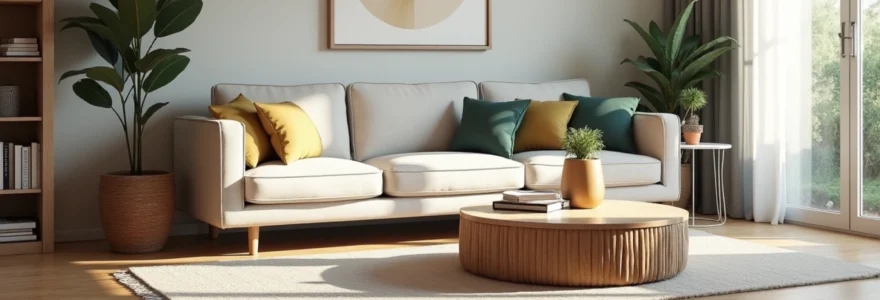
Transforming your living environment doesn’t require breaking the bank or embarking on extensive renovations. The art of home styling lies in understanding how strategic adjustments can dramatically alter the perception and atmosphere of any space. Professional interior designers have long relied on clever techniques that maximise visual impact while minimising financial investment, proving that luxury aesthetics are achievable regardless of budget constraints.
Today’s homeowners increasingly seek methods to refresh their interiors without the substantial costs associated with complete redesigns. The growing trend towards sustainable living and mindful consumption has sparked renewed interest in budget-friendly styling approaches that prioritise creativity over costly purchases. These techniques focus on manipulating existing elements, repositioning furniture, and introducing carefully selected accessories to achieve remarkable transformations.
The psychology of space design reveals that humans respond strongly to visual changes, even when modifications appear subtle. Understanding this principle enables anyone to create meaningful improvements through thoughtful application of design fundamentals. The key lies in recognising which elements have the greatest impact on spatial perception and learning to manipulate them effectively.
Strategic paint application techniques for maximum visual impact
Paint remains one of the most powerful and cost-effective tools in any decorator’s arsenal, offering infinite possibilities for spatial transformation. The strategic application of colour can alter perceived room dimensions, create focal points, and establish atmospheric moods that completely redefine living environments. Modern paint formulations provide exceptional coverage and durability, ensuring that even modest investments yield long-lasting results.
Accent wall creation using the 60-30-10 colour rule
The 60-30-10 colour rule provides a foolproof framework for creating balanced and visually appealing colour schemes. This principle allocates 60% of the space to a dominant neutral tone, 30% to a secondary colour, and 10% to an accent shade. When applied to accent wall creation, this rule ensures that bold colour choices enhance rather than overwhelm the space.
Selecting the appropriate wall for accent treatment requires careful consideration of room layout and natural light patterns. The wall that immediately draws attention upon entering typically serves as the ideal candidate for colour enhancement. This might be the wall behind a sofa, headboard, or fireplace, depending on the room’s primary function and furniture arrangement.
Feature wall enhancement with painter’s tape geometric patterns
Geometric patterns created with painter’s tape offer sophisticated visual interest without requiring artistic expertise or expensive materials. These designs can simulate expensive wallpaper effects or architectural details at a fraction of the cost. The key to successful pattern application lies in precise measurement and high-quality tape that prevents paint bleeding.
Popular geometric approaches include chevron patterns, horizontal stripes for ceiling height illusion, and diamond shapes for contemporary appeal. The scale of the pattern should complement the room’s proportions , with larger patterns working better in spacious areas and smaller designs suiting compact spaces. Metallic paint accents within geometric frameworks can add luxurious touches that rival high-end design schemes.
Crown moulding illusion through strategic paint placement
Creating the illusion of architectural details through paint application represents one of the most ingenious budget styling techniques. By painting a band of colour along the ceiling line, homeowners can simulate the presence of crown moulding without the expense and installation complexity of actual millwork. This technique proves particularly effective in rooms with standard ceiling heights that benefit from enhanced vertical definition.
The width of the painted band should typically range between 6-12 inches, depending on room proportions and desired impact level. Choosing a shade slightly darker or lighter than the wall colour creates subtle definition, while contrasting colours produce more dramatic effects. This approach works especially well in dining rooms and living areas where architectural sophistication is desired.
Ombré effect application for vertical space amplification
Ombré painting techniques create gradual colour transitions that can visually expand room height and add artistic sophistication to any space. This technique involves blending multiple tones of the same colour family from light to dark, creating depth and visual movement. The gradient effect draws the eye upward, making ceilings appear higher and rooms feel more spacious.
Successful ombré application requires working quickly with wet paint and using a large, soft brush or sponge for blending. Starting with the lightest tone at the top and progressing to darker shades below creates the most flattering effect for most room types. This technique works exceptionally well in bathrooms, bedrooms, and powder rooms where intimate atmospheres are desired.
Textile layering methodologies for atmospheric transformation
Textiles possess an extraordinary ability to alter room atmospheres through the introduction of colour, texture, and pattern. Professional designers understand that fabric elements serve multiple functions beyond mere decoration, influencing acoustics, temperature regulation, and psychological comfort levels. The strategic layering of textiles creates depth and visual interest while providing opportunities to introduce seasonal variations and personal style expressions.
Throw pillow clustering using the triangle composition principle
The triangle composition principle governs effective pillow arrangement on sofas and chairs, creating visually pleasing groupings that appear professionally styled. This technique involves positioning pillows in triangular formations, with varying heights and sizes contributing to dynamic visual flow. The principle applies whether using three pillows in a literal triangle or creating multiple triangular relationships across larger seating arrangements.
Colour coordination within pillow clusters should follow established design rules while allowing for creative expression. Mixing patterns requires careful attention to scale variation , combining large-scale designs with smaller prints and solid colours for balance. Texture mixing adds another dimension, with smooth fabrics complementing rougher weaves for tactile and visual interest.
Window treatment elevation through Ceiling-Mounted hardware installation
Mounting curtain hardware at ceiling level rather than just above window frames creates an immediate impression of increased room height and window size. This technique, employed by professional designers worldwide, maximises natural light penetration while creating more dramatic and luxurious window treatments. The visual impact far exceeds the minimal additional cost and effort required.
Curtain length should extend to the floor or even pool slightly for maximum effect. Full-width panels that extend beyond window frames on both sides create the illusion of larger windows and more expansive rooms. This approach works particularly well with lightweight fabrics that drape gracefully and allow maximum light transmission.
Area rug positioning for room proportion optimisation
Proper rug sizing and positioning can dramatically alter perceived room proportions and furniture relationships. The general rule suggests that rugs should be large enough to accommodate at least the front legs of all major furniture pieces, creating cohesive groupings and defined spaces within larger rooms. However, budget constraints often necessitate creative approaches to rug selection and placement.
Layering smaller rugs can achieve similar effects to single large rugs while providing flexibility and cost savings. Contrasting textures and complementary colours in layered arrangements add visual interest and allow for easy seasonal updates. This technique proves particularly effective in open-plan living areas where distinct zones require definition.
Curtain puddling technique for luxury aesthetic achievement
Curtain puddling involves allowing fabric to pool on the floor, creating an opulent appearance reminiscent of high-end hotel suites and luxury homes. This technique requires purchasing curtains that exceed the actual window-to-floor measurement by several inches, but the dramatic effect justifies the additional fabric cost. The pooled fabric adds weight and substance to window treatments while creating elegant visual anchors.
The degree of puddling should match the room’s formality level and traffic patterns. Minimal puddling suits casual spaces , while dramatic pooling enhances formal dining rooms and master bedrooms. Regular maintenance keeps puddled curtains looking intentional rather than neglected, requiring occasional adjustment and cleaning.
Lighting design manipulation for spatial perception enhancement
Lighting design fundamentally affects how spaces are perceived and experienced, influencing everything from apparent room size to emotional responses. Professional lighting designers understand that effective illumination requires multiple sources operating at different levels and serving various functions. The strategic manipulation of existing lighting fixtures, combined with carefully positioned accent lighting, can transform any space without requiring electrical modifications or substantial investments.
Natural light optimisation forms the foundation of effective lighting schemes, requiring attention to window treatments, mirror positioning, and obstacle removal. Maximising daylight penetration reduces dependence on artificial lighting while creating more vibrant and spacious environments. Strategic mirror placement can redirect natural light to darker corners, effectively doubling illumination levels in targeted areas.
Ambient lighting provides overall illumination and sets the room’s general mood, while task lighting focuses on specific activities and accent lighting highlights architectural features or decorative elements. The interplay between these three lighting types creates depth and visual interest, preventing the flat appearance that results from relying solely on overhead fixtures. Table lamps, floor lamps, and strategically placed candles can supplement existing lighting infrastructure without requiring professional installation.
Colour temperature selection significantly impacts room atmosphere, with warm white bulbs creating cosy, intimate environments and cooler tones producing more energetic, contemporary feelings. Dimmer switches offer flexibility in adjusting light levels throughout the day, accommodating different activities and moods. LED technology provides energy efficiency and longevity while offering extensive colour temperature options at affordable prices.
Professional designers often employ the “layer lighting” approach, using multiple light sources at different heights to create depth and eliminate harsh shadows that can make spaces appear smaller and less welcoming.
Furniture reconfiguration strategies using feng shui principles
Furniture arrangement profoundly affects room functionality, traffic flow, and psychological comfort levels. Feng shui principles provide time-tested frameworks for optimising furniture placement to enhance energy flow and create harmonious living environments. These ancient concepts align remarkably well with modern interior design principles, offering practical guidance for achieving balanced and welcoming spaces.
The commanding position principle suggests placing major furniture pieces where occupants can see the room’s entrance while feeling supported by solid walls or substantial furniture behind them. This positioning creates psychological security and comfort, making rooms feel more inviting and functional. Chairs and sofas benefit from this approach , particularly in living rooms and home offices where extended sitting occurs.
Traffic flow optimisation requires ensuring clear pathways between room entrances and key destinations, avoiding obstacles that force awkward navigation. The ideal arrangement allows smooth movement while maintaining intimate conversation groupings and functional work zones. Furniture angles can soften rigid room geometries, with diagonal positioning often creating more dynamic and interesting spatial relationships than parallel alignments.
Scale relationships between furniture pieces significantly impact room harmony and perceived proportions. Mixing furniture heights creates visual rhythm and prevents monotonous arrangements that can make rooms appear static. The 2/3 rule suggests that no single furniture piece should exceed two-thirds of the wall length it faces, ensuring balanced proportions and preventing overwhelming effects.
Creating conversation areas requires positioning seating within 8 feet of each other, with coffee tables or side tables providing convenient surfaces for drinks and personal items. Multiple seating groupings work well in larger rooms, offering flexibility for different activities and group sizes. The key lies in maintaining clear circulation paths while fostering intimate gathering spaces.
Ancient feng shui wisdom teaches that energy should flow through spaces like a gentle river, avoiding both stagnant pools and rushing torrents that can create discomfort and imbalance in living environments.
Wall art curation and gallery wall installation techniques
Wall art serves as the finishing touch that transforms houses into homes, expressing personal style while adding colour, texture, and visual interest to otherwise plain surfaces. The curation and installation of artwork requires understanding both aesthetic principles and practical considerations to achieve professional-quality results. Strategic art placement can alter perceived room proportions, create focal points, and establish atmospheric moods that enhance overall design schemes.
Picture hanging height calculation using the 57-inch gallery standard
The 57-inch rule represents the industry standard for picture hanging height, positioning artwork centres at 57 inches from the floor. This measurement accommodates average human eye levels while ensuring optimal viewing angles for most individuals. However, furniture relationships and ceiling heights may require adjustments to this baseline measurement for optimal results.
When hanging art above furniture, the general guideline suggests positioning pieces 6-8 inches above the furniture top, ensuring visual connection while preventing overwhelming effects. Large artwork may require slight adjustments to maintain proper proportional relationships with surrounding elements. Group arrangements should be treated as single units when applying the 57-inch rule, with the collection’s visual centre positioned at the standard height.
Asymmetrical balance creation in Multi-Piece arrangements
Asymmetrical balance creates more dynamic and interesting wall arrangements than perfectly symmetrical layouts, while still maintaining visual harmony. This approach requires careful attention to visual weight distribution, considering factors such as size, colour intensity, and subject matter complexity when positioning individual pieces. The goal is achieving equilibrium without rigid symmetry.
The triangle principle guides effective asymmetrical arrangements, with imaginary triangular shapes connecting artwork centres throughout the grouping. Varying triangle sizes and orientations creates rhythm and movement while preventing static appearances. This technique works particularly well with mixed media collections and varying frame sizes.
Frame mixing methodology for cohesive eclectic displays
Successfully mixing frame styles requires establishing unifying elements that prevent chaotic appearances while celebrating diversity. Common approaches include maintaining consistent colour families, similar materials, or coordinating finishes across different frame styles. The key lies in finding the right balance between variety and cohesion.
Matting provides another opportunity for creating unity within diverse frame collections. Consistent mat colours or widths can tie together disparate frame styles while allowing individual pieces to maintain their unique characteristics. White and cream mats offer universal compatibility, while coloured mats can coordinate with room colour schemes.
Negative space utilisation in minimalist art placement
Negative space, or the empty areas surrounding artwork, plays a crucial role in creating sophisticated and uncluttered wall displays. Understanding how to leverage negative space prevents overwhelming effects while allowing individual pieces to command appropriate attention. This principle proves particularly important in smaller rooms where wall space is limited.
The relationship between artwork and surrounding space should feel intentional rather than accidental. Generous spacing between pieces allows each work to breathe while creating opportunities for the eye to rest. This approach works especially well with bold or complex artwork that benefits from visual isolation.
Professional galleries understand that the space around artwork is just as important as the artwork itself, using negative space to control viewing experiences and emotional responses to displayed pieces.
Botanical integration and greenery styling for biophilic design enhancement
Botanical elements bring life, colour, and natural beauty into interior spaces while providing numerous psychological and physiological benefits. The integration of plants and greenery represents one of the most cost-effective methods for refreshing any environment, offering opportunities for seasonal variation and personal expression. Understanding proper plant selection, placement, and styling techniques ensures successful botanical integration that enhances rather than complicates room designs.
Plant selection should consider both aesthetic preferences and practical maintenance requirements, including light levels, humidity needs, and care complexity. Low-maintenance options like snake plants, pothos, and rubber trees provide maximum visual impact with minimal ongoing attention, making them ideal for busy households or inexperienced plant parents. Seasonal flowering plants can add temporary colour bursts, while evergreen varieties provide consistent year-round presence.
Container selection significantly impacts overall aesthetic success, with planters serving as important design elements in their own right. The interplay between plant characteristics and container styles creates opportunities for creative expression and style reinforcement. Natural materials like wood, clay, and stone complement botanical elements while maintaining organic feels, whereas metallic or ceramic containers can introduce contemporary or traditional elements as desired.
Grouping arrangements follow many of the same principles governing other decorative displays, with odd numbers typically creating more pleasing compositions than even groupings. Varying plant heights, textures, and container sizes within groupings prevents monotony while establishing visual rhythm. The triangle composition principle applies to plant arrangements just as effectively as artwork or accessory displays.
Vertical growing systems and hanging installations maximise botanical impact in limited spaces while creating dramatic focal points. Wall-mounted planters, hanging baskets, and plant stands allow for creative three-dimensional arrangements that add architectural interest. These approaches prove particularly valuable in small apartments or rooms where floor space is at a premium but wall space remains available for creative utilisation.