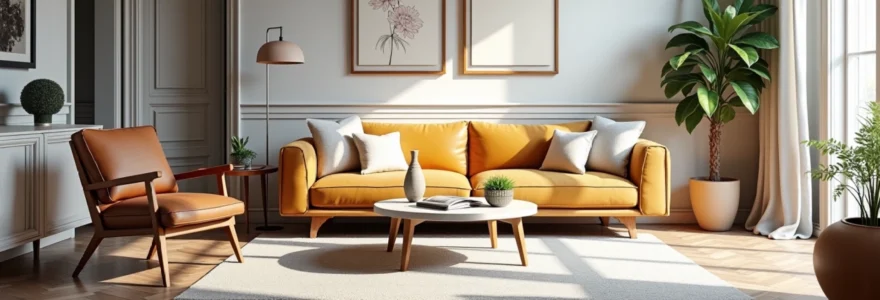
Creating a harmonious home with different decorating styles in each room presents one of interior design’s most exciting challenges. Many homeowners find themselves drawn to multiple aesthetics—perhaps loving the clean lines of Scandinavian design for their bedroom whilst craving the warmth of traditional English country style in their sitting room. Rather than settling for a single decorative approach throughout the house, it’s entirely possible to celebrate diverse styles whilst maintaining visual cohesion and flow. The key lies in understanding how transitional design elements, strategic colour coordination, and careful material selection can create seamless connections between contrasting spaces. When executed thoughtfully, this approach transforms your home into a curated collection that reflects your personality’s many facets whilst ensuring each room feels purposeful and connected to the whole.
Establishing visual cohesion through transitional design elements
The foundation of successfully harmonising different room styles rests on creating invisible threads that connect disparate spaces. These transitional elements serve as the visual glue that prevents your home from feeling like a furniture showroom where styles clash rather than complement. Professional interior designers understand that cohesion doesn’t require uniformity—instead, it demands strategic repetition of carefully chosen design elements that guide the eye naturally from one space to another.
Colour palette coordination using the 60-30-10 rule
The 60-30-10 colour rule provides an invaluable framework for maintaining visual harmony across rooms with different styles. This principle allocates 60% of your space to a dominant neutral colour, 30% to a secondary colour that adds personality, and 10% to a bold accent colour that creates visual interest. By maintaining consistency in your 60% neutral throughout the house—perhaps using variations of warm whites or soft greys—you create an underlying foundation that allows individual rooms to express different personalities through their secondary and accent colours.
Consider how a soft dove grey might serve as your dominant colour , appearing on walls in your minimalist bedroom, as upholstery in your traditional living room, and as cabinet paint in your industrial kitchen. The 30% secondary colour could shift from room to room—sage green in the bedroom, navy blue in the living room, and charcoal in the kitchen—whilst your 10% accent colour might remain consistent as brass hardware and lighting fixtures throughout.
Strategic placement of recurring materials and textures
Material repetition creates subtle visual connections that allow different decorating styles to coexist harmoniously. Natural materials like oak, marble, or linen possess the versatility to adapt to various design aesthetics whilst maintaining their inherent character. A live-edge oak dining table fits seamlessly into both rustic farmhouse and contemporary industrial settings, whilst Carrara marble can enhance everything from traditional Georgian to ultra-modern spaces.
The strategic placement of these materials requires careful consideration of proportions and finishes. Raw oak beams might dominate a country-style kitchen whilst appearing as sleek floating shelves in a modern study. Similarly, brass can manifest as ornate traditional hardware in one room and minimalist geometric lighting in another, creating continuity without compromising individual room personalities.
Architectural molding and trim consistency techniques
Consistent architectural details provide the most effective method for unifying diverse decorating styles throughout your home. Crown molding, baseboards, and door casings painted in the same colour create visual continuity regardless of wall colours or furniture styles. This approach allows you to paint different rooms in dramatically different hues whilst maintaining architectural coherence.
Professional designers often specify identical trim profiles throughout a home, varying only the paint colours to complement each room’s individual style requirements.
Consider implementing picture rails or wainscoting with consistent profiles but different paint treatments. Traditional rooms might feature classic white trim, whilst contemporary spaces could showcase the same molding profiles in dramatic charcoal or sophisticated black. This technique maintains architectural integrity whilst allowing each space to express its unique character.
Lighting temperature standardisation across spaces
Consistent lighting temperature throughout your home eliminates the jarring transitions that can occur when moving between spaces with different colour temperatures. Standardising on warm white LED bulbs (2700K-3000K) creates a cohesive ambiance that flatters both traditional and contemporary decorating styles. This consistency becomes particularly important in open-plan areas where multiple rooms flow together.
Layer different types of lighting—ambient, task, and accent—in each room whilst maintaining the same colour temperature. Your industrial kitchen might feature exposed bulb pendants, your traditional sitting room could showcase elegant table lamps, and your contemporary bedroom might include sleek recessed lighting, but all should emit the same warm, welcoming glow.
Maximalist to minimalist room integration strategies
Successfully integrating dramatically different design philosophies requires understanding how opposing styles can complement rather than compete with each other. The contrast between maximalist and minimalist approaches can create dynamic visual interest when properly balanced, with each style highlighting the other’s strengths. The key lies in creating breathing space between intense decorating moments and ensuring that transitions feel intentional rather than accidental.
Scandinavian-industrial fusion methodology
The marriage of Scandinavian hygge and industrial aesthetics creates compelling design opportunities through their shared emphasis on functionality and honest materials. Both styles celebrate natural textures, though Scandinavian design favours warm wood tones whilst industrial style embraces cool metals and raw concrete. Bridge these approaches by incorporating warm oak floors throughout your home, allowing them to ground industrial steel fixtures in one room and support traditional Scandinavian furniture in another.
Lighting becomes crucial in this fusion , as both styles rely heavily on atmospheric illumination. Industrial-style exposed bulb fixtures can work beautifully in Scandinavian-influenced spaces when balanced with soft textiles and natural materials. Similarly, the clean lines characteristic of Scandinavian furniture complement the geometric shapes favoured in industrial design, creating harmonious relationships between seemingly different aesthetics.
Victorian-contemporary juxtaposition techniques
The dramatic contrast between ornate Victorian details and sleek contemporary design creates opportunities for striking visual dialogue when handled skillfully. Victorian architecture provides elaborate moldings, high ceilings, and grand proportions that can actually enhance contemporary furniture by providing dramatic backdrops. The key lies in respecting the architectural bones whilst introducing contemporary elements that complement rather than compete with period details.
Consider preserving Victorian plasterwork and architectural details whilst introducing contemporary furniture with clean lines and modern materials. A sleek glass dining table can look stunning against ornate Victorian wallpaper, whilst contemporary art can provide fresh contrast against traditional paneling. The secret lies in maintaining proportional relationships that respect both the architectural scale and the furniture’s intended impact.
Mid-century modern with traditional english country balance
These seemingly opposite styles share surprising common ground in their appreciation for natural materials and comfortable proportions. Mid-century modern furniture often features the same warm wood tones celebrated in English country style, whilst both approaches prioritise comfort and livability over pure aesthetics. Create bridges between these styles by emphasising shared materials like oak, walnut, and natural fibres whilst varying their application and finish.
Traditional English country florals can coexist beautifully with mid-century geometric patterns when united by a consistent colour palette. Consider using traditional chintz fabrics in mid-century furniture silhouettes, or introduce mid-century lighting into rooms dominated by country-style furniture. The warm colour palettes favoured by both styles—rich burgundies, forest greens, and golden yellows—provide natural connection points.
Art deco and bohemian eclectic convergence
Art Deco’s geometric precision and bohemian style’s organic eclecticism might seem incompatible, but both celebrate bold colours, luxurious textures, and dramatic visual impact. The structured geometry of Art Deco can provide framework for bohemian collections, whilst bohemian textiles can soften Art Deco’s sometimes austere lines. Rich jewel tones common to both styles create natural harmony—emerald greens, sapphire blues, and deep purples work equally well in Art Deco geometric patterns and bohemian paisley prints.
The key to successful Art Deco-bohemian fusion lies in balancing structured and organic elements whilst maintaining consistent colour relationships throughout both styles.
Flooring transitions and material flow optimisation
Flooring decisions significantly impact how different decorating styles connect throughout your home, as floors provide the literal foundation upon which all other design elements rest. The challenge lies in selecting materials that complement multiple aesthetic approaches whilst creating smooth transitions between spaces. Successful flooring strategies consider both visual continuity and practical functionality, ensuring that material changes enhance rather than disrupt the overall design flow.
Wide-plank hardwood floors offer the most versatile foundation for mixed decorating styles, as natural wood complements everything from traditional to ultra-contemporary aesthetics. Oak, in particular, adapts beautifully to different design approaches through varied finishing techniques—light, natural finishes support Scandinavian and contemporary styles, whilst darker stains complement traditional and industrial aesthetics. When budget constraints require different flooring materials in different areas, focus on maintaining consistent undertones rather than identical materials.
Strategic use of area rugs can help bridge flooring transitions whilst defining individual room personalities. Large-scale rugs in neutral tones provide cohesive foundations that allow furniture and accessories to express different styles, whilst smaller accent rugs can introduce room-specific colours and patterns without overwhelming the overall scheme. Consider how a jute rug might ground both rustic country furniture and sleek modern pieces, providing textural interest that complements multiple decorating approaches.
Tile and stone selections require particular attention to scale and pattern when transitioning between different style zones. Large-format tiles with minimal grout lines support contemporary aesthetics whilst smaller, more detailed patterns complement traditional styles. Natural stone materials like limestone or travertine possess the versatility to enhance both formal and casual decorating approaches, depending on their finish and installation pattern.
Scale and proportion calibration for Multi-Style environments
Understanding scale relationships becomes critical when combining furniture and accessories from different decorating periods and styles. Each design movement developed its own proportional language—Victorian pieces tend toward grand scale and elaborate detail, whilst mid-century modern furniture celebrates sleek proportions and minimal ornamentation. Successfully mixing these approaches requires understanding how different scales can complement rather than compete with each other.
Furniture height ratio calculations between rooms
Maintaining consistent furniture heights throughout your home creates visual continuity even when styles vary dramatically. Standard dining table heights (76cm), coffee table heights (40-45cm), and seating heights (45-50cm) provide reference points that work across multiple decorating styles. When these proportional relationships remain consistent, you can mix ornate traditional pieces with sleek contemporary designs without creating visual confusion.
Consider how a traditional English oak dining table and contemporary acrylic chairs can coexist harmoniously when both respect standard proportional relationships. The contrast in materials and styles creates visual interest whilst the consistent height relationships maintain functional and aesthetic coherence. This principle extends to storage furniture, where bookcases, dressers, and cabinets benefit from consistent height relationships regardless of their stylistic differences.
Pattern scale graduation from bold to subtle spaces
Pattern mixing across different decorating styles requires careful attention to scale relationships and visual weight distribution. Large-scale patterns demand generous space and minimal competition, making them ideal for rooms with simpler decorating schemes. Conversely, small-scale patterns can layer successfully with other design elements, making them suitable for busier, more eclectic spaces.
Develop a pattern hierarchy that moves from bold statement patterns in focal areas to subtle supporting patterns in transitional spaces. A large-scale botanical print might dominate a traditional sitting room, whilst smaller geometric patterns could support a contemporary bedroom scheme. The key lies in ensuring that pattern scales complement rather than compete with each other when viewed from connecting spaces.
Ceiling height visual compensation techniques
Varying ceiling heights throughout your home provide opportunities to enhance different decorating styles whilst maintaining overall proportional harmony. High ceilings naturally complement grand traditional styles and dramatic contemporary designs, whilst standard height ceilings suit intimate decorating approaches. Strategic use of vertical elements can help balance these differences—tall bookcases, floor-to-ceiling curtains, and vertical artwork can visually raise lower ceilings whilst horizontal elements can help ground soaring spaces.
Consider how lighting choices can enhance or minimise ceiling height differences. Pendant lighting draws attention upward, making it ideal for rooms where you want to emphasise height, whilst table and floor lamps create intimate pools of light that make large spaces feel more approachable. The key lies in using these techniques consistently to support your overall design intentions rather than accidentally highlighting awkward proportional relationships.
Professional zoning techniques using sightlines and doorway framing
Strategic sightline management allows you to control how different decorating styles are revealed and experienced throughout your home. Professional designers understand that what you see from any given position significantly impacts your perception of space and style coherence. By carefully considering views between rooms, you can create dramatic reveals whilst maintaining overall design harmony.
Doorway framing provides natural opportunities to signal style transitions whilst maintaining visual connections between spaces. Consider how different door and trim treatments can telegraph style changes—a rustic barn door might signal entry into a farmhouse-style kitchen from a contemporary hallway, whilst sleek pocket doors could separate formal traditional spaces from casual modern areas. The key lies in making these transitions feel intentional rather than abrupt.
Furniture placement becomes crucial in managing sightlines between rooms with different decorating styles . Position key pieces to create focal points that draw attention whilst blocking or filtering views of potentially conflicting elements. A beautiful console table can serve as a visual buffer between contrasting spaces whilst providing display opportunities that support both decorating schemes.
Strategic placement of mirrors can multiply successful design moments whilst reflecting light and creating the illusion of larger, more connected spaces.
Consider how colour placement affects sightlines between rooms. Bold colours naturally draw attention and should be positioned where they enhance rather than distract from your overall design flow. A dramatic accent wall might provide a stunning backdrop for a traditional dining room whilst remaining partially visible from an adjacent contemporary kitchen, creating visual interest without overwhelming either space.
Advanced accessory curation for Cross-Style harmonisation
Accessories provide the final layer of design integration, offering opportunities to create subtle connections between rooms whilst allowing individual spaces to maintain their distinct personalities. The strategic selection and placement of artwork, plants, books, and decorative objects can reinforce colour relationships, introduce textural variety, and create visual pathways that guide the eye through different decorating styles.
Develop an accessory strategy that includes repeating elements in different scales and contexts throughout your home. A collection of blue and white ceramics might appear as formal vases in a traditional living room, casual bowls in a contemporary kitchen, and geometric planters in a modern study. This repetition creates visual threads that connect different spaces whilst respecting their individual style requirements.
Books and plants offer particularly versatile cross-style accessories , as they complement virtually any decorating approach whilst introducing natural colours and textures. Consider how leather-bound classics might enhance both traditional and industrial settings, whilst contemporary coffee table books could bridge modern and eclectic styles. Plants provide living colour that adapts to seasonal changes whilst introducing organic shapes that soften harder decorating approaches.
Lighting accessories—table lamps, floor lamps, and decorative fixtures—provide excellent opportunities for style bridging whilst serving practical functions. A brass table lamp might complement both traditional and contemporary settings depending on its shade and proportions, whilst industrial-style pendant lights can enhance both modern and rustic decorating schemes. The key lies in selecting pieces that share materials or proportional relationships with elements in multiple rooms, creating subtle connections that enhance overall design cohesion without compromising individual room personalities.