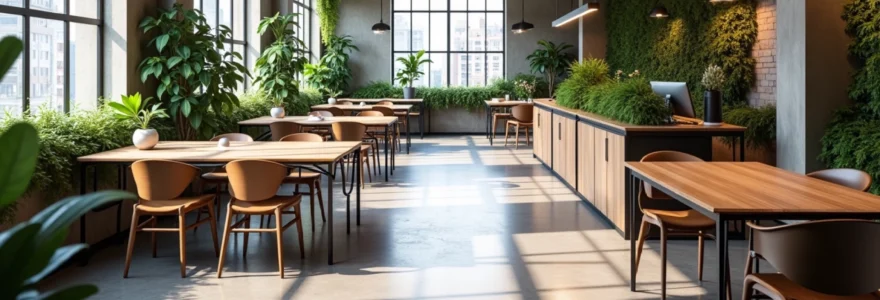
The industrial office aesthetic has evolved beyond mere exposed brick walls and vintage lighting fixtures. Today’s industrial workspace design represents a sophisticated blend of raw architectural elements and cutting-edge functionality that can significantly enhance both creativity and productivity. This design philosophy embraces the beauty of unfinished surfaces whilst integrating modern amenities and ergonomic considerations that support optimal work performance.
Research indicates that employees working in well-designed industrial spaces demonstrate up to 25% higher productivity rates compared to traditional corporate environments. The combination of high ceilings, abundant natural light, and flexible layouts creates an atmosphere that stimulates innovative thinking whilst providing the practical infrastructure necessary for modern business operations. Understanding how to balance these industrial elements with contemporary workplace requirements becomes crucial for organisations seeking to optimise their office environments.
Industrial design fundamentals for creative workspace architecture
The foundation of successful industrial office design lies in understanding how raw architectural elements can enhance rather than hinder workplace functionality. Unlike conventional office spaces that often feel sterile and disconnected from their structural origins, industrial workspaces celebrate the building’s inherent character whilst adapting it for modern professional use. This approach creates environments that feel authentic and inspiring, qualities that research shows can boost employee engagement by up to 30%.
Exposed structural elements and raw material integration
Exposed structural elements serve as the backbone of industrial office design, providing visual interest whilst maintaining cost-effectiveness. Steel beams, concrete columns, and visible ductwork create a sense of honesty in the space that many employees find refreshing compared to concealed ceiling systems. When properly integrated, these elements can improve acoustics by breaking up large flat surfaces that would otherwise create echo problems in open-plan environments.
The key to successful structural exposure lies in selective revelation rather than complete abandonment of finished surfaces. Strategic placement of exposed elements can define different zones within the workspace whilst maintaining visual continuity throughout the office. Industrial design principles suggest that roughly 60-70% of structural elements should remain visible to achieve the desired aesthetic without overwhelming the space or compromising functionality.
Open-plan layout optimisation with strategic zoning
Industrial spaces naturally lend themselves to open-plan configurations, but effective zoning becomes essential to prevent the common pitfalls of noise pollution and lack of privacy. Research from Harvard Business School indicates that poorly planned open offices can reduce productivity by up to 15%, making strategic spatial planning crucial for industrial workspace success. The challenge lies in maintaining the expansive feel of industrial architecture whilst creating defined areas for different types of work.
Successful zoning in industrial offices often utilises a combination of physical and visual barriers that complement the space’s raw aesthetic. Low-height industrial shelving units, moveable glass partitions, and strategically placed furniture groupings can define collaboration zones, focused work areas, and informal meeting spaces without disrupting sight lines or natural light flow. This approach maintains the open feel whilst providing necessary functional separation.
High ceiling utilisation and vertical space management
The generous ceiling heights typical of industrial buildings present unique opportunities for creative space utilisation. Vertical space can accommodate mezzanine levels for additional workspace, dramatic lighting installations, and improved ventilation systems. Studies show that ceiling heights above 3 metres can enhance creative thinking by up to 10%, making proper utilisation of this vertical real estate particularly valuable for innovation-focused organisations.
Effective vertical space management also involves considerations for storage, technology infrastructure, and acoustic treatment. Overhead cable management systems, suspended storage solutions, and elevated meeting pods can maximise floor space efficiency whilst taking advantage of the abundant vertical volume. The key lies in maintaining proportional relationships between floor area and ceiling height to prevent the space from feeling overwhelming or cavernous.
Polished concrete flooring and industrial surface treatments
Flooring selection significantly impacts both the aesthetic and functional performance of industrial office spaces. Polished concrete floors offer durability, easy maintenance, and authentic industrial character whilst providing excellent thermal mass for temperature regulation. However, the hardness of concrete surfaces requires careful consideration of acoustic properties and employee comfort, particularly in areas where staff spend extended periods standing.
Strategic use of area rugs, sound-absorbing materials, and mixed flooring textures can mitigate the potential drawbacks of hard industrial surfaces whilst maintaining design integrity. Surface treatment strategies might include combining polished concrete in circulation areas with warmer materials like reclaimed wood or industrial carpeting in workspace zones to create comfort without compromising the overall aesthetic vision.
Biophilic design integration in industrial office environments
The integration of natural elements within industrial office spaces represents one of the most significant trends in contemporary workplace design. Biophilic design principles demonstrate that incorporating nature into work environments can improve cognitive function by up to 15% whilst reducing stress levels and absenteeism. The challenge lies in harmoniously blending organic elements with the raw, manufactured aesthetic of industrial architecture.
Research from the University of Technology Sydney found that introducing plants into office environments led to a 37% reduction in anxiety and a 38% reduction in fatigue among employees working in industrial-style spaces.
Living wall systems and vertical garden implementation
Living walls provide an ideal solution for incorporating substantial amounts of greenery without sacrificing valuable floor space in industrial offices. These vertical garden systems can transform bare concrete or brick walls into vibrant focal points whilst improving air quality and acoustic performance. Modern living wall technology allows for integration with building systems, including automated irrigation and integrated lighting to support plant health.
The selection of appropriate plant species becomes crucial in industrial environments, where factors such as air circulation, temperature fluctuations, and lighting conditions may differ from conventional office spaces. Hardy species such as pothos, snake plants, and peace lilies typically perform well in these environments whilst requiring minimal maintenance. Strategic placement of living walls can also serve as natural room dividers, creating intimate spaces within larger open areas.
Natural light maximisation through clerestory windows
Industrial buildings often feature expansive window systems that provide exceptional opportunities for natural light optimisation. Clerestory windows, positioned high on walls or in roof structures, can flood interior spaces with daylight whilst maintaining privacy and reducing glare at workstation level. This approach supports circadian rhythm regulation, which research indicates can improve employee alertness and overall well-being.
The challenge in industrial spaces lies in managing the potential for excessive heat gain and glare during peak sunlight hours. Strategic use of exterior shading systems, high-performance glazing, and interior light shelves can help control these issues whilst maximising the benefits of natural illumination. Properly designed daylighting strategies can reduce artificial lighting energy consumption by up to 40% whilst creating more pleasant working conditions.
Indoor air quality enhancement with Plant-Based solutions
Industrial office environments often face unique air quality challenges due to their size, ventilation systems, and potential exposure to outdoor pollutants through large window systems. Plant-based air purification offers a natural solution that complements mechanical ventilation whilst enhancing the aesthetic appeal of the workspace. NASA research indicates that certain plants can remove up to 87% of air toxins within 24 hours.
Strategic placement of air-purifying plants throughout industrial office spaces can create micro-climates of improved air quality whilst contributing to the overall biophilic design strategy. Species such as spider plants, rubber trees, and Boston ferns excel at removing common indoor pollutants whilst thriving in the environmental conditions typical of industrial spaces. The key lies in achieving sufficient plant density to impact air quality whilst maintaining the clean, uncluttered aesthetic that defines successful industrial design.
Biomimetic design elements and organic form integration
Biomimetic design elements provide subtle ways to incorporate natural inspiration without overwhelming the industrial aesthetic. Furniture with organic curves, lighting fixtures inspired by natural forms, and architectural details that echo natural patterns can soften the hard edges of industrial spaces whilst maintaining design coherence. These elements work particularly effectively when executed in materials that complement the industrial palette, such as weathered steel, natural wood, or oxidised copper.
The integration of organic forms should feel intentional rather than arbitrary, supporting the overall design narrative whilst addressing functional requirements. For example, curved seating arrangements can encourage collaboration whilst providing visual relief from the predominantly linear geometry of industrial architecture. Similarly, lighting fixtures inspired by tree branches or leaf structures can provide task illumination whilst serving as artistic focal points.
Advanced lighting systems for enhanced cognitive performance
Lighting design in industrial office spaces requires a sophisticated understanding of both aesthetic and physiological requirements. The generous ceiling heights and open layouts characteristic of industrial architecture create unique opportunities for dramatic lighting installations whilst presenting challenges for achieving appropriate illumination levels at task surfaces. Modern lighting technology enables designers to create systems that support both the visual drama of industrial spaces and the functional requirements of contemporary office work.
Circadian lighting systems represent a significant advancement in workplace illumination, with research indicating that properly designed lighting can improve cognitive performance by up to 23%. These systems adjust colour temperature and intensity throughout the day to support natural biological rhythms, helping employees maintain alertness during peak work hours whilst preparing them for rest during evening hours. Industrial spaces, with their typically large windows and high ceilings, provide ideal conditions for implementing these sophisticated lighting strategies.
The integration of smart lighting controls allows for personalised illumination that adapts to individual preferences and task requirements. Sensors can automatically adjust lighting based on occupancy, daylight availability, and time of day, whilst manual controls enable employees to fine-tune their immediate work environment. This level of control becomes particularly important in industrial spaces, where the scale of the environment might otherwise make individual comfort difficult to achieve.
Task-specific lighting zones within industrial offices require careful planning to ensure adequate illumination without creating harsh contrasts or glare problems. Pendant fixtures suspended from exposed structural elements can provide focused task lighting whilst contributing to the industrial aesthetic. Track lighting systems offer flexibility for reconfiguration as workspace needs evolve, whilst architectural lighting integrated into structural elements can provide ambient illumination that emphasises the space’s industrial character.
Ergonomic furniture selection for industrial aesthetic balance
The selection of furniture for industrial office spaces requires balancing ergonomic requirements with aesthetic considerations that complement the raw architectural environment. Modern employees spend an average of 10 hours per day in office environments, making proper ergonomic support crucial for both health and productivity. The challenge lies in finding furniture solutions that provide necessary comfort and adjustability whilst maintaining visual harmony with industrial design elements.
Height-adjustable workstation configuration
Height-adjustable workstations have become essential components of modern office design, with research indicating that sit-stand desks can improve productivity by up to 46% whilst reducing health risks associated with prolonged sitting. In industrial office environments, these workstations must complement the raw aesthetic whilst providing sophisticated functionality. Steel-framed desks with reclaimed wood tops or powder-coated surfaces can achieve this balance effectively.
The integration of technology infrastructure within height-adjustable workstations requires careful planning in industrial spaces, where cable management systems must work harmoniously with exposed structural elements. Overhead cable management utilizing existing beams and ductwork can provide clean power and data delivery whilst maintaining the industrial aesthetic. Modular workstation systems allow for easy reconfiguration as team sizes and work patterns evolve.
Modular seating solutions and collaborative furniture
Collaborative furniture in industrial offices must support both formal and informal interaction whilst maintaining flexibility for space reconfiguration. Modular seating systems offer particular advantages in industrial environments, where the large scale of spaces can accommodate substantial furniture groupings that would overwhelm conventional office environments. These systems can be reconfigured to support different types of collaboration, from intimate team discussions to larger group presentations.
The selection of materials for collaborative furniture should complement the industrial palette whilst providing necessary comfort for extended use. Leather upholstery develops attractive patina over time, whilst high-quality textiles in neutral colours can soften the harder elements of industrial design. Frame materials such as blackened steel or weathered aluminum echo the structural elements of the building whilst providing durability for heavy use.
Storage systems integration with industrial design language
Storage solutions in industrial offices must address the practical requirements of modern business operations whilst maintaining visual consistency with the overall design aesthetic. Traditional office storage systems often appear incongruous within industrial environments, making custom or carefully selected solutions essential for design success. Open shelving systems fabricated from steel and reclaimed wood can provide necessary storage whilst serving as architectural elements that define space and create visual interest.
The integration of technology storage becomes particularly important in industrial offices, where exposed infrastructure must accommodate modern communication and computing requirements. Server rooms, printer stations, and equipment storage can be housed within custom enclosures that complement the industrial aesthetic whilst providing necessary climate control and security. Mobile storage units enable flexibility whilst maintaining the ability to reconfigure spaces as business needs evolve.
Acoustic engineering solutions for open industrial spaces
Acoustic performance represents one of the most significant challenges in industrial office design, where large volumes, hard surfaces, and minimal traditional acoustic treatments can create problematic reverberation and noise transmission. Research indicates that poor acoustic conditions can reduce cognitive performance by up to 66%, making effective acoustic engineering crucial for productivity in industrial workspaces. The key lies in implementing solutions that improve acoustic performance whilst maintaining the aesthetic integrity of the industrial design.
Sound absorption materials and acoustic panel placement
The strategic placement of sound absorption materials requires understanding both the acoustic properties of industrial spaces and the visual requirements of the design aesthetic. Acoustic panels designed to complement industrial materials can provide necessary sound absorption whilst appearing as intentional design elements rather than retrofitted corrections. Panels fabricated from natural materials such as cork, recycled denim, or perforated wood can achieve both acoustic and aesthetic objectives.
Suspended acoustic elements offer particular advantages in industrial spaces, where high ceilings provide opportunities for overhead sound treatment without interfering with floor-level activities. Fabric-wrapped acoustic clouds, perforated metal panels, and even specially designed acoustic sculptures can provide significant sound absorption whilst contributing to the visual interest of the space. The key lies in achieving sufficient acoustic treatment density whilst maintaining the open, uncluttered feel that defines successful industrial design.
White noise management and ambient sound control
Industrial buildings often feature significant mechanical systems that can provide natural white noise masking, but these systems require careful management to ensure they enhance rather than detract from the acoustic environment. HVAC systems, in particular, can be tuned to provide consistent background sound that masks conversation and other office noises without becoming intrusive. The goal lies in creating an acoustic environment that supports both concentration and collaboration.
Sound masking systems designed specifically for open office environments can supplement natural building systems to achieve optimal acoustic conditions. These systems must be carefully calibrated to account for the specific acoustic properties of industrial spaces, including reverberation times and frequency response characteristics. Modern sound masking technology can provide zone-based control, allowing different areas of the office to maintain appropriate acoustic conditions for their intended use.
Speech privacy enhancement through spatial design
Achieving speech privacy in open industrial spaces requires a combination of spatial planning, acoustic treatment, and strategic use of masking elements. The placement of workstations relative to hard surfaces, the orientation of seating arrangements, and the strategic use of partial height barriers can significantly impact speech intelligibility between adjacent work areas. Research indicates that proper spatial planning can improve speech privacy by up to 40% without requiring extensive acoustic treatments.
The integration of natural and architectural elements can provide speech privacy whilst maintaining visual openness. Water features, for example, can provide natural sound masking whilst contributing to the biophilic design strategy. Similarly, strategically placed art installations or architectural screens can create acoustic shadows that improve privacy without creating visual barriers that contradict the open industrial aesthetic.
Reverberation time control in High-Ceiling environments
The generous ceiling heights typical of industrial spaces can create reverberation times that exceed optimal levels for speech intelligibility and concentration. Effective reverberation control requires a systematic approach that addresses both the quantity and placement of acoustic absorption materials. The goal involves achieving reverberation times between 0.6 and 0.8 seconds in office areas, whilst potentially allowing longer reverberation times in circulation and social spaces where the acoustic liveliness can enhance the sense of energy and activity.
Suspended acoustic treatment offers the most effective approach to reverberation control in high-ceiling industrial spaces. Acoustic clouds, baffles, and suspended panels can provide significant absorption whilst maintaining the visual impact of the generous ceiling height. The challenge lies in integrating these elements with existing structural elements, lighting systems, and mechanical infrastructure to create a cohesive design that addresses acoustic requirements without compromising the industrial aesthetic.
Technology infrastructure planning for modern industrial offices
The integration of modern technology infrastructure within industrial office environments requires careful consideration of both functional requirements and aesthetic impact. Industrial spaces often lack the concealed infrastructure pathways typical of purpose-built office buildings, making creative solutions necessary for power, data, and communications delivery. The challenge lies in providing comprehensive technology support whilst maintaining the clean, uncluttered aesthetic that defines successful industrial design.
Wireless technology has revolutionised the infrastructure requirements for office environments, but industrial buildings present unique challenges for wireless signal propagation due to their steel structural elements and large open volumes. Proper planning for wireless access point placement becomes crucial for ensuring consistent connectivity throughout the space. Strategic placement can take advantage of existing structural elements whilst avoiding interference from building systems
and mechanical systems. The strategic placement of access points on exposed structural elements can actually enhance signal coverage whilst maintaining the industrial aesthetic through the use of visually compatible mounting hardware.
Power delivery in industrial offices requires creative solutions that balance accessibility with visual impact. Overhead power distribution systems utilising existing beam structures can provide flexible power access whilst maintaining clean floor areas. Floor-mounted power pedestals, when designed to complement the industrial aesthetic, can provide task-specific power delivery without compromising the open layout. Modern power delivery systems can be integrated with furniture systems, allowing for easy reconfiguration as workspace arrangements evolve.
Data infrastructure planning must account for both current requirements and future expansion needs. The large open volumes of industrial spaces can accommodate substantial cable pathways, but these must be organised in ways that complement rather than clutter the exposed structural elements. Structured cabling systems designed for industrial environments can utilise existing building infrastructure whilst providing the bandwidth and reliability required for modern business operations.
Climate control systems in industrial offices require sophisticated zoning capabilities to address the challenges of large volumes and varying occupancy patterns. Smart building technologies can monitor occupancy, temperature, and air quality in real-time, adjusting mechanical systems to optimise comfort whilst minimising energy consumption. Integration with lighting and security systems creates comprehensive building management platforms that enhance both operational efficiency and user experience.
Security infrastructure must address both physical and digital requirements whilst maintaining the open, welcoming atmosphere that defines successful industrial office environments. Access control systems can be integrated with existing architectural elements, whilst surveillance systems require careful placement to provide comprehensive coverage without creating an oppressive atmosphere. The challenge lies in achieving necessary security levels whilst preserving the transparency and accessibility that make industrial offices appealing to employees and visitors.
The integration of audiovisual systems throughout industrial offices requires consideration of both the acoustic properties of these large spaces and the aesthetic impact of necessary equipment. Conference room systems must account for potential reverberation and background noise, whilst presentation areas require equipment that can perform effectively in environments with high ambient light levels. Wireless presentation systems and cloud-based collaboration tools can reduce the infrastructure requirements whilst providing the flexibility necessary for modern business operations.
Future-proofing technology infrastructure in industrial offices involves anticipating evolving workplace technologies whilst maintaining flexibility for changing business requirements. The substantial structural capacity of industrial buildings provides opportunities for significant infrastructure upgrades without major construction disruption. Planning for emerging technologies such as artificial intelligence, virtual reality, and advanced automation systems ensures that industrial office environments can adapt to changing business needs whilst maintaining their fundamental appeal and functionality.