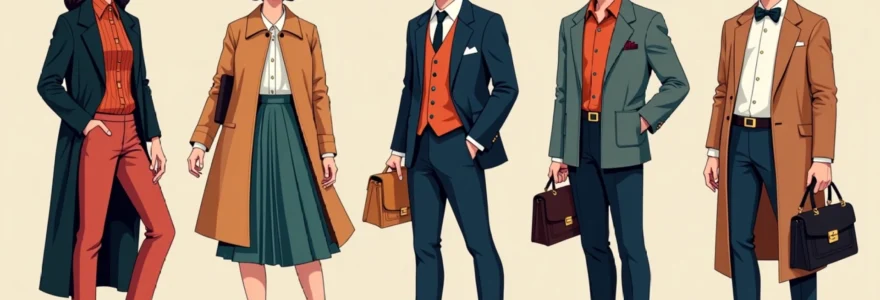
Selecting the right accessories can transform an ordinary outfit into something extraordinary, yet many people struggle with knowing which pieces will truly enhance their look for specific occasions. The art of accessorising extends far beyond simply matching colours or following basic style rules—it requires understanding the subtle interplay between design elements, cultural context, and personal expression. Whether you’re attending a black-tie gala, a wedding ceremony, or a professional networking event, your choice of accessories communicates volumes about your attention to detail and understanding of appropriate dress codes.
The modern approach to accessorising has evolved significantly, with contemporary style enthusiasts embracing both traditional etiquette and innovative mixing techniques. Today’s fashion landscape demands versatility, where a single accessory might need to transition seamlessly from daytime professional settings to evening social gatherings. Understanding these nuanced requirements becomes essential for anyone seeking to make memorable impressions whilst maintaining sophisticated elegance across various social and professional contexts.
Accessory coordination fundamentals for formal evening events
Formal evening events present unique challenges in accessory selection, where the margin for error narrows considerably compared to casual occasions. The sophisticated atmosphere of galas, charity dinners, and formal receptions demands accessories that complement rather than compete with your primary ensemble. Strategic accessory planning begins with understanding the event’s specific dress code requirements, as these provide the foundational framework for all subsequent decisions.
The hierarchy of importance in formal accessorising typically places jewellery at the pinnacle, followed by handbags, footwear, and finally supplementary pieces such as scarves or gloves. Each element must contribute to a cohesive visual narrative that speaks to your understanding of formal protocols whilst allowing your personality to shine through appropriate channels. The key lies in mastering the delicate balance between adherence to traditional standards and subtle personal expression.
Colour theory application in jewellery and handbag selection
Colour coordination in formal accessories operates on multiple levels, extending beyond simple matching to encompass sophisticated harmonic relationships. The most elegant approach often involves selecting accessories that either complement your outfit’s undertones or provide carefully calculated contrast points. Warm-toned metals such as gold and rose gold naturally pair with warmer colour palettes including deep burgundies, rich navies, and warm blacks, whilst cool-toned metals like platinum and silver enhance cooler colour schemes featuring true blacks, icy blues, and pure whites.
Advanced colour theory suggests implementing the 60-30-10 rule in formal accessorising, where your primary outfit colour occupies 60% of the visual space, secondary accessory colours claim 30%, and accent pieces provide the remaining 10%. This mathematical approach ensures visual harmony whilst preventing any single element from overwhelming the overall composition. Consider how emerald jewellery can elevate a black evening gown, providing that crucial 10% accent colour that transforms the entire ensemble from standard to spectacular.
Metallic finish coordination between watches and cufflinks
The coordination of metallic finishes represents one of the most scrutinised aspects of formal accessorising, particularly for gentlemen’s evening wear. Traditional etiquette dictates that all visible metals should maintain consistency—if you choose gold cufflinks, your watch, ring, and any other metallic accessories should follow suit. However, contemporary styling has introduced more flexibility, allowing for intentional mixing when executed with confidence and precision.
The modern approach to metallic coordination acknowledges that quality pieces in different metals can coexist harmoniously when united by similar design aesthetics or proportional relationships. A platinum watch can successfully accompany gold cufflinks if both pieces share similar geometric lines or proportional scales. The critical factor becomes ensuring that mixed metals appear intentional rather than accidental , which requires careful attention to the overall visual weight and design language of each piece.
Proportional balance techniques for statement pieces
Statement pieces in formal settings require exceptional finesse to avoid overwhelming the wearer or the occasion. The fundamental principle involves allowing one significant piece to command attention whilst supporting elements remain deliberately understated. If you select dramatic chandelier earrings as your statement piece, accompanying accessories should scale down accordingly—perhaps a simple bracelet and minimal ring rather than competing necklaces or bold handbag designs.
Professional stylists often employ the “triangle rule” when positioning statement pieces, creating visual triangles that guide the eye naturally around the ensemble. This might involve pairing bold earrings with a statement ring on the opposite hand, whilst keeping the neckline and central torso relatively unadorned. The goal remains creating visual interest without chaos , ensuring that each statement piece receives appropriate attention within the broader compositional framework.
Texture mixing principles for leather goods and footwear
Texture coordination in formal accessories adds sophisticated depth to your ensemble whilst demonstrating advanced styling knowledge. The interplay between different leather finishes, fabric textures, and metallic surfaces creates visual richness that elevates standard colour coordination to new heights. Patent leather shoes can beautifully complement satin evening bags, whilst textured leather handbags pair elegantly with smooth silk scarves or velvet gloves.
The art of texture mixing involves understanding how different surfaces interact under various lighting conditions typical of formal venues. Matte finishes absorb light and create sophisticated, understated elegance, whilst glossy surfaces reflect light and add glamorous sparkle. Balancing these opposing characteristics requires considering the specific lighting environment of your event—crystal chandeliers in ballrooms favour different textural combinations than intimate candlelit dinner settings.
Wedding guest attire accessory protocols and etiquette standards
Wedding guest accessories operate under unique protocols that blend traditional etiquette with contemporary styling sensibilities. The primary consideration involves respecting the celebratory nature of the occasion whilst ensuring your accessories enhance rather than detract from the wedding party’s prominence. Understanding these delicate balance requirements prevents common etiquette breaches whilst allowing appropriate personal expression within established boundaries.
Regional and cultural variations in wedding etiquette significantly impact accessory choices, making research into specific customs essential for appropriate guest attire. Mediterranean weddings might welcome bolder colour palettes and more elaborate accessories, whilst traditional British ceremonies typically favour more restrained approaches. Successful wedding guest styling requires cultural sensitivity combined with impeccable timing awareness, as different ceremony segments may call for subtle accessory adjustments.
Morning ceremony fascinator selection and placement guidelines
Fascinator selection for morning wedding ceremonies requires understanding both traditional millinery principles and contemporary styling adaptations. The ideal fascinator should complement your facial structure whilst adhering to the ceremony’s formality level and venue requirements. Church ceremonies often impose height restrictions for headpieces, making low-profile designs with horizontal rather than vertical emphasis more appropriate choices.
Placement techniques for fascinators involve multiple considerations including hair texture, style preferences, and photographic angles. The traditional placement slightly off-centre and above the right eyebrow creates elegant asymmetry whilst ensuring clear sightlines for ceremony viewing. Professional placement often requires strategic bobby pin positioning that secures the piece without creating visible hardware disruption, particularly important for outdoor ceremonies where wind factors must be anticipated and managed effectively.
Evening reception clutch sizing and material considerations
Evening wedding receptions demand clutch selections that balance practical storage needs with appropriate elegance levels. The optimal size accommodates essential items including mobile phone, lipstick touch-up products, and perhaps small gift cards or cash, without creating bulky proportions that disrupt your ensemble’s sleek lines. Standard reception clutches measure approximately 8-10 inches in length, providing adequate storage whilst maintaining sophisticated proportions.
Material considerations for reception clutches should account for extended wear duration and potential interaction with various surfaces throughout the celebration. Satin and silk options offer elegant appearance but may show wear marks from dancing or dining activities, whilst structured leather alternatives provide durability with maintained sophistication. Metallic finishes bridge the gap between practicality and glamour , offering surfaces that disguise minor scuffs whilst complementing typical reception lighting conditions and photographic requirements.
Religious venue modesty requirements for shoulder coverage
Religious wedding venues often impose specific modesty requirements that significantly impact accessory selection, particularly regarding shoulder and décolletage coverage. Understanding these requirements in advance allows for strategic accessory planning that meets religious protocols whilst maintaining personal style integrity. Elegant solutions include sophisticated wraps, tailored boleros, or statement scarves that provide appropriate coverage without compromising your ensemble’s overall aesthetic appeal.
The art of modesty accessorising involves selecting pieces that appear integral to your planned outfit rather than obvious afterthoughts added for compliance purposes. High-quality pashminas in complementary colours can transform sleeveless dresses into venue-appropriate attire whilst adding luxurious texture elements. Strategic layering techniques ensure comfort throughout extended ceremonies , allowing for discrete removal during photography sessions or reception dancing when venue restrictions may relax appropriately.
Seasonal wedding palette coordination strategies
Seasonal considerations profoundly influence wedding guest accessory selection, with each season offering distinct colour palettes and material preferences that guide appropriate choices. Spring weddings traditionally embrace soft pastels and fresh metallics, making rose gold accessories and delicate floral motifs particularly suitable selections. Summer celebrations allow for bolder colour choices and lighter materials, whilst autumn events favour richer tones and textured accessories that complement the seasonal atmosphere.
Winter wedding accessories require special attention to both aesthetic appropriateness and practical functionality. Elegant outerwear becomes an essential accessory element, demanding coordination with indoor ensemble pieces whilst providing adequate warmth for outdoor photography sessions. Luxury materials like cashmere wraps or fur stoles serve dual purposes as practical necessities and sophisticated styling elements that enhance rather than hide your carefully planned ensemble underneath.
Business professional accessory investment hierarchy
Professional accessory investment requires strategic planning that balances immediate wardrobe needs with long-term career advancement considerations. The most effective approach involves creating a foundation of versatile, high-quality pieces that transcend seasonal trends whilst gradually adding specialised items for specific professional situations. Understanding investment hierarchy prevents costly mistakes whilst ensuring your professional image consistently communicates competence and attention to detail across various business contexts.
The modern professional landscape demands accessories that perform multiple functions whilst maintaining impeccable appearance standards. A quality leather briefcase must accommodate technological requirements including laptop storage and charging capabilities whilst projecting appropriate authority levels for client meetings and presentations. Similarly, professional watches need reliable functionality combined with aesthetic versatility that transitions seamlessly from boardroom presentations to networking receptions without appearing inappropriate for either context.
Budget allocation for professional accessories should prioritise pieces with highest visibility impact and longest useful lifespan. Quality leather goods including handbags, briefcases, and belts typically offer excellent investment returns through extended durability and timeless styling that remains appropriate across multiple career stages. Strategic purchasing focuses on neutral colour palettes that coordinate with diverse wardrobe selections whilst avoiding trendy elements that may appear dated within professional environments after short time periods.
Technology integration represents an increasingly important consideration in professional accessory selection. Modern smartwatches offer functionality benefits including calendar management and communication capabilities whilst requiring careful styling to maintain professional appearance standards. The key involves selecting technology accessories that enhance rather than distract from your professional presence, ensuring that functionality additions contribute to rather than detract from your overall professional image and effectiveness in business contexts.
Cocktail party styling matrix for contemporary accessories
Cocktail party accessorising represents one of fashion’s most creative opportunities, where traditional rules relax sufficiently to allow experimental combinations whilst maintaining sophisticated elegance standards. The cocktail environment encourages bold choices that might seem excessive in formal business settings but appear perfectly appropriate within social celebration contexts. Understanding this flexibility enables creative expression that showcases personal style whilst respecting the celebratory nature of cocktail gatherings and their inherently social atmosphere.
Contemporary cocktail styling embraces mixing unexpected elements that create conversation-worthy combinations without appearing costume-like or inappropriate for sophisticated social environments. Vintage brooches might adorn modern blazer lapels, whilst geometric earrings provide striking contrast against flowing silk scarves. The modern approach favours intentional eclecticism over matchy-matchy coordination, allowing accessories to tell interesting stories about personal style evolution and cultural appreciation.
Art Deco-Inspired geometric earring selections
Art Deco geometric earrings offer perfect solutions for contemporary cocktail styling, providing bold visual impact whilst maintaining sophisticated historical references that demonstrate cultural awareness. These distinctive pieces typically feature clean lines, symmetrical patterns, and metallic finishes that complement modern cocktail attire beautifully. The angular aesthetics of Art Deco designs create striking contrast against soft fabrics and flowing silhouettes commonly found in contemporary cocktail dresses.
Selecting appropriate geometric earrings requires considering both scale relationships and metal coordination with other accessories. Larger geometric pieces work excellently as statement elements when paired with minimal accompanying jewellery, whilst smaller geometric designs allow for layering with complementary necklaces or bracelets. The key involves maintaining visual balance that allows the geometric elements to enhance rather than overwhelm your overall ensemble’s sophisticated cohesion.
Vintage brooches as modern lapel statement pieces
Vintage brooches have experienced remarkable resurgence in contemporary cocktail styling, offering unique opportunities for personal expression whilst adding historical depth to modern ensembles. These distinctive accessories work particularly well on blazer lapels, dress shoulders, or hat bands, providing focal points that spark conversations whilst demonstrating appreciation for craftsmanship and design heritage. Quality vintage brooches often feature superior materials and construction techniques that surpass contemporary mass-produced alternatives.
The art of incorporating vintage brooches into modern styling involves understanding proportion relationships and thematic coherence with contemporary pieces. A 1940s floral brooch might beautifully complement a modern silk blouse, whilst abstract 1960s designs pair excellently with geometric contemporary accessories. Successful vintage integration appears intentional rather than accidental , requiring careful consideration of colour relationships, scale proportions, and overall aesthetic harmony within your complete cocktail ensemble.
Minimalist scandinavian design philosophy in belt selection
Scandinavian design principles offer excellent guidance for belt selection in contemporary cocktail styling, emphasising clean lines, functional beauty, and understated elegance that complements rather than competes with other ensemble elements. These design philosophies prioritise quality materials and impeccable construction over elaborate ornamentation, creating accessories that enhance silhouette definition whilst maintaining sophisticated restraint appropriate for varied cocktail environments.
Minimalist belt selection focuses on perfecting fundamental elements including leather quality, hardware finishes, and proportional relationships with accompanying outfit elements. The Scandinavian approach favours neutral colour palettes that provide maximum versatility across diverse wardrobe selections, whilst subtle texture variations add visual interest without overwhelming simplicity. Quality over quantity principles guide investment decisions towards fewer, higher-grade pieces that perform excellently across multiple styling scenarios rather than numerous trendy options with limited versatility.
Mediterranean-inspired coral and turquoise accent integration
Mediterranean colour palettes offer vibrant opportunities for cocktail party accessorising, with coral and turquoise tones providing striking accent options that evoke sophisticated travel experiences and cultural appreciation. These distinctive colours work particularly well in cocktail environments where creative expression receives encouragement, allowing for bold choices that might seem excessive in conservative business settings. The warm, organic nature of these hues creates appealing contrast against neutral base colours whilst adding personality and visual interest.
Integrating Mediterranean-inspired colours requires understanding their cultural significance and appropriate application within contemporary styling contexts. Coral accessories pair beautifully with navy, cream, and gold elements, whilst turquoise complements brown, bronze, and silver tones excellently. Strategic colour placement creates sophisticated international flair without appearing costume-like or culturally inappropriate, ensuring that Mediterranean influences enhance rather than dominate your cocktail party ensemble’s overall aesthetic appeal and cultural sensitivity.
Cultural celebration accessory authenticity and appropriation guidelines
Cultural celebration accessories require exceptional sensitivity to authenticity concerns whilst respecting traditional significance and avoiding inappropriate appropriation. Understanding the distinction between appreciation and appropriation becomes essential when selecting accessories for multicultural celebrations, religious observances, or international themed events. Respectful accessory selection demonstrates cultural awareness whilst ensuring your choices enhance rather than detract from the celebratory atmosphere and community respect within diverse social environments.
Research becomes fundamental when accessorising for cultural celebrations, as seemingly innocent choices might carry significant religious or cultural meanings that require respectful handling. Traditional patterns, sacred colours, and ceremonial elements often possess deep significance that extends far beyond aesthetic appeal. Professional cultural consultants or community leaders can provide invaluable guidance for appropriate accessory selection that honours traditions whilst allowing meaningful participation in cultural celebration activities.
The safest approach to cultural celebration accessorising involves selecting pieces that complement traditional aesthetics without directly copying sacred or ceremonial elements. Contemporary interpretations of cultural colour palettes, geometric patterns inspired by traditional motifs, or accessories created by artisans from relevant cultural backgrounds offer respectful participation opportunities. Supporting authentic cultural creators ensures appropriate representation whilst contributing positively to cultural preservation and economic sustainability within traditional artisan communities
whilst contributing meaningfully to ongoing cultural dialogue and understanding through informed accessory choices.
Alternative approaches include selecting accessories that draw inspiration from cultural aesthetics without directly replicating traditional elements. Modern interpretations of traditional colour combinations, contemporary pieces created in collaboration with cultural artisans, or accessories that celebrate cultural influence through abstract representation offer respectful participation opportunities. The goal involves demonstrating cultural appreciation whilst maintaining appropriate boundaries that respect sacred or ceremonial significance within traditional communities.
Documentation and education enhance cultural celebration accessorising by ensuring informed choices that demonstrate genuine respect and understanding. Learning about the historical significance of patterns, colours, or materials helps prevent inadvertent appropriation whilst enabling meaningful participation in cultural celebrations. Engaging with cultural communities directly provides authentic guidance that surpasses superficial research and creates opportunities for genuine cross-cultural understanding and appreciation through thoughtful accessory selection and respectful celebration participation.
Seasonal transition accessory layering methodologies
Seasonal transition periods present unique accessorising challenges that require strategic planning to maintain sophisticated appearance standards whilst adapting to changing weather conditions and social expectations. The art of transitional accessorising involves creating versatile combinations that perform effectively across temperature variations whilst ensuring appropriate style levels for different seasonal social calendars. Mastering transitional techniques eliminates wardrobe gaps that often occur during seasonal shifts when previous season’s accessories seem inappropriate whilst new seasonal pieces feel premature for current conditions.
Spring transition accessorising focuses on gradually introducing lighter colours and materials whilst maintaining sufficient versatility for unpredictable weather patterns. Strategic layering involves combining winter accessories like structured scarves with emerging spring elements such as delicate jewellery or lighter handbag materials. The key lies in creating combinations that appear intentionally transitional rather than indecisive, demonstrating seasonal awareness whilst maintaining sophisticated coordination throughout changing conditions.
Summer to autumn transitions require careful balance between maintaining warm-weather practicality whilst introducing richer colours and heavier textures appropriate for cooler temperatures and changing social calendars. Layering techniques might involve adding structured belts over flowing summer dresses, introducing deeper metallic tones through jewellery selections, or incorporating textured scarves that provide both style enhancement and practical warmth during cool evening events. Successful autumn preparation maintains summer’s relaxed elegance whilst gradually building towards winter’s more structured accessory requirements.
Winter transition strategies involve the most dramatic accessory adjustments, requiring integration of functional elements like gloves, hats, and substantial outerwear that must coordinate with existing accessory collections. The challenge involves maintaining sophisticated appearance levels whilst ensuring adequate protection from harsh weather conditions. Luxury materials like cashmere, wool, and quality leather provide excellent solutions that bridge functional requirements with aesthetic expectations, creating winter accessory wardrobes that enhance rather than hide carefully planned ensemble coordination.
Year-round accessory investment strategies focus on building collections that provide maximum versatility across seasonal transitions whilst maintaining consistent quality and style standards. Core pieces in neutral colours and classic designs provide stable foundations that accommodate seasonal accent additions without requiring complete wardrobe overhauls. Strategic purchasing involves selecting accessories that perform excellently across multiple seasons whilst adding seasonal-specific pieces that provide appropriate variety and freshness to established accessory collections. Intelligent seasonal planning reduces overall investment requirements whilst ensuring appropriate accessory availability for diverse seasonal social and professional requirements throughout the complete annual cycle.