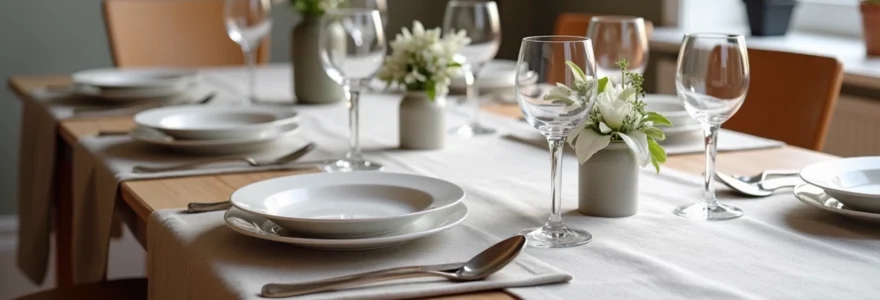
Creating an exceptional dining environment requires more than just selecting beautiful dishes or arranging flowers. The foundation of sophisticated table presentation lies in choosing the right table linens that harmonise with your interior design whilst providing practical functionality. Quality tablecloths and table runners serve as the canvas upon which memorable dining experiences unfold, transforming ordinary meals into extraordinary occasions.
The art of selecting premium table linens involves understanding fabric characteristics, mastering dimensional calculations, and developing an eye for colour coordination. Modern dining environments demand versatility, durability, and aesthetic appeal from table coverings that must withstand regular use whilst maintaining their elegant appearance. Whether hosting intimate family gatherings or formal dinner parties, the right choice of table linens establishes the tone and atmosphere for every dining occasion.
Professional interior designers recognise that table linens represent one of the most cost-effective methods for updating dining room aesthetics. The strategic selection of fabrics, patterns, and sizing creates visual impact that extends far beyond the dining table itself, influencing the entire room’s ambiance and perceived value.
Fabric selection and material properties for premium table linens
Understanding fabric composition forms the cornerstone of selecting table linens that deliver both beauty and performance. Different materials offer distinct advantages in terms of durability, maintenance requirements, and visual appeal. The choice between natural fibres, synthetic blends, and specialty weaves directly impacts the longevity and functionality of your investment.
Natural fibres such as cotton and linen provide breathability and comfort whilst developing character over time. These materials offer superior absorption properties, making them practical choices for everyday dining situations. Synthetic blends incorporate durability enhancements whilst maintaining aesthetic appeal, particularly important in high-traffic dining environments where frequent washing is necessary.
Cotton percale vs egyptian cotton sateen weave characteristics
Cotton percale represents the gold standard for everyday table linens, offering exceptional durability through its plain weave construction. This weave pattern creates a crisp, hotel-like finish that becomes softer with each wash whilst maintaining structural integrity. Percale fabrics resist pilling and provide excellent colour retention, making them ideal for tablecloths that require frequent laundering.
Egyptian cotton sateen delivers luxury through its lustrous finish and silky hand feel. The sateen weave floats yarns over multiple threads, creating a naturally lustrous surface that reflects light beautifully. However, this construction requires more careful handling and may show wear patterns more readily than percale alternatives.
Linen blend durability and belgian flax quality standards
Belgian flax represents the pinnacle of linen quality, cultivated in specific climatic conditions that produce exceptionally strong and uniform fibres. These premium linens develop a beautiful patina over time, becoming more supple and attractive with age. Pure linen table runners and tablecloths offer unmatched elegance for formal dining situations.
Linen blends incorporate cotton or polyester to enhance durability whilst maintaining the characteristic texture and drape of pure linen. These blends reduce wrinkle formation and simplify care requirements without significantly compromising the natural aesthetic appeal that makes linen so desirable for sophisticated table settings.
Polyester-cotton blend performance in High-Traffic dining environments
Polyester-cotton blends deliver optimal performance for families and commercial dining environments where durability takes precedence over luxury feel. These fabrics resist staining, wrinkle formation, and colour fading whilst maintaining reasonable softness and drape characteristics. The synthetic component provides enhanced tear resistance and dimensional stability.
High-quality poly-cotton blends utilise ring-spun cotton fibres combined with microfibre polyester to achieve superior texture whilst maintaining easy-care properties. These materials withstand frequent washing cycles without significant degradation, making them cost-effective choices for everyday use.
Jacquard weaving techniques and damask pattern integration
Jacquard weaving creates intricate patterns directly in the fabric structure rather than through printing or embroidery. This technique produces durable, sophisticated designs that maintain their appearance through countless washing cycles. Jacquard tablecloths offer texture variation that adds visual interest without overwhelming existing dinnerware patterns.
Damask patterns represent the epitome of jacquard weaving artistry, combining matte and lustrous threads to create subtle, elegant designs that complement both traditional and contemporary dining aesthetics.
Dimensional calculations and proportional sizing for table coverage
Proper sizing represents perhaps the most critical factor in achieving professional-looking table presentations. Incorrectly sized linens create awkward proportions that detract from the overall dining experience. Understanding the relationship between table dimensions, desired drop lengths, and functional requirements ensures optimal aesthetic and practical outcomes.
Professional measurements account for both the table’s physical dimensions and the intended use patterns. Formal dining situations typically require longer drops for elegant draping, whilst casual settings benefit from shorter overhangs that facilitate comfortable seating and movement around the table.
Standard drop length formulas for rectangular and round tables
For rectangular tables, the standard formula adds twice the desired drop length to each table dimension. A formal drop of 12-15 inches creates elegant draping suitable for special occasions, whilst an 8-10 inch drop provides appropriate coverage for everyday use. Tables measuring 72 inches in length require tablecloths measuring 96-102 inches for optimal formal presentation.
Round tables follow similar principles but require careful attention to diameter measurements rather than length and width calculations. The formula diameter plus twice the drop length determines the required tablecloth size. A 48-inch round table needs a 72-78 inch round tablecloth for proper formal coverage.
Table runner Width-to-Table ratio optimization techniques
Table runner width should typically measure one-third of the table’s width to achieve balanced proportions. This ratio ensures the runner provides adequate coverage without overwhelming the table surface or interfering with place settings. A 36-inch wide table requires a 12-inch wide runner for optimal visual balance.
Length calculations for table runners depend on the desired aesthetic effect. Traditional placement extends 6-12 inches beyond each table end, whilst contemporary styling may use runners that terminate at the table edges or extend dramatically for theatrical effect.
Overhang measurements for formal vs casual dining settings
Formal dining protocols require 12-15 inch overhangs that create elegant draping whilst allowing comfortable seating. This length prevents the tablecloth from interfering with guests’ legs whilst maintaining sophisticated proportions. Casual settings benefit from 6-8 inch overhangs that provide adequate protection without excessive formality.
Restaurant and banquet settings often utilise floor-length tablecloths for maximum elegance and to conceal table legs or storage areas. These applications require drops measuring 28-30 inches for standard dining table heights of 28-30 inches.
Multi-table configuration planning for banquet arrangements
Banquet configurations require careful planning to ensure visual continuity across multiple tables. Consistent overhang measurements and coordinated linen colours create cohesive presentations that enhance the overall event atmosphere. Planning includes accounting for table spacing and guest circulation patterns.
Long banquet tables created by joining multiple round or rectangular tables require specialty linens or creative layering techniques. Professional event planners often utilise table runners to create visual unity whilst accommodating varying table dimensions within the same event space.
Colour theory application and pattern coordination strategies
Colour selection profoundly impacts the perceived atmosphere and success of dining presentations. Understanding colour psychology, seasonal preferences, and coordination principles enables the creation of harmonious table settings that enhance food presentation and guest comfort. The interplay between tablecloth colours, existing décor elements, and lighting conditions requires careful consideration.
Professional colour coordination extends beyond simple colour matching to include understanding undertones, saturation levels, and the impact of artificial lighting on colour perception. Evening dining situations may require different colour choices than daytime entertaining due to changes in lighting quality and intensity.
Monochromatic schemes using pantone colour matching systems
Monochromatic colour schemes create sophisticated, cohesive presentations through careful variation of a single hue. Pantone colour matching systems enable precise colour coordination between table linens and other décor elements. These schemes work particularly well in contemporary dining environments where subtle variation creates visual interest without overwhelming clean design lines.
Successful monochromatic presentations utilise varying textures and sheens to create depth within the single colour family. Matte tablecloths paired with lustrous table runners in the same colour family demonstrate this principle effectively, creating visual interest through texture variation rather than colour contrast.
Complementary palette development with existing interior elements
Effective colour coordination considers existing wall colours, flooring materials, and furniture finishes when selecting table linens. Complementary palettes utilise colours opposite each other on the colour wheel to create vibrant, energetic presentations suitable for casual dining situations.
Analogous colour schemes employ adjacent colours on the colour wheel to create harmonious, calming environments appropriate for formal dining. These palettes work particularly well in traditional dining rooms where tranquility and elegance take precedence over dramatic visual impact.
Seasonal colour psychology in dining environment design
Seasonal colour preferences reflect psychological responses to changing natural environments. Spring palettes incorporating soft greens and warm yellows create fresh, optimistic atmospheres that complement lighter foods and increased natural lighting. Summer entertaining benefits from cool blues and crisp whites that suggest refreshment and relaxation.
Autumn colour schemes utilising warm oranges, deep reds, and golden yellows create cosy, intimate environments perfect for comfort food presentations and extended family gatherings.
Winter colour selections often favour rich jewel tones and metallic accents that create warmth and luxury during darker months. These colours complement hearty foods and formal entertaining situations that characterise winter holiday celebrations.
Pattern scale balancing with existing dinnerware and glassware
Pattern scale coordination prevents visual confusion and creates harmonious table presentations. Large-scale patterns on tablecloths require simple, unadorned dinnerware to avoid competing visual elements. Conversely, ornate china patterns benefit from solid-coloured or subtly textured table linens that provide calm backgrounds.
Mixed pattern presentations require careful attention to scale relationships and colour coordination. Professional designers often limit pattern mixing to two distinct scales – typically combining small geometric patterns with large florals or using solid colours as transition elements between competing patterns.
Maintenance protocols and fabric care specifications
Proper maintenance ensures table linens retain their beauty and functionality throughout years of regular use. Different fabric types require specific care protocols to prevent damage, maintain colour integrity, and preserve structural characteristics. Understanding these requirements influences fabric selection decisions and long-term satisfaction with linen investments.
Professional laundering techniques extend fabric life significantly compared to improper home care methods. Factors such as water temperature, detergent selection, and drying methods directly impact fabric appearance and longevity. Investment-grade table linens justify professional cleaning services for optimal maintenance outcomes.
Stain prevention and immediate treatment protocols preserve fabric appearance between deep cleaning cycles. Understanding fabric-specific stain removal techniques prevents permanent damage and maintains professional presentation standards for both casual and formal dining situations.
Storage methods significantly impact fabric condition between uses. Proper folding techniques, climate-controlled storage environments, and protection from light exposure prevent premature ageing and maintain fabric integrity. Seasonal rotation schedules distribute wear patterns and extend overall fabric life.
Style integration with contemporary and traditional dining aesthetics
Successfully integrating table linens with existing dining room aesthetics requires understanding design principles that govern both contemporary and traditional interior styles. Contemporary environments emphasise clean lines, minimal ornamentation, and functional beauty that table linen selections must complement rather than compete against.
Traditional dining aesthetics embrace ornate details, rich textures, and layered presentations that table linens can enhance through careful selection of patterns, colours, and fabric weights. The key lies in understanding the dominant design elements within the existing space and selecting linens that harmonise with these characteristics.
Transitional design approaches combine elements from both contemporary and traditional styles, requiring table linens that bridge these aesthetic differences. Neutral colours, subtle patterns, and quality fabrics that avoid extreme stylistic statements work effectively in these flexible environments.
The most successful table linen selections enhance the existing dining environment rather than attempting to transform it completely, creating cohesive presentations that feel intentional and professionally designed.
Seasonal style adaptations allow dining environments to evolve throughout the year whilst maintaining core aesthetic principles. Lightweight fabrics and fresh colours create spring and summer presentations, whilst heavier textures and richer colours provide autumn and winter warmth without requiring complete interior redesign.
Budget allocation and investment planning for quality table linens
Strategic budget allocation for table linens requires understanding the relationship between initial investment, maintenance costs, and replacement frequency. Quality fabrics command higher purchase prices but deliver superior longevity and maintained appearance that justifies the initial expense over time.
Investment planning should prioritise versatile, neutral-coloured pieces that accommodate multiple dining situations and seasonal variations. Building a foundational collection of high-quality basics enables gradual expansion with accent pieces and seasonal additions without requiring complete replacement of existing inventory.
Cost-per-use calculations provide realistic assessments of table linen investments by considering frequency of use, maintenance requirements, and expected lifespan. Premium fabrics used regularly for family dining may represent better value than expensive specialty pieces reserved for infrequent occasions.
Professional consultation services help maximise budget effectiveness by providing expert guidance on fabric selection, sizing decisions, and care requirements. These services often identify cost-effective alternatives to expensive options whilst ensuring quality standards meet long-term durability expectations. The investment in professional advice frequently pays for itself through improved purchasing decisions and extended fabric life through proper selection and care protocols.