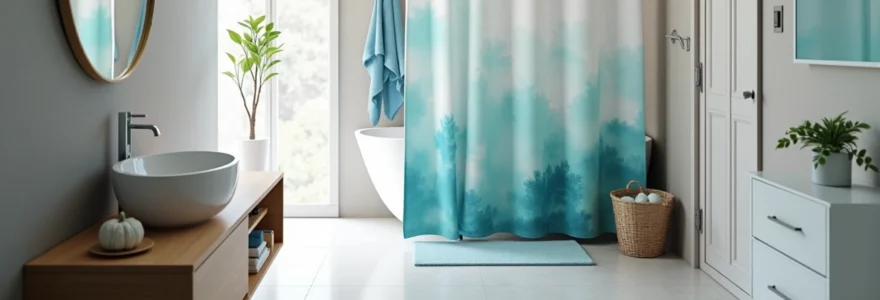
The humble shower curtain has evolved far beyond its utilitarian origins to become a cornerstone of contemporary bathroom design. Modern homeowners increasingly recognise that selecting the right shower curtain can dramatically transform their bathroom’s aesthetic whilst providing essential functionality. Unlike permanent fixtures, shower curtains offer an accessible pathway to refresh your space without committing to costly renovations or long-term design decisions. The contemporary market presents an overwhelming array of materials, patterns, and technologies, making informed selection crucial for achieving both style and performance objectives.
Today’s shower curtains combine advanced material engineering with sophisticated design principles, offering solutions that address mildew resistance, water repulsion, and decorative impact simultaneously. Whether you’re working within rental property constraints or seeking to maximise your bathroom’s visual appeal, understanding the technical specifications and design considerations behind modern shower curtains empowers you to make choices that enhance both form and function. The key lies in balancing aesthetic preferences with practical requirements whilst considering factors such as maintenance, longevity, and environmental impact.
Shower curtain material technologies and performance characteristics
The foundation of any exceptional shower curtain lies in its material composition and technological features. Modern manufacturing has revolutionised traditional fabric approaches, introducing sophisticated polymer systems and eco-friendly alternatives that deliver superior performance characteristics. Understanding these material technologies enables you to select curtains that withstand daily moisture exposure whilst maintaining their aesthetic appeal over extended periods.
PEVA vs. EVA polymer construction for mildew resistance
PEVA (Polyethylene Vinyl Acetate) represents a significant advancement over traditional PVC shower curtain materials, offering enhanced flexibility and improved environmental credentials. This polymer construction provides excellent water resistance whilst eliminating the harsh chemical odours associated with vinyl alternatives. PEVA curtains demonstrate superior mildew resistance due to their non-porous surface characteristics, preventing moisture penetration that typically leads to bacterial growth. The material’s inherent flexibility ensures longevity, as it resists cracking and tearing even under frequent use conditions.
EVA (Ethylene Vinyl Acetate) polymer technology takes durability a step further, incorporating enhanced clarity properties that make these curtains ideal for maintaining visual spaciousness in smaller bathrooms. EVA construction offers superior temperature resistance, maintaining structural integrity in environments with significant temperature fluctuations. The material’s advanced formulation includes antimicrobial additives that actively inhibit mildew formation, extending the curtain’s functional lifespan whilst reducing maintenance requirements.
Polyester microfibre weaves and Water-Repellent coating systems
Polyester microfibre technology has transformed fabric-based shower curtains, delivering textile aesthetics with performance characteristics that rival synthetic alternatives. These advanced weaves incorporate densely packed fibres that create natural water-repellent properties whilst maintaining breathability. The microscopic fibre structure prevents water penetration whilst allowing air circulation, reducing the humid conditions that promote mildew development.
Contemporary coating systems applied to polyester substrates utilise fluorine-free treatments that provide long-lasting water repulsion without environmental concerns. These hydrophobic coatings bond permanently to the fabric structure, ensuring water droplets bead and roll off the surface rather than penetrating the material. Advanced coating technologies also incorporate stain-resistant properties, making maintenance significantly easier whilst preserving the fabric’s original appearance throughout its service life.
Hemp and bamboo fibre integration in Eco-Friendly curtain manufacturing
Sustainable material innovations have introduced hemp and bamboo fibres as viable alternatives for environmentally conscious consumers seeking natural shower curtain solutions. Hemp fibres possess inherent antimicrobial properties, naturally resisting mildew formation without chemical treatments. The fibre’s robust structure provides exceptional durability whilst developing an increasingly soft texture through regular use and washing cycles.
Bamboo fibre integration offers rapid moisture-wicking capabilities, drawing water away from the curtain surface to prevent saturation and bacterial growth. Bamboo’s natural antibacterial properties complement hemp’s durability, creating hybrid fabrics that perform exceptionally well in high-humidity environments. These eco-friendly options require specialised water-repellent treatments derived from plant-based sources, ensuring complete environmental compatibility whilst maintaining performance standards.
Vinyl thickness specifications and antimicrobial treatment applications
Vinyl shower curtains continue to offer practical advantages, particularly when manufactured with appropriate thickness specifications and modern antimicrobial treatments. Standard vinyl thickness ranges from 3-gauge to 10-gauge , with heavier specifications providing enhanced durability and improved drapery characteristics. Thicker vinyl constructions resist tearing and maintain their shape better, particularly important in high-traffic bathroom environments.
Contemporary antimicrobial treatments utilise silver-ion technology and zinc-based additives that provide continuous protection against bacterial and mildew growth. These treatments penetrate the vinyl matrix during manufacturing, ensuring long-term effectiveness rather than temporary surface protection. Advanced formulations also incorporate UV stabilisers that prevent discoloration and material degradation when exposed to bathroom lighting, maintaining aesthetic appeal throughout the curtain’s functional lifespan.
Design pattern classification and visual impact assessment
Pattern selection fundamentally influences your bathroom’s visual dynamics, affecting perceived space, lighting conditions, and overall aesthetic harmony. Modern design approaches embrace both minimalist philosophies and bold statement pieces, requiring careful consideration of how patterns interact with existing bathroom elements. The psychological impact of different pattern types can dramatically alter your bathroom experience, making pattern classification knowledge essential for achieving desired atmospheric effects.
Geometric tessellation patterns: moroccan tiles and art deco influences
Geometric patterns create structured visual rhythms that can either enhance or constrain spatial perception depending on their scale and complexity. Moroccan-inspired tessellations introduce intricate mathematical beauty whilst maintaining cultural authenticity in design expression. These patterns work exceptionally well in bathrooms with neutral colour palettes, providing visual interest without overwhelming the space. The repetitive nature of tessellated designs creates a meditative quality that enhances the relaxation aspects of bathroom environments.
Art Deco geometric influences bring sophisticated elegance through angular patterns and metallic colour schemes. These designs complement contemporary bathroom fixtures whilst introducing historical design elements that add character and depth. Art Deco patterns typically feature bold contrasts and symmetrical arrangements that create focal points without requiring additional decorative elements. The geometric precision inherent in these designs makes them particularly suitable for modern bathroom aesthetics where clean lines and structured forms predominate.
Botanical motifs: tropical palm prints and scandinavian minimalist florals
Botanical patterns establish natural connections that soften bathroom environments whilst introducing organic visual elements. Tropical palm prints create immediate associations with relaxation and luxury, transforming daily routines into spa-like experiences. These designs work particularly effectively in bathrooms with abundant natural light, where the botanical elements can create dynamic shadow patterns that change throughout the day.
Scandinavian minimalist florals offer understated botanical beauty through simplified forms and muted colour palettes. These patterns provide natural visual interest whilst maintaining the clean, uncluttered aesthetic that defines Nordic design philosophy. Minimalist floral motifs complement rather than compete with bathroom fixtures, creating harmonious environments that promote tranquility and well-being. The simplified botanical forms translate well across different bathroom sizes, maintaining their visual impact regardless of spatial constraints.
Abstract expressionism: watercolour gradients and marble effect techniques
Abstract patterns offer unlimited creative possibilities whilst avoiding the literal representations that might clash with bathroom fixtures or personal preferences. Watercolour gradient techniques create fluid, organic transitions that mirror the bathroom’s fundamental relationship with water. These effects can visually expand smaller bathrooms by creating depth perception and eliminating harsh visual boundaries that constrain spatial awareness.
Marble effect techniques introduce luxury associations whilst providing practical pattern benefits that disguise water spots and minor staining. The natural variation inherent in marble patterns means that minor wear or discoloration becomes part of the overall design rather than obvious defects. Abstract marble effects complement both traditional and contemporary bathroom styles, offering versatility that adapts to changing decorative preferences without requiring replacement.
Nautical and coastal themes: anchor motifs and ocean wave typography
Nautical themes create immediate associations with cleanliness and freshness whilst introducing maritime design elements that feel naturally appropriate in bathroom environments. Anchor motifs provide structured focal points that work well with striped or solid colour schemes, creating cohesive design narratives without overwhelming smaller spaces. These patterns particularly suit coastal properties or bathrooms where maritime themes complement broader home decorating schemes.
Ocean wave typography combines textual elements with natural forms, creating patterns that communicate tranquility whilst providing visual movement. Wave-inspired designs can create illusions of spaciousness through their flowing, horizontal orientations that guide the eye across rather than fragmenting visual space. Typography elements add contemporary sophistication whilst maintaining the relaxing associations that make nautical themes perennially popular in bathroom applications.
Hardware integration and installation methodology
The hardware components and installation approach significantly impact both the functional performance and aesthetic integration of your shower curtain system. Modern hardware solutions extend beyond basic functionality to incorporate design elements that enhance overall bathroom aesthetics whilst improving user experience. Understanding the relationship between curtain materials and hardware specifications ensures optimal performance and longevity from your investment.
Contemporary shower curtain rods utilise advanced materials and engineering principles that eliminate common installation challenges whilst providing superior support characteristics. Tension-based systems now incorporate micro-adjustment mechanisms that accommodate walls that aren’t perfectly parallel, ensuring secure installation without requiring permanent mounting hardware. These systems particularly benefit rental properties where permanent modifications aren’t permitted, offering professional installation quality without structural alterations.
Ceiling-mounted track systems represent the premium approach to shower curtain installation, providing smooth operation whilst maximising vertical space utilisation. These systems require careful measurement and planning but deliver superior aesthetic results by eliminating visual gaps between the curtain and ceiling. The installation methodology involves locating ceiling joists or using appropriate anchoring systems rated for the combined weight of hardware and saturated curtain materials. Advanced track systems incorporate ball-bearing mechanisms that ensure effortless curtain operation even with heavier fabric options.
Grommet and hook integration technologies have evolved to address both functional and aesthetic requirements. Rust-resistant metal grommets with reinforced fabric surrounds prevent tearing whilst maintaining smooth operation over extended periods. Hook systems now utilise roller bearings and curved designs that reduce friction whilst eliminating the clicking sounds associated with traditional plastic alternatives. The spacing and sizing of these hardware elements must correspond to curtain weight and material characteristics to prevent premature wear or operational difficulties.
Modern hardware solutions transform shower curtain installation from a purely functional necessity into an integrated design element that enhances both performance and aesthetic appeal.
Colour psychology and bathroom spatial perception
Colour selection profoundly influences both psychological well-being and spatial perception within bathroom environments. The confined nature of most bathrooms amplifies colour impact, making informed colour choices essential for creating positive daily experiences. Understanding how different colours interact with natural and artificial lighting conditions enables you to select shower curtains that enhance rather than diminish your bathroom’s atmospheric qualities.
Light colours, particularly whites, creams, and pale pastels, reflect natural light whilst creating illusions of expanded space that benefit smaller bathrooms. These colours provide neutral foundations that accommodate changing decorative preferences without requiring curtain replacement. Light colour palettes also demonstrate superior longevity in terms of style relevance, avoiding the dated appearances that can result from trendy colour choices. The psychological impact of light colours promotes cleanliness associations and creates calming environments that enhance relaxation during daily routines.
Bold colour choices require careful consideration of existing bathroom elements and lighting conditions. Deep blues and greens can create spa-like atmospheres whilst maintaining sophistication, but require adequate lighting to prevent the space from feeling claustrophobic. Saturated colours work particularly well in bathrooms with white fixtures and neutral wall treatments, providing controlled colour injection without overwhelming the space. The key lies in balancing colour intensity with room size and natural light availability.
Colour temperature considerations become crucial when artificial lighting predominates in your bathroom environment. Warm colour schemes complement incandescent and warm LED lighting, creating cohesive atmospheric effects. Cool colours perform better under daylight-balanced LED systems, maintaining their intended appearance rather than shifting toward undesirable colour casts. Understanding your bathroom’s lighting characteristics enables colour selections that maintain their intended impact throughout different times of day and seasonal light variations.
Strategic colour selection transforms shower curtains from functional barriers into powerful tools for enhancing mood, spatial perception, and overall bathroom experience.
Maintenance protocols and longevity optimisation strategies
Establishing proper maintenance protocols significantly extends shower curtain lifespan whilst maintaining optimal appearance and hygiene standards. Different material types require specific care approaches that maximise their inherent performance characteristics whilst preventing premature degradation. Understanding these maintenance requirements during the selection process ensures you choose curtains that align with your available time and effort for ongoing care.
Machine-washable fabric curtains require regular cleaning cycles that remove soap residue, mineral deposits, and biological contaminants before they become embedded in the material structure. Cold water washing prevents shrinkage whilst gentle cycle settings protect fabric integrity. Adding white vinegar to the wash cycle helps dissolve mineral deposits whilst providing natural antimicrobial benefits. Air drying prevents heat damage whilst allowing complete moisture evacuation that prevents mildew formation during storage or rehanging.
Vinyl and polymer curtains benefit from regular surface cleaning that prevents buildup of soap scum and mineral deposits. Weekly cleaning with mild detergent solutions maintains appearance whilst preventing the need for aggressive cleaning methods that can damage the material surface. Preventive maintenance proves more effective than corrective approaches, making consistent light cleaning preferable to periodic intensive cleaning efforts. Proper ventilation after shower use accelerates drying and reduces the humid conditions that promote biological growth.
Rotation strategies can significantly extend overall curtain investment value whilst maintaining fresh bathroom appearances. Maintaining two curtain sets enables regular washing cycles without leaving the bathroom unprotected during cleaning periods. Seasonal rotation also prevents any single curtain from bearing continuous exposure to bathroom conditions, distributing wear patterns across multiple pieces. This approach particularly benefits expensive designer curtains where replacement costs make preservation efforts economically justified.
| Material Type | Cleaning Frequency | Washing Method | Drying Approach |
|---|---|---|---|
| Cotton/Linen | Weekly | Cold water, gentle cycle | Air dry, full extension |
| Polyester | Bi-weekly | Warm water, normal cycle | Low heat or air dry |
| PEVA/EVA | Weekly wipe-down | Hand wash monthly | Air dry completely |
| Vinyl | Weekly cleaning | Surface cleaning only | Immediate drying |
Budget-conscious selection criteria and value engineering
Effective budget management requires understanding the relationship between initial investment and long-term value delivery. Premium shower curtains often justify their higher costs through extended lifespans, superior performance characteristics, and reduced maintenance requirements. However, budget constraints don’t necessarily preclude stylish and functional solutions when selection criteria prioritise value engineering principles over purely aesthetic considerations.
Cost-per-wear analysis for premium vs. economy curtain options
Cost-per-wear calculations provide objective frameworks for evaluating shower curtain investments beyond initial purchase prices. Premium curtains costing £50-80 but lasting three years with minimal maintenance deliver better value than £15 economy options requiring annual replacement plus additional cleaning products and effort. Quality construction materials resist fading, tearing, and mildew formation that necessitate premature replacement of cheaper alternatives.
Performance characteristics significantly impact total ownership costs through reduced maintenance requirements and extended replacement intervals. Antimicrobial treatments, superior water repellency, and reinforced stress points justify premium pricing through reduced ongoing expenses. Economy options often require additional accessories such as separate liners, upgraded hardware, or frequent replacement cycles that accumulate hidden costs exceeding premium option investments.
Seasonal rotation strategies for maximising decorative investment
Seasonal rotation approaches enable design refreshment without continuous replacement expenses. Purchasing two complementary curtain designs during sales periods provides year-round variety whilst extending each curtain’s functional lifespan through reduced exposure periods. Strategic timing of purchases during end-of-season clearances can reduce costs by 40-60% compared to peak-season pricing.
Neutral base designs with seasonal accent accessories offer cost-effective variety through changeable elements rather than
complete curtain replacement. Storage-friendly designs that fold compactly enable easy seasonal transitions whilst minimising storage space requirements. This approach particularly benefits smaller homes where storage limitations constrain decorative rotation possibilities.
Bulk purchasing considerations for multi-bathroom properties
Properties with multiple bathrooms can achieve significant cost savings through coordinated purchasing strategies that leverage volume discounts whilst maintaining design cohesion. Bulk purchasing agreements with suppliers often provide 15-25% discounts on orders exceeding minimum quantities, making multi-bathroom coordination economically attractive. Standardising on compatible hardware systems reduces installation complexity whilst enabling economies of scale in both materials and labour costs.
Design coordination across multiple bathrooms requires balancing aesthetic consistency with functional appropriateness for each space’s specific requirements. Primary bathrooms may justify premium materials and sophisticated designs, whilst guest bathrooms can utilise coordinated but more economical options that maintain visual harmony. This tiered approach optimises budget allocation whilst ensuring each bathroom receives appropriate treatment based on usage patterns and importance within the overall home design scheme.
Maintenance efficiency improves significantly when multiple bathrooms utilise similar curtain materials and care requirements. Coordinated washing schedules reduce labour investment whilst standardised replacement cycles enable bulk ordering of new curtains at optimal pricing intervals. Standardisation benefits extend beyond initial costs to encompass ongoing operational efficiency that delivers sustained value throughout the curtains’ service lives.
Strategic bulk purchasing transforms multiple bathroom coordination from a design challenge into an opportunity for achieving superior value whilst maintaining aesthetic excellence across all spaces.
The modern shower curtain market offers unprecedented opportunities for creating stylish, functional bathroom environments that reflect personal taste whilst delivering exceptional performance characteristics. Understanding material technologies, design principles, and value engineering approaches empowers informed decision-making that balances aesthetic preferences with practical requirements. Whether working with limited budgets or pursuing premium design outcomes, the key lies in prioritising features that deliver genuine value whilst avoiding unnecessary complexity that complicates maintenance or installation processes.
Contemporary manufacturing advances have eliminated traditional compromises between style and performance, enabling selections that excel in both areas simultaneously. The investment in quality shower curtains pays dividends through extended service life, reduced maintenance requirements, and sustained aesthetic appeal that maintains its impact throughout changing design trends. By applying the principles outlined above, you can confidently select shower curtains that enhance your bathroom’s functionality whilst creating the atmospheric qualities that transform daily routines into enjoyable experiences.