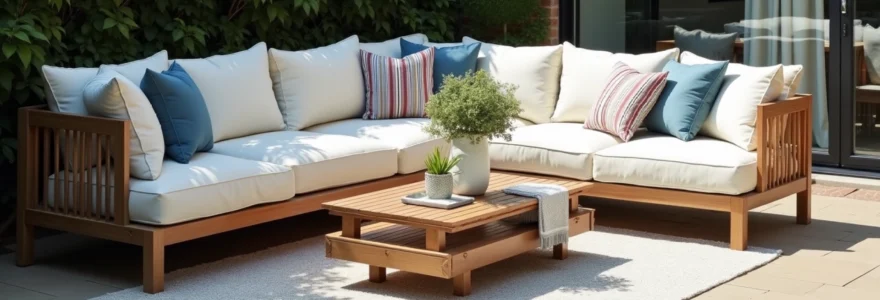
Creating an exceptional outdoor living environment requires careful attention to every detail, particularly when it comes to selecting decorative outdoor cushions that can withstand the elements whilst enhancing your space’s aesthetic appeal. The modern outdoor cushion market has evolved dramatically, offering sophisticated solutions that merge cutting-edge textile technologies with ergonomic design principles. Today’s homeowners face an unprecedented array of choices, from advanced fabric treatments that resist UV degradation to innovative fill materials that maintain their shape and comfort through countless seasons.
The selection process extends far beyond simple colour coordination or pattern matching. Contemporary outdoor cushions represent a convergence of materials science, ergonomic research, and design psychology, requiring a nuanced understanding of how various components interact with environmental conditions and human comfort preferences. Whether you’re furnishing a sun-drenched Mediterranean terrace or a moisture-prone British garden, the cushions you choose will significantly impact both the longevity of your investment and the quality of your outdoor experiences.
Weather-resistant fabric technologies for outdoor cushion durability
The foundation of any exceptional outdoor cushion lies in its fabric construction, where advanced textile technologies determine both performance longevity and aesthetic preservation. Modern weather-resistant fabrics represent decades of research into polymer chemistry, weaving techniques, and protective coating applications. These innovations have transformed outdoor textiles from simple canvas coverings into sophisticated materials that rival indoor upholstery in both appearance and comfort whilst exceeding them in durability.
Understanding the science behind weather resistance enables informed decision-making when evaluating cushion options. Fabric performance metrics include UV stability, water repellency, stain resistance, and dimensional stability under temperature fluctuations. The most effective outdoor fabrics combine multiple protective mechanisms, creating synergistic effects that enhance overall performance beyond what individual treatments might achieve.
Solution-dyed acrylic fibres: sunbrella and outdura performance analysis
Solution-dyed acrylic fibres represent the gold standard in outdoor textile performance, with brands like Sunbrella and Outdura leading technological advancement in this category. The solution-dyeing process integrates colorants directly into the polymer matrix before fibre extrusion, creating colour stability that penetrates the entire fibre structure rather than merely coating the surface. This fundamental difference explains why solution-dyed acrylics maintain vibrant colours even after years of intense UV exposure.
Comparative testing reveals that high-quality solution-dyed acrylics retain over 95% of their original colour intensity after 1,000 hours of accelerated weathering tests, equivalent to approximately five years of typical outdoor exposure. The molecular structure of acrylic polymers inherently resists moisture absorption, preventing the dimensional instability and mould growth that plague natural fibres in outdoor applications.
Polyester microfibre weaving techniques for UV protection
Advanced polyester microfibres utilise sophisticated weaving patterns that enhance UV protection through both chemical and physical mechanisms. Tight weave constructions create dense fabric structures that physically block ultraviolet radiation, whilst specialised yarn treatments incorporate UV-absorbing compounds that convert harmful radiation into harmless heat energy. Modern microfibre polyesters achieve UPF (Ultraviolet Protection Factor) ratings exceeding 50, providing excellent protection for both the fabric itself and underlying fill materials.
The manufacturing process for high-performance polyester involves precise control of fibre diameter, typically ranging from 0.5 to 2.0 denier, allowing for incredibly fine weaves that maintain strength whilst maximising surface area for protective treatments. These technical specifications directly translate to superior fade resistance and enhanced tactile comfort compared to conventional polyester fabrics.
Ptfe-coated textiles and DWR treatment applications
Polytetrafluoroethylene (PTFE) coatings and Durable Water Repellent (DWR) treatments provide advanced liquid barrier protection whilst maintaining fabric breathability. PTFE applications create microscopic pore structures that allow water vapour to escape whilst preventing liquid water penetration, addressing the common challenge of moisture accumulation in outdoor cushions. This technology, originally developed for high-performance outdoor gear, has found successful adaptation in premium outdoor furnishing applications.
DWR treatments function by modifying the surface energy of textile fibres, causing water to form discrete droplets that roll off the fabric rather than spreading and penetrating. Modern DWR formulations demonstrate excellent wash durability, maintaining effectiveness through numerous cleaning cycles when properly cared for. Professional-grade treatments can provide water repellency for several seasons, though periodic reapplication may be necessary in high-exposure environments.
Olefin polymer fabrics: stain resistance and colour retention properties
Olefin polymers offer unique advantages in outdoor applications, particularly regarding stain resistance and colour stability. The hydrophobic nature of olefin fibres prevents most liquid stains from penetrating the fibre structure, enabling easy cleanup of spills before they can set. Additionally, olefin’s low surface energy makes it naturally resistant to soil adhesion, reducing the frequency of deep cleaning requirements.
From a chemical perspective, olefin’s molecular structure provides inherent UV stability without requiring additional protective treatments. This characteristic, combined with solution-dyeing capabilities, creates fabrics that maintain their appearance with minimal maintenance. However, olefin’s lower melting point compared to other synthetics requires careful consideration in high-temperature environments or applications involving direct contact with heat sources.
Ergonomic design specifications and cushion fill material engineering
The internal construction of outdoor cushions significantly influences both comfort and longevity, requiring sophisticated understanding of materials science and human ergonomics. Modern fill technologies must address multiple performance criteria simultaneously: providing adequate support for extended sitting periods, maintaining structural integrity under varying weather conditions, and facilitating rapid moisture evacuation to prevent mould and mildew development. Engineering specifications for outdoor cushion fills involve complex trade-offs between comfort, durability, and maintenance requirements.
Contemporary research in ergonomic seating has identified optimal pressure distribution patterns and support characteristics that enhance comfort whilst reducing fatigue during prolonged use. These findings have direct applications in outdoor cushion design, where users often spend extended periods in single positions during social gatherings or relaxation activities. The challenge lies in achieving these ergonomic ideals using materials that can withstand outdoor environmental stresses without degradation.
High-density polyurethane foam core construction methods
High-density polyurethane foams represent the most common core material for premium outdoor cushions, offering excellent support characteristics combined with reasonable weather resistance. Density specifications typically range from 1.8 to 2.5 pounds per cubic foot, with higher densities providing increased durability and support but potentially compromising comfort for some users. The cellular structure of polyurethane foam can be engineered to optimise specific performance characteristics, including compression resistance, recovery rate, and moisture management.
Manufacturing techniques for outdoor-grade polyurethane involve careful control of cell structure to promote drainage whilst maintaining support properties. Open-cell foams facilitate water evacuation but may compress more readily under load, whilst closed-cell constructions provide superior support but can retain moisture if the outer membrane is compromised. Hybrid constructions attempt to balance these competing requirements through graduated density profiles and strategic perforation patterns.
Quick-dry fill technologies: Dri-Fast and AirLOFT systems
Specialised quick-dry technologies address the fundamental challenge of moisture management in outdoor cushion applications. Systems such as Dri-Fast utilise reticulated foam structures with enhanced drainage pathways, allowing water to flow through the material rather than being absorbed and retained. These technologies can reduce drying times by 50-75% compared to conventional foam constructions, significantly reducing the risk of mould and mildew development.
AirLOFT and similar systems incorporate synthetic fibre matrices that mimic the loft characteristics of natural down whilst providing superior moisture resistance. These systems typically feature hollow synthetic fibres with specialised crimping patterns that create air pockets for comfort whilst maintaining structural pathways for moisture evacuation. The resulting materials provide comparable comfort to traditional fills whilst offering dramatically improved weather resistance and maintenance characteristics.
Memory foam integration for lumbar support applications
Memory foam integration in outdoor cushions requires careful consideration of temperature sensitivity and moisture management characteristics. Traditional memory foam can become uncomfortably firm in cold weather and may retain heat excessively in hot conditions, limiting its direct application in outdoor environments. However, recent developments in gel-infused and plant-based memory foams have addressed many of these limitations, enabling the incorporation of pressure-relieving properties in outdoor applications.
Strategic placement of memory foam elements, particularly in lumbar support applications, can significantly enhance comfort during extended sitting periods. These applications typically involve thin layers of modified memory foam combined with more weather-resistant base materials, creating hybrid constructions that provide targeted support whilst maintaining overall environmental durability. Advanced designs may incorporate zoned construction techniques, varying material properties across the cushion surface to optimise support characteristics for different body regions.
Fibre-fill synthetic alternatives to down: dacron and hollofil comparisons
Synthetic fibre fills offer advantages in outdoor applications through their inherent moisture resistance and consistent performance characteristics. Dacron polyester fibres provide reliable loft and compressibility recovery, though they may lose some resilience over time compared to higher-performance alternatives. The manufacturing process for Dacron involves crimping and siliconising polyester fibres to enhance loft and reduce matting, creating materials suitable for decorative cushions and low-intensity seating applications.
Hollofil technology incorporates hollow synthetic fibres that provide enhanced loft-to-weight ratios whilst maintaining good moisture resistance. The hollow construction creates additional air spaces for comfort whilst reducing material weight, making these fills particularly suitable for large decorative cushions where weight considerations are important. Comparative testing indicates that Hollofil maintains superior loft retention compared to solid fibre alternatives, though both technologies significantly outperform natural down in outdoor moisture exposure scenarios.
Colour psychology and pattern selection for garden design harmonisation
The psychological impact of colour choices in outdoor environments extends far beyond simple aesthetic preferences, influencing mood, perceived temperature, and spatial relationships within garden and patio settings. Research in environmental psychology demonstrates that colour selections can affect relaxation levels, social interaction patterns, and even appetite during outdoor dining experiences. Strategic colour planning requires understanding both the direct psychological effects of specific hues and their interaction with natural lighting conditions throughout the day and across seasons.
Contemporary garden design principles emphasise the importance of creating cohesive colour narratives that connect outdoor living spaces with their surrounding landscape contexts. This approach moves beyond traditional matching concepts to embrace more sophisticated relationships between built and natural elements. The challenge lies in selecting cushion colours that complement seasonal plant changes whilst maintaining their own visual integrity as garden colours shift throughout the growing season.
Pattern selection involves additional complexity, as geometric and organic designs interact differently with natural garden textures and forms. Bold geometric patterns can create striking focal points but may compete with intricate plant forms, whilst subtle organic patterns might blend seamlessly with garden textures but fail to provide necessary visual anchoring for seating areas. Understanding these relationships enables more thoughtful pattern choices that enhance rather than detract from overall garden composition.
The concept of seasonal adaptability in colour and pattern selection recognises that outdoor spaces experience dramatic visual changes throughout the year. Spring’s fresh greens and delicate blooms create different contextual relationships than autumn’s rich oranges and deep reds. Successful cushion selection often involves choosing colours that work harmoniously across multiple seasons, or alternatively, planning for seasonal cushion changes that align with garden transformation cycles.
Colour temperature considerations become particularly important in outdoor settings, where natural lighting varies dramatically from dawn through dusk. Cool colours may appear lifeless in morning shadows but come alive in bright midday sun, whilst warm colours maintain their vibrancy in softer evening light but may appear overwhelming in intense afternoon exposure.
The scale of pattern elements requires careful consideration relative to viewing distances and surrounding landscape elements. Large-scale patterns that appear striking in showroom settings may become visually chaotic when viewed from typical garden vantage points, whilst very small patterns might disappear entirely when seen from across a patio or deck area. Successful pattern selection balances visual impact at multiple viewing distances whilst considering how patterns will interact with dappled sunlight and shadow patterns created by overhead vegetation.
Sizing calculations and dimensional specifications for furniture compatibility
Accurate dimensional planning forms the foundation of successful outdoor cushion selection, requiring precise measurements and understanding of how cushion thickness affects both comfort and visual proportions. Standard furniture dimensions vary significantly between manufacturers and design styles, making generic sizing approaches inadequate for achieving optimal results. Professional measurement techniques involve documenting not only basic length and width dimensions but also considering depth requirements, back angle specifications, and tie-down attachment points that affect cushion positioning and security.
The relationship between cushion thickness and perceived comfort involves complex ergonomic considerations that vary based on furniture construction and intended use patterns. Thin cushions (2-3 inches) may be appropriate for decorative applications or occasional seating but provide insufficient support for extended relaxation periods. Medium thickness cushions (4-6 inches) offer good comfort for most applications whilst maintaining reasonable proportions with standard furniture scales. Thick cushions (7+ inches) provide luxury-level comfort but may overwhelm smaller furniture pieces or create awkward spatial relationships in compact outdoor areas.
| Furniture Type | Recommended Cushion Thickness | Standard Dimensions | Key Considerations |
|---|---|---|---|
| Dining Chairs | 2-4 inches | 18″ x 16″ x 3″ | Maintain proper table height relationship |
| Lounge Chairs | 4-6 inches | 24″ x 22″ x 5″ | Balance comfort with back support angle |
| Deep Seating | 6-8 inches | 26″ x 26″ x 7″ | Consider proportional back cushion sizing |
| Bench Seating | 3-5 inches | 48″ x 18″ x 4″ | Ensure even support distribution |
Custom sizing considerations become particularly important when working with antique or imported furniture pieces that may not conform to contemporary dimensional standards. European furniture often features different proportional relationships than American designs, whilst Asian-inspired pieces may incorporate lower seating heights that require adjusted cushion specifications. Understanding these cultural design variations enables more appropriate cushion selection that respects original design intentions whilst enhancing comfort for contemporary users.
The impact of cushion compression under load significantly affects both comfort and appearance over time. High-quality fills may compress 10-15% under normal use loads, whilst lower-grade materials might compress 25-30% or more. This compression factor must be considered during initial sizing to ensure that cushions maintain appropriate thickness and support characteristics throughout their service life. Additionally, compression affects visual proportions, potentially making initially well-proportioned cushions appear inadequate after break-in periods.
Tie and securing mechanism compatibility requires careful attention to furniture construction details and cushion edge treatments. Standard tie systems work well with traditional slatted or woven furniture construction but may be incompatible with solid surface or metal frame designs. Alternative securing methods include non-slip backing materials, weighted edges, and integrated clips or hooks that accommodate various furniture construction approaches. Proper securing mechanisms prevent cushion shifting during use whilst avoiding damage to both cushions and furniture surfaces.
Maintenance protocols and seasonal storage solutions for longevity
Implementing comprehensive maintenance protocols significantly extends outdoor cushion lifespan whilst preserving both aesthetic appeal and functional performance. Regular maintenance schedules should address multiple aspects of cushion care, including surface cleaning, deep sanitisation, structural inspection, and protective treatments. The frequency and intensity of maintenance requirements vary based on environmental exposure levels, usage patterns, and material specifications, necessitating customised approaches for different application scenarios.
Daily maintenance practices for high-use outdoor cushions involve simple but critical steps that prevent minor issues from developing into major problems. Brushing or shaking cushions to remove surface debris prevents abrasive particles from embedding in fabric weaves, whilst immediate attention to spills prevents staining and reduces the likelihood of attracting insects or encouraging bacterial growth. These seemingly minor practices, when performed consistently, can dramatically extend cushion service life and reduce the need for intensive cleaning procedures.
- Weekly surface cleaning with appropriate fabric-specific cleaners
- Monthly deep inspection for wear patterns, loose seams, or developing damage
- Seasonal comprehensive cleaning and protective treatment renewal
- Annual professional assessment and refurbishment as needed
Seasonal storage solutions require systematic approaches that address both environmental protection and space efficiency. Proper storage begins with thorough cleaning and complete drying to eliminate any moisture that might encourage mould growth during storage periods. Storage containers should provide protection from rodents, dust, and temperature fluctuations whilst allowing adequate ventilation to prevent condensation buildup. Climate-controlled storage environments offer optimal conditions, though well-ventilated sheds or garages can provide adequate protection when combined with appropriate storage materials.
The timing of seasonal storage varies significantly based on geographical location and local climate patterns. In temperate regions, storage typically begins with the first sustained freezing temperatures, whilst coastal areas might extend outdoor cushion seasons well into autumn months. Strategic storage planning involves monitoring local weather patterns and having storage systems ready before conditions deteriorate rapidly. Emergency protection protocols should be established for unexpected weather events that require rapid cushion protection.
Long-term storage requires attention to compression and deformation prevention. Cushions stored under heavy weights or in cramped spaces may develop permanent creases or compressed areas that affect both appearance and comfort when returned to service. Proper storage involves laying cushions flat when possible or supporting them in natural positions that maintain their intended shape. Rotation schedules for stored cushions help prevent prolonged compression in specific areas, particularly important for foam-filled designs that might develop memory patterns during extended storage periods.
Professional storage services specialising in outdoor furniture and textiles offer comprehensive solutions for valuable cushion collections, including cleaning, treatment, and climate-controlled storage environments that extend product lifespans significantly.
Storage container selection requires balancing protection with breathability requirements. Completely sealed plastic containers may trap moisture and encourage mould growth, whilst inadequately protected storage exposes cushions to pest damage and environmental contamination. Purpose-designed furniture storage solutions often incorporate moisture-wicking materials and ventilation systems that maintain optimal storage conditions. DIY storage solutions can achieve similar results using breathable fabric covers combined with moisture-absorbing materials and proper ventilation planning.
Documentation systems for stored cushions help track cleaning dates, treatment applications, and any developing issues that require attention before returning items to service. Photography records of cushion conditions before storage provide valuable references for insurance purposes and help identify developing problems early. Inventory systems become particularly important for households with multiple cushion sets or seasonal rotation schedules that involve different colour schemes or fabric types.
Pest prevention strategies form critical components of seasonal storage protocols, as outdoor textiles can attract various insects and rodents seeking nesting materials. Natural deterrents such as cedar blocks, lavender sachets, and diatomaceous earth provide effective protection without introducing harmful chemicals that might affect fabric treatments or user health. Regular inspection schedules during storage periods allow early detection of pest issues before they cause significant damage.
Spring preparation protocols ensure cushions return to service in optimal condition after storage periods. This involves thorough inspection for any storage-related damage, airing out to remove any storage odours, and assessment of fabric treatments that might require renewal. UV protection and water repellent treatments may degrade during storage and require reapplication before outdoor exposure resumes. Professional services can provide comprehensive spring preparation packages that include cleaning, treatment renewal, and minor repairs that extend cushion service life.
- Pre-storage cleaning and complete moisture elimination
- Selection of appropriate breathable storage containers
- Implementation of pest prevention measures
- Regular storage inspection schedules
- Spring preparation and treatment renewal protocols
Investment protection through proper maintenance and storage protocols justifies the initial costs of premium outdoor cushions whilst ensuring years of reliable service and aesthetic enjoyment. The total cost of ownership for well-maintained quality cushions often proves lower than frequent replacement of inferior products, particularly when considering the enhanced comfort and visual appeal that quality cushions provide to outdoor living experiences. Understanding and implementing comprehensive care protocols transforms outdoor cushion ownership from a recurring expense into a long-term investment in outdoor lifestyle enhancement.
Modern outdoor cushion technologies offer unprecedented opportunities for creating exterior living spaces that rival interior environments in comfort and style. From advanced weather-resistant fabrics that maintain their beauty through countless seasons to ergonomic fill systems that provide exceptional support, today’s cushion options enable sophisticated outdoor design approaches that were impossible with previous generations of outdoor textiles. The key to success lies in understanding the complex relationships between materials, construction techniques, environmental factors, and maintenance requirements that determine long-term satisfaction with cushion investments.
The future of outdoor cushion technology continues evolving, with emerging innovations in sustainable materials, smart textiles, and adaptive comfort systems promising even greater performance and environmental responsibility. As outdoor living becomes increasingly integral to modern lifestyle approaches, the importance of thoughtful cushion selection grows correspondingly. By applying the comprehensive evaluation criteria and maintenance protocols outlined in this analysis, homeowners can make informed decisions that enhance their outdoor living experiences whilst protecting their investments for years to come.