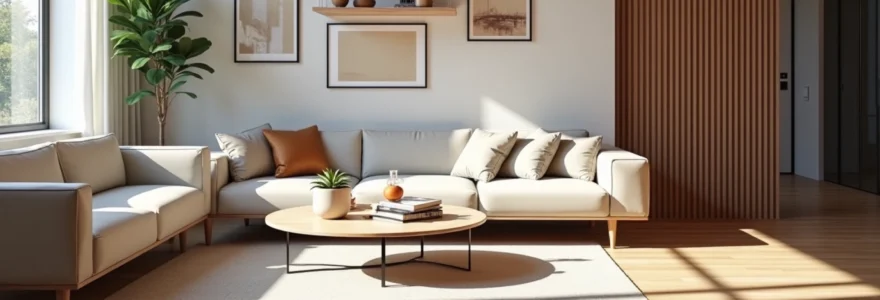
The art of selecting decorative objects has evolved dramatically in recent years, transforming from simple accessorising to a sophisticated practice that bridges psychology, design theory, and contemporary lifestyle trends. Modern interiors demand more than aesthetically pleasing items scattered throughout a space; they require carefully curated objects that create visual harmony whilst expressing personal identity. Understanding how to choose these elements effectively can elevate any interior from ordinary to extraordinary, regardless of budget constraints or spatial limitations.
Today’s design landscape offers unprecedented access to diverse decorative objects, from artisanal ceramics crafted by independent makers to mass-produced pieces that capture current design movements. However, this abundance creates its own challenges. The key lies in developing a discerning eye that balances trending aesthetics with timeless principles of good design. Successful object selection requires understanding both the technical aspects of spatial composition and the emotional impact these pieces create within your living environment .
Colour psychology and visual weight distribution in contemporary interior design
Colour serves as the foundation for all decorative object selection, functioning not merely as an aesthetic choice but as a psychological tool that influences mood, spatial perception, and overall ambience. Contemporary interior design leverages colour psychology to create environments that support specific lifestyle goals, whether fostering relaxation in bedrooms or encouraging productivity in home offices. The strategic placement of coloured objects throughout a space can guide the eye, create focal points, and establish the desired emotional atmosphere.
Visual weight distribution becomes crucial when working with coloured decorative objects, as darker colours naturally appear heavier than lighter ones. A deep burgundy vase carries significantly more visual weight than a pale pink equivalent of identical size, requiring different positioning strategies to maintain spatial balance. Understanding this principle allows you to create dynamic compositions that feel both stable and engaging, preventing any single area from overwhelming the overall design scheme.
Monochromatic schemes with statement accent pieces
Monochromatic colour schemes provide an elegant backdrop for showcasing carefully selected statement pieces, creating sophisticated interiors that feel cohesive yet interesting. This approach involves selecting decorative objects within a single colour family whilst varying saturation, tone, and texture to maintain visual interest. The success of monochromatic decorating lies in embracing subtle variations rather than exact colour matches , allowing natural light and shadow to create depth and dimension throughout the space.
Statement accent pieces within monochromatic schemes should be chosen with particular care, as they carry the responsibility of preventing monotony whilst respecting the overall colour discipline. A single vibrant sculpture or artwork can energise an entirely neutral room without disrupting its serene quality. These focal pieces work most effectively when they share undertones with the dominant colour scheme, creating connection whilst providing necessary contrast.
Complementary colour theory applications for decorative objects
Complementary colours—those positioned opposite each other on the colour wheel—create natural vibrancy when paired together in decorative object arrangements. This principle extends beyond simple red-and-green or blue-and-orange combinations to include more sophisticated interpretations such as sage green with dusty rose or navy blue with warm terracotta. The key lies in balancing the intensity of these pairings to avoid overwhelming the space whilst maintaining their dynamic visual impact.
Modern interpretations of complementary colour theory often involve using one colour as the dominant presence whilst introducing its complement through smaller decorative objects. This approach creates visual tension that energises a space without creating chaos. Consider how copper accessories can warm a predominantly blue room, or how purple textiles can add richness to a yellow-based colour scheme.
Warm versus cool undertones in modern minimalist spaces
Temperature in colour extends beyond obvious warm reds and cool blues to encompass the subtle undertones present in seemingly neutral objects. Even white decorative pieces can lean warm with creamy undertones or cool with blue-grey influences, significantly affecting how they interact with surrounding elements. Recognising these undertones becomes essential when creating cohesive minimalist interiors where every object must justify its presence .
Modern minimalist spaces benefit from consistent temperature choices in decorative objects, whether embracing the cosy warmth of honey-toned woods and brass accents or the crisp clarity of cool greys and chrome finishes. Mixed temperatures can create visual confusion in sparse environments where there are fewer objects to mediate between conflicting tones.
Metallic finishes and their impact on spatial perception
Metallic finishes in decorative objects serve multiple functions beyond their obvious aesthetic appeal, acting as light reflectors that can visually expand spaces and create points of interest throughout an interior. Different metals carry distinct psychological associations—brass suggests warmth and tradition, chrome implies modernity and precision, whilst copper evokes earthiness and craftsmanship. Understanding these associations helps in selecting metals that support your intended atmosphere.
The reflective quality of metallic objects requires careful consideration of their placement relative to light sources and viewing angles. A strategically positioned bronze sculpture can catch afternoon sunlight and cast interesting shadows, whilst a collection of silver objects might reflect artificial lighting to brighten darker corners. However, too many reflective surfaces can create visual chaos, particularly in smaller spaces where every reflection multiplies the visual complexity.
Scale, proportion and spatial hierarchy principles
Understanding scale and proportion forms the backbone of successful decorative object selection, determining whether individual pieces enhance or overwhelm their surroundings. These mathematical relationships, whilst often intuitive, follow specific principles that professional designers use to create visually pleasing arrangements. Scale refers to the size of objects relative to their environment, whilst proportion concerns the relationships between different elements within the same composition. Mastering these concepts allows you to create arrangements that feel natural and balanced, regardless of the individual objects involved .
Spatial hierarchy establishes visual importance through size relationships, positioning, and contrast. Larger objects naturally draw attention first, followed by medium-sized pieces, with smaller objects providing supporting details. This hierarchy can be manipulated through colour, texture, and placement to guide the viewer’s eye through your interior in a deliberate sequence. Creating effective hierarchy requires understanding not just the objects themselves, but how they interact with furniture, architectural features, and lighting conditions.
Golden ratio applications in decorative object placement
The golden ratio, approximately 1:1.618, appears throughout nature and has been used in art and architecture for millennia. When applied to decorative object placement, this ratio creates arrangements that feel inherently harmonious and pleasing to the eye. You can apply this principle by positioning objects so that the relationship between different sized elements follows this mathematical relationship, creating natural focal points and visual flow.
Practical application might involve placing a large vase and medium sculpture so that their proportional relationship echoes the golden ratio, then introducing smaller objects to support this primary relationship. This technique works particularly well when arranging objects on mantels, shelves, or console tables where linear arrangement allows the mathematical relationship to become visually apparent.
Visual triangle formation using Three-Point composition
Three-point composition creates stability and interest by arranging objects in triangular formations, either literally or implied through varying heights and positions. This technique prevents the static quality that often results from symmetrical arrangements whilst maintaining visual balance. The triangle’s points don’t need to be identical objects; instead, they should share some common element—colour, material, or style—that unifies the composition.
Effective triangular arrangements often feature one dominant element flanked by two supporting pieces of different heights and visual weights. This asymmetrical approach creates dynamic tension whilst maintaining overall stability. Consider how a tall candlestick, medium-sized bowl, and small decorative box might form an engaging triangular composition on a side table, each element supporting the others whilst maintaining individual character.
Height variation techniques for dynamic shelf styling
Creating visual interest through height variation requires more than simply placing tall objects next to short ones. Effective shelf styling employs a rhythm of heights that guides the eye naturally across the display whilst preventing monotony. The most successful arrangements typically feature a mix of one-third tall objects, one-third medium objects, and one-third low objects , though this ratio can be adjusted based on the specific shelf dimensions and surrounding context.
Professional stylists often employ the concept of “visual stairstepping,” where objects are arranged in gradually ascending or descending heights to create movement and flow. This technique works particularly well with books, ceramics, and sculptural objects that can be layered and stacked to achieve the desired height variations whilst maintaining stability and visual coherence.
Negative space management in contemporary display arrangements
Negative space—the empty areas around and between objects—plays a crucial role in contemporary display arrangements, preventing visual overwhelm whilst allowing individual pieces to shine. Modern design philosophy embraces these empty spaces as active elements in the composition rather than voids to be filled. Strategic use of negative space creates breathing room that enhances the impact of selected objects whilst supporting the overall aesthetic goals.
Effective negative space management requires discipline in object selection and placement. Each empty area should feel intentional rather than accidental, supporting the overall composition’s rhythm and flow. This principle becomes particularly important in minimalist interiors where negative space often occupies more area than the objects themselves, making every placement decision critically important to the overall success of the design.
Current design movement integration and trend analysis
Contemporary interior design movements offer frameworks for selecting decorative objects that align with current aesthetic preferences whilst maintaining timeless appeal. Understanding these movements helps you make informed choices that feel fresh and relevant without falling into short-term trend traps. Each design philosophy carries its own object selection criteria, material preferences, and compositional approaches that, when understood and applied thoughtfully, can create cohesive and compelling interiors.
The challenge lies in interpreting these movements authentically whilst adapting them to personal preferences and practical constraints. Rather than adopting any movement wholesale, successful interior design involves extracting relevant principles and applying them selectively. This approach allows you to create spaces that feel contemporary and considered whilst maintaining individual character and long-term satisfaction.
Japandi aesthetic elements and natural material selection
The Japandi movement combines Japanese minimalism with Scandinavian hygge, creating interiors that emphasise natural materials, clean lines, and functional beauty. Decorative objects within this aesthetic typically feature organic forms, neutral colours, and tactile textures that invite touch and contemplation. Wood, stone, ceramics, and natural fibres dominate material selections, with each object chosen for both aesthetic and functional merit.
Successful Japandi object selection prioritises quality over quantity, with each piece serving a clear purpose whilst contributing to the overall sense of calm and order. The philosophy embraces imperfection as beauty, making handcrafted objects with visible maker’s marks particularly appropriate choices . Consider ceramics with subtle asymmetries, wooden bowls showing natural grain patterns, or stone objects displaying natural variations in colour and texture.
Maximalist revival through eclectic object curation
The maximalist revival challenges minimalist orthodoxy by celebrating abundance, pattern mixing, and eclectic object combinations. This movement requires sophisticated curation skills to prevent chaos whilst maintaining visual interest and personal expression. Successful maximalist decorating involves finding common threads—whether colour, era, material, or theme—that unify disparate objects into cohesive collections.
Effective maximalist object selection often involves layering different scales, textures, and periods whilst maintaining some underlying organisational principle. This might involve collecting objects within a specific colour family, focusing on particular materials like brass or ceramic, or curating pieces from certain historical periods. The key lies in creating organised complexity rather than random accumulation.
Biophilic design integration with living decorative elements
Biophilic design recognises humans’ innate connection to nature, incorporating natural elements that support wellbeing and environmental consciousness. Beyond traditional houseplants, this movement includes objects that reference natural forms, textures, and processes. Water features, natural stone sculptures, wood objects retaining organic shapes, and even fossilised specimens can serve as decorative elements that strengthen our connection to the natural world.
Living decorative elements require consideration of practical maintenance alongside aesthetic goals. Air plants in geometric containers, terrariums displaying miniature landscapes, or aquatic gardens can serve as sculptural objects whilst providing the psychological benefits of nature connection. These elements often change over time, adding temporal dimension to interior compositions that static objects cannot provide.
Industrial chic accessories and raw material combinations
Industrial chic celebrates the aesthetic of manufacturing and urban environments, incorporating raw materials like exposed metal, concrete, and reclaimed wood into residential interiors. Decorative objects within this movement often feature honest construction, visible joinery, and materials left in natural or weathered states. The appeal lies in authenticity and craftsmanship that contrasts with mass-produced perfection .
Successful industrial object selection balances roughness with refinement, preventing interiors from feeling harsh or unwelcoming. Concrete planters might be paired with soft textiles, whilst metal sculptures could be balanced with warm wood elements. The key lies in maintaining the industrial aesthetic’s honesty whilst ensuring the space remains habitable and comfortable for daily life.
Material science and texture layering strategies
Understanding how different materials interact visually and physically enhances your ability to create compelling decorative arrangements that engage multiple senses. Texture layering involves combining materials with varying surface qualities—smooth and rough, matte and glossy, hard and soft—to create visual and tactile interest throughout an interior. This approach prevents monotony whilst adding depth and sophistication to object arrangements.
Material science considerations extend beyond aesthetics to include practical factors like durability, maintenance requirements, and aging characteristics. Natural materials typically develop patina over time, whilst synthetic materials may maintain their original appearance indefinitely. Understanding these temporal qualities helps in selecting objects that will age gracefully within your interior, maintaining their appeal and contributing positively to the overall aesthetic evolution of the space.
Successful texture layering requires balancing contrasting materials whilst maintaining overall harmony through colour, scale, or stylistic connections. A rough-hewn wooden bowl might be paired with smooth ceramic vessels, whilst maintaining connection through similar earth tones. Metallic objects can bridge different material families, their reflective qualities mediating between matte and glossy surfaces whilst adding their own distinct textural contribution.
The most compelling interiors feature deliberate material contrasts that create visual dialogue between different surfaces, inviting touch and encouraging closer examination whilst maintaining overall compositional unity.
Lighting interaction and reflective surface optimisation
Lighting transforms decorative objects throughout the day, affecting their perceived colour, texture, and visual weight within interior compositions. Understanding how different materials interact with various light sources enables more strategic object placement and selection. Natural light changes throughout the day and seasons, creating different moods and highlighting different aspects of the same objects. Artificial lighting offers more control but requires careful consideration of colour temperature, intensity, and direction to showcase decorative objects effectively.
Reflective surfaces in decorative objects can amplify lighting effects whilst creating visual complexity through multiple reflections and refractions. Metallic finishes, glass objects, and polished stone surfaces all interact differently with light sources, requiring specific positioning strategies to achieve desired effects. Too many reflective surfaces can create visual chaos, whilst strategic placement can enhance spatial perception and add dynamism to static arrangements.
Consider how morning light might illuminate a collection of glass vessels differently than evening lamplight, revealing different aspects of colour and transparency. Matte surfaces absorb light and appear more stable throughout changing conditions, whilst glossy surfaces create drama through their dynamic interaction with light sources. Professional designers often position objects with these lighting variations in mind, ensuring arrangements remain compelling throughout different times of day and various lighting scenarios .
Strategic lighting consideration transforms static object arrangements into dynamic compositions that evolve throughout the day, creating different moods and focal points as light conditions change naturally or through artificial control.
Cultural authenticity and artisanal craftsmanship sourcing
Sourcing authentic cultural objects and supporting artisanal craftsmanship adds depth and meaning to decorative object collections whilst contributing to global maker communities. This approach requires research and sensitivity to avoid cultural appropriation whilst celebrating diverse aesthetic traditions. Authentic pieces carry stories and techniques passed down through generations, bringing richness that mass-produced alternatives cannot replicate.
Understanding the cultural significance and traditional uses of objects enhances their integration into contemporary interiors. A traditional Japanese ceramic tea bowl might serve as a sculptural object whilst maintaining respect for its original purpose and cultural context. This knowledge informs placement, grouping, and care decisions that honour the object’s origins whilst allowing it to function within a new cultural context.
Artisanal craftsmanship offers unique pieces that cannot be exactly replicated, ensuring your interior contains elements that are truly individual. The slight irregularities and maker’s marks inherent in handcrafted objects provide visual interest and authenticity that factory-produced items lack. Supporting contemporary makers maintains traditional skills whilst encouraging innovation within established techniques, creating objects that bridge historical methods with contemporary aesthetic sensibilities.
Authentic cultural objects and artisanal pieces bring irreplaceable depth to interior compositions, carrying stories and techniques that mass production cannot replicate, whilst supporting global communities of skilled craftspeople who maintain traditional knowledge and techniques.
Working with local artisans also allows for customisation opportunities that align perfectly with specific interior requirements. Many craftspeople accept commissions for pieces tailored to particular colour schemes, dimensions, or functional needs. This collaborative approach creates objects that fit seamlessly into existing design schemes whilst maintaining the authenticity and uniqueness that only handmade items can provide. The relationship between maker and owner often extends beyond the initial purchase, creating ongoing connections that add personal narrative to the decorative objects within your interior.
The investment in authentic cultural objects and artisanal craftsmanship extends beyond monetary value to encompass cultural preservation, community support, and the irreplaceable satisfaction of owning pieces that carry genuine human creativity and skill within their forms and finishes.
When selecting decorative objects for contemporary interiors, the convergence of aesthetic principles, practical considerations, and personal expression creates opportunities for truly exceptional design outcomes. The most successful approaches combine technical understanding of colour, scale, and composition with sensitivity to cultural contexts and appreciation for skilled craftsmanship. Whether embracing minimalist restraint or maximalist abundance, the thoughtful selection and placement of decorative objects transforms ordinary spaces into environments that reflect individual taste whilst demonstrating sophisticated design understanding.
Remember that trends provide inspiration rather than rigid rules, and the most compelling interiors often result from confident personal choices supported by solid design principles. Your decorative object selections should ultimately create environments that enhance daily life whilst expressing your unique perspective on contemporary living. Through careful consideration of these various factors—from colour psychology to cultural authenticity—you can curate collections that remain visually engaging and personally meaningful for years to come, evolving gracefully as your aesthetic preferences and lifestyle requirements change over time.