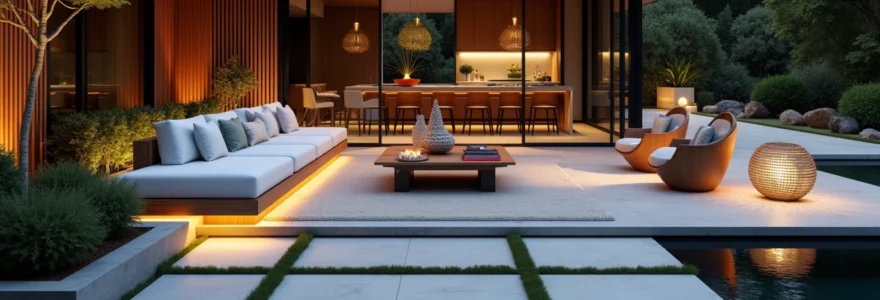
Outdoor living spaces have evolved from simple patios to sophisticated extensions of our homes, demanding the same level of design attention as interior rooms. The strategic incorporation of statement decor pieces transforms mundane garden areas into captivating environments that reflect personal style whilst providing functional outdoor living solutions. Understanding how to select, position, and integrate these focal elements requires both artistic vision and practical knowledge of outdoor design principles.
Contemporary homeowners increasingly recognise that outdoor spaces serve as valuable extensions of their living areas, with property values rising by an average of 15-20% when well-designed outdoor environments are present. The key lies in choosing pieces that not only withstand weather conditions but also create visual impact throughout different seasons. From sculptural water features to architectural lighting installations, statement decor elements establish hierarchy within outdoor compositions whilst maintaining cohesive design narratives.
The investment in quality statement pieces pays dividends in both aesthetic appeal and long-term durability. Professional landscape designers emphasise that successful outdoor environments balance functionality with visual drama, creating spaces that invite both contemplation and entertainment. This approach requires careful consideration of scale, materials, and positioning to achieve maximum impact without overwhelming the natural landscape.
Strategic placement principles for statement decor elements in outdoor environments
The foundation of successful outdoor design lies in understanding how statement pieces interact with existing landscape elements and architectural features. Professional placement strategies consider multiple viewing angles, seasonal changes, and the natural flow of outdoor spaces to create environments that feel both intentional and organic.
Visual weight distribution techniques using focal point theory
Visual weight distribution governs how the eye moves through outdoor spaces, with statement pieces serving as anchors that guide attention and create balanced compositions. Large-scale sculptures or architectural features should be positioned to complement rather than compete with existing focal points such as mature trees, water views, or significant architectural elements. The rule of thirds applies effectively in outdoor design, with primary focal points positioned approximately one-third from edges rather than centre-stage.
Secondary statement pieces support the primary focal point whilst creating visual triangles that lead the eye through the space. This technique prevents the common mistake of clustering impressive pieces together, which can create visual confusion and diminish individual impact. Asymmetrical balance often proves more dynamic than symmetrical arrangements, particularly in naturalistic garden settings where organic forms predominate.
Proportional scaling methods for Large-Format garden sculptures
Scale relationships determine whether statement pieces enhance or overwhelm outdoor environments. Professional designers utilise the golden ratio principle, ensuring that large sculptures measure approximately 1.618 times the height of surrounding elements for optimal visual harmony. This mathematical approach prevents the common error of selecting pieces that appear either insignificant within expansive landscapes or overpowering in intimate garden rooms.
Vertical elements require particular attention to proportional relationships with horizontal planes. A sculpture standing eight feet tall demands a minimum clearance zone of five feet radius to prevent crowding effects, whilst allowing adequate viewing distance for appreciation of detail and form. Ground-level statement pieces such as architectural planters or sculptural seating benefit from elevation changes or backdrop elements that enhance their prominence without requiring excessive scale.
Sight line optimisation through strategic positioning frameworks
Strategic positioning considers multiple viewpoints throughout outdoor spaces, ensuring statement pieces remain visually engaging from primary seating areas, entrance points, and circulation paths. The concept of “borrowed scenery” allows statement pieces to frame distant views or draw attention to attractive landscape features beyond property boundaries. This technique maximises visual impact whilst creating connections between different garden zones.
Seasonal sight line changes require forward-thinking placement strategies. Deciduous plantings may obscure summer views whilst revealing winter vistas, affecting how statement pieces function throughout the year. Professional designers often create “seasonal reveals” where certain decor elements become more prominent during specific seasons, maintaining year-round visual interest through changing emphasis rather than static arrangements.
Landscape architecture integration using golden ratio principles
The golden ratio provides mathematical precision for integrating statement pieces within existing landscape architecture. This principle applies to spacing between elements, height relationships, and proportional divisions of outdoor areas. For instance, when positioning a water feature within a rectangular patio, placement at the golden ratio point (approximately 38% from one edge) creates more dynamic visual tension than central positioning.
Hardscape elements such as retaining walls, pergolas, or built-in seating benefit from golden ratio proportioning to achieve pleasing relationships with statement decor pieces. The interplay between architectural elements and decorative features should feel inevitable rather than arbitrary, with each component supporting the overall design narrative whilst maintaining individual character and function.
Contemporary statement furniture selection for alfresco dining spaces
Modern outdoor furniture transcends basic functionality to become sculptural elements that define outdoor living areas. The selection process requires balancing aesthetic impact with practical considerations including weather resistance, maintenance requirements, and adaptability to changing seasonal needs.
Weather-resistant teak statement dining tables from barlow tyrie collections
Premium teak furniture represents the pinnacle of outdoor dining elegance, with Barlow Tyrie collections exemplifying the marriage of contemporary design and time-tested materials. Teak’s natural oils provide inherent weather resistance whilst developing an attractive silver patina over time, eliminating the need for protective finishes that can compromise aesthetic appeal. Statement dining tables featuring architectural bases or innovative joinery techniques serve dual roles as functional surfaces and sculptural focal points.
The longevity of quality teak furniture justifies initial investment costs, with well-maintained pieces lasting decades whilst retaining their visual appeal. Contemporary teak designs incorporate clean lines and geometric forms that complement both traditional and modern architectural styles. Maintenance requirements remain minimal, typically involving periodic cleaning and optional oil treatments to preserve original colouring if desired.
Sculptural seating solutions: dedon outdoor lounge systems
Innovative seating systems blur the boundaries between furniture and art, with modular configurations allowing creative arrangements that adapt to different entertainment scenarios. Dedon’s synthetic fibre technologies provide the tactile appeal of natural materials whilst offering superior weather resistance and colour retention. These systems often feature sculptural silhouettes that maintain visual interest even when unoccupied.
Modular seating arrangements enable flexible outdoor room configurations, transforming intimate conversation areas into larger entertainment zones as needed. The key to successful integration lies in selecting pieces with strong individual character that work harmoniously within larger compositions. Quality construction ensures these investment pieces maintain their structural integrity and aesthetic appeal through multiple seasons of use.
Architectural pergola structures with integrated lighting features
Contemporary pergola designs function as architectural statement pieces whilst providing practical benefits including shade, weather protection, and lighting integration. Modern materials such as powder-coated aluminium offer design flexibility without the maintenance requirements of traditional timber construction. Integrated lighting systems transform these structures into dramatic evening focal points whilst extending usable hours of outdoor spaces.
LED technology enables sophisticated lighting effects within pergola frameworks, from subtle accent lighting to dynamic colour-changing systems. The structural geometry of pergolas creates natural mounting points for speakers, heating elements, and retractable shade systems, maximising functionality whilst maintaining clean aesthetic lines. Smart home integration allows automated control of lighting, climate, and audio systems through unified control platforms.
Modular sectional arrangements using paola lenti outdoor fabrics
High-performance outdoor fabrics enable sophisticated upholstery treatments that rival interior furniture quality whilst withstanding outdoor conditions. Paola Lenti fabrics combine exceptional weather resistance with luxurious tactile qualities and sophisticated colour palettes that complement natural outdoor settings. These materials enable the creation of statement seating arrangements that provide both visual drama and superior comfort.
Modular sectional systems offer design flexibility whilst maintaining cohesive aesthetic themes throughout outdoor living areas. The ability to reconfigure seating arrangements accommodates different entertainment scenarios whilst ensuring optimal traffic flow and sight lines. Quality construction and premium materials justify higher initial costs through extended service life and maintained appearance quality over time.
Artistic water feature integration as landscape centrepieces
Water features serve as powerful focal points that engage multiple senses whilst creating cooling effects and masking unwanted ambient noise. Contemporary designs range from minimalist reflecting pools to sculptural fountains, each requiring careful integration with existing landscape elements and infrastructure considerations including electrical supply, drainage, and seasonal maintenance access.
The scale and style of water features must complement rather than compete with architectural elements and natural landscape features. Large installations demand substantial infrastructure investment including foundation work, electrical supply, and filtration systems, whilst smaller features can often integrate into existing irrigation systems. Professional installation ensures proper drainage, prevents water damage to adjacent structures, and incorporates safety features required by local building codes.
Modern water feature technology includes variable-speed pumps, LED lighting systems, and automated maintenance equipment that simplify ongoing care whilst maximising operational efficiency. Smart controls enable remote monitoring and adjustment of water flow, lighting effects, and filtration cycles. Seasonal considerations include winterisation procedures in freeze-prone climates and algae management during warm weather periods.
The sound of moving water creates an immediate sense of tranquillity whilst providing acoustic privacy from neighbouring properties, making water features particularly valuable in urban outdoor environments.
Energy-efficient pumping systems and solar-powered options reduce operational costs whilst supporting sustainable design principles. The integration of native aquatic plants enhances ecological value whilst reducing maintenance requirements through natural filtration processes. Water feature placement should consider prevailing wind patterns to prevent excessive evaporation and spray drift onto adjacent surfaces or plantings.
Contemporary fountain designs often incorporate programmable jets, colour-changing LED systems, and music synchronisation capabilities that transform simple water features into sophisticated entertainment elements. These advanced systems require professional installation and maintenance but provide dramatic focal points for special events and evening entertainment. The technology also enables seasonal programming that adjusts water patterns and lighting effects throughout the year.
Oversized planters and container gardening for architectural impact
Large-scale planters function as architectural elements whilst providing flexible planting opportunities that adapt to changing design needs and seasonal preferences. Contemporary materials including lightweight concrete, weathering steel, and high-performance composites enable dramatic scale without excessive weight or maintenance requirements.
Strategic planter positioning creates room divisions, screens unsightly views, and establishes circulation patterns within outdoor spaces. The mobility of container gardens enables seasonal design changes and protection of valuable plants during adverse weather conditions. Drainage design proves critical for plant health and structural longevity, requiring proper sizing of drainage holes and appropriate substrate materials.
Oversized planters accommodate mature specimens that provide immediate visual impact and seasonal interest. Tree-form plants in substantial containers create portable shade and architectural presence that can be repositioned as design needs evolve. The investment in quality containers and mature plantings pays dividends through immediate establishment and reduced maintenance requirements compared to traditional landscape installation.
Grouping planters of varying sizes creates dynamic compositions whilst maintaining design cohesion through material consistency or complementary plant palettes. Professional designers often employ odd-number groupings and varied heights to achieve natural-appearing arrangements that feel intentional rather than static. The interplay between container materials, plant textures, and surrounding hardscape elements creates layered visual interest that evolves throughout growing seasons.
Modern planter technologies include self-watering systems, integrated lighting, and modular construction that simplifies installation and relocation. These features particularly benefit rooftop and balcony applications where weight considerations and water access present challenges. Smart irrigation systems can be integrated with weather monitoring and soil moisture sensors to optimise plant health whilst minimising water consumption.
Ambient lighting design through statement fixture installation
Sophisticated outdoor lighting transforms garden spaces into dramatic evening environments whilst extending usable hours and enhancing security. Contemporary lighting design balances functional illumination with aesthetic impact, creating layers of light that highlight architectural features, define circulation paths, and establish intimate gathering areas.
LED strip integration within hardscape elements
Integrated LED strip lighting creates seamless illumination effects within steps, retaining walls, and architectural features without visible fixtures that compromise daytime aesthetics. Modern LED technologies offer exceptional energy efficiency, extended service life, and sophisticated control capabilities including dimming, colour changing, and programmable effects. Proper installation requires weatherproof connections and adequate heat dissipation to ensure system longevity.
The linear nature of LED strips enables creative applications including outline lighting of architectural features, under-cap lighting of walls and planters, and integrated pathway marking. Professional installation ensures proper electrical connections, adequate weatherproofing, and compliance with local electrical codes. Control systems range from simple switches to sophisticated smart home integration that enables automated scheduling and remote operation.
Solar-powered sculptural lighting from tom dixon outdoor collections
Solar-powered lighting solutions eliminate electrical installation requirements whilst providing sophisticated design aesthetics through sculptural fixture forms. Tom Dixon outdoor collections exemplify how functional lighting can serve as daytime sculptural elements that transform into dramatic light sources after dark. Advanced solar technology and efficient LED systems enable reliable operation even in challenging climate conditions.
The portability of solar fixtures enables flexible positioning and seasonal reconfiguration without electrical infrastructure modifications. Quality solar lighting systems incorporate intelligent charging management and weather-resistant construction that ensures reliable operation throughout varying seasonal conditions. Battery backup systems provide extended operation during periods of limited solar charging, maintaining consistent lighting performance.
Uplighting techniques for mature tree canopy enhancement
Professional uplighting techniques transform mature trees into dramatic nighttime focal points whilst providing ambient illumination for surrounding areas. Proper fixture placement and beam angle selection prevent light pollution whilst maximising visual impact through strategic highlighting of trunk structure and foliage patterns. Well-designed uplighting creates depth and dimension within outdoor spaces after dark.
Energy-efficient LED fixtures provide the precise beam control and colour quality necessary for effective tree lighting whilst minimising operational costs and maintenance requirements. Fixture positioning must consider seasonal foliage changes and growth patterns to maintain optimal lighting effects over time. Timer controls and smart switching systems enable automated operation whilst preventing unnecessary energy consumption during daylight hours.
Pathway illumination using recessed ground fixtures
Recessed pathway lighting provides essential safety illumination whilst maintaining clean aesthetic lines that don’t compete with surrounding landscape elements. Quality ground fixtures incorporate robust construction and superior sealing systems that withstand foot traffic, weather exposure, and landscape maintenance activities. LED technology enables precise beam patterns that illuminate walking surfaces without creating glare or light pollution.
Strategic spacing and beam angle selection ensure adequate illumination whilst avoiding over-lighting that can compromise the intimate ambiance of evening outdoor spaces. Recessed fixtures require proper drainage design and access provisions for maintenance activities. Professional installation includes appropriate electrical protection and compliance with local building codes for ground-mounted lighting systems.
Textile applications through Weather-Resistant statement fabrics
High-performance outdoor textiles enable sophisticated soft furnishing treatments that provide comfort, colour, and pattern whilst withstanding challenging weather conditions. Contemporary synthetic fabrics offer superior fade resistance, mould prevention, and easy maintenance compared to traditional natural fibres, enabling investment in quality soft furnishings that maintain their appearance over multiple seasons.
Statement textile applications include oversized cushions, weather-resistant curtains, and architectural shade structures that define outdoor rooms whilst providing comfort and weather protection. The key to successful textile integration lies in selecting fabrics that complement rather than compete with natural outdoor elements whilst providing sufficient visual impact to serve as focal points within outdoor compositions.
Quality outdoor fabrics can withstand over 1,000 hours of UV exposure whilst maintaining colour integrity, making them suitable for permanent installation in even the most challenging outdoor environments.
Modern outdoor fabric technologies include antimicrobial treatments, stain resistance, and water repellency that simplify maintenance whilst ensuring hygiene and appearance retention. These treatments enable the use of lighter colours and more sophisticated patterns that would be impractical with traditional outdoor textiles. Professional cleaning and seasonal storage extend fabric life whilst maintaining optimal appearance quality.
Textile layering techniques create sophisticated outdoor environments that adapt to changing weather conditions and seasonal preferences. Removable cushion covers enable easy cleaning and seasonal colour changes, whilst permanent installations such as shade sails and architectural curtains provide structural elements that define outdoor spaces. The interplay between textile colours, patterns, and surrounding natural elements creates dynamic seasonal compositions that evolve throughout the year.
Custom fabrication enables precise fit and unique design solutions that integrate seamlessly with specific outdoor furniture and architectural elements. Professional installation ensures proper tensioning, drainage, and attachment methods that prevent damage during high wind conditions whilst maintaining aesthetic appeal. Quality hardware systems including marine-grade stainless steel components ensure long-term durability in challenging outdoor environments.