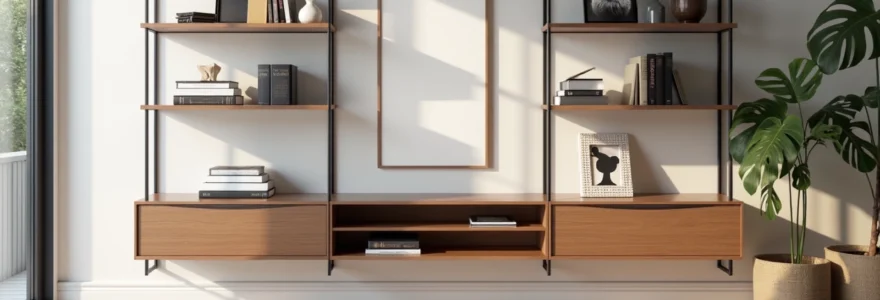
Designer shelving has evolved far beyond mere storage solutions, transforming into sophisticated architectural elements that blur the lines between functionality and artistic expression. Modern homeowners increasingly recognise that well-designed shelving systems can serve as sculptural installations, creating visual depth and dynamic focal points that rival traditional wall art. The careful selection of materials, proportions, and arrangement patterns can transform an ordinary wall into a compelling design statement that enhances the entire living space.
The concept of shelving as art represents a fundamental shift in interior design philosophy. Rather than viewing storage as a necessary evil that must be hidden away, contemporary designers embrace shelving as an opportunity to create three-dimensional compositions that engage viewers through form, texture, and spatial relationships. This approach allows homeowners to display their collections whilst simultaneously creating an artistic framework that elevates the perceived value of displayed objects.
Understanding the technical aspects of shelving installation, compositional principles, and material selection enables homeowners to make informed decisions about their wall treatments. The integration of lighting systems and modular components further expands the creative possibilities, allowing for dynamic arrangements that can evolve with changing needs and aesthetic preferences.
Floating shelving systems: engineering weight distribution and structural integrity
The engineering principles behind floating shelves represent a fascinating intersection of physics and design aesthetics. Modern floating shelf systems rely on sophisticated bracket mechanisms that distribute weight loads across multiple wall attachment points, creating the illusion of shelves that defy gravity. The most effective systems incorporate steel reinforcement within the shelf structure itself, allowing for substantial load-bearing capacity whilst maintaining the clean, minimal appearance that makes floating shelves so visually striking.
Hidden bracket mechanisms: keyhole and french cleat installation techniques
Keyhole mounting systems represent the most common approach for lightweight floating shelves, utilising precisely machined grooves that slide over corresponding wall-mounted screws. This technique works exceptionally well for shelves under 15 kilograms, providing secure mounting whilst maintaining the floating aesthetic. The keyhole design allows for easy installation and removal, making it ideal for rental properties or frequently changing display arrangements.
French cleat systems offer superior load-bearing capacity through their interlocking design principle. The cleat consists of two bevelled strips – one mounted to the wall and another attached to the shelf – that lock together when the shelf is lowered into position. This distribution method can support weights exceeding 50 kilograms per linear metre when properly installed into wall studs, making it suitable for displaying heavy books, ceramics, or sculptural objects.
Load-bearing calculations for cantilever shelf design
Calculating the appropriate load-bearing capacity requires understanding the cantilever effect that occurs with floating shelves. The further an object sits from the wall attachment point, the greater the leverage force applied to the mounting system. Professional installers use the formula: Load Factor = Weight × Distance from Wall ÷ Shelf Depth to determine safe loading limits and prevent shelf failure.
Material thickness plays a crucial role in load distribution. Shelves constructed from 38mm thick engineered timber can typically support 25-30 kilograms when properly reinforced, whilst steel-core systems can handle significantly higher loads. The mounting height also affects structural performance, with higher installations requiring additional bracing to counteract the increased leverage forces.
Wall stud integration and hollow wall anchor solutions
Locating wall studs remains essential for heavy-duty floating shelf installations. Modern electronic stud finders can detect timber framing through plasterboard with remarkable accuracy, allowing installers to position brackets for maximum structural support. When installing into concrete or masonry walls, chemical anchors provide superior holding power compared to mechanical fixings, creating bonds that often exceed the strength of the surrounding material.
Hollow wall installations require specialised anchor systems designed to distribute loads across larger surface areas. Toggle bolts and cavity anchors work by expanding behind the plasterboard, creating mechanical locks that prevent pull-through failure. For premium installations, installers often combine multiple anchor types to create redundant fixing systems that ensure long-term reliability.
Material selection: steel reinforcement versus aluminium framework
Steel reinforcement provides unmatched strength-to-weight ratios for floating shelf construction. Internal steel armatures can be completely concealed within timber shelves, providing exceptional load-bearing capacity whilst maintaining natural wood aesthetics. Powder-coated steel frameworks resist corrosion and provide consistent performance across varying humidity conditions, making them ideal for bathroom and kitchen installations.
Aluminium frameworks offer significant weight savings whilst providing excellent corrosion resistance. Extruded aluminium profiles can be precisely machined to accommodate hidden fixing systems and cable management for integrated lighting. The material’s thermal properties also make it suitable for heated environments, where timber might experience dimensional changes that could compromise the installation.
Asymmetrical composition techniques in contemporary shelving arrangements
Asymmetrical shelving arrangements create visual dynamism that challenges traditional notions of balance and proportion. Unlike symmetrical layouts that rely on mirror-image repetition, asymmetrical compositions achieve harmony through careful weight distribution and proportional relationships. This approach allows for more organic, flowing arrangements that respond to the specific architectural features of each space whilst accommodating varying display requirements.
Contemporary designers increasingly favour asymmetrical arrangements because they create visual movement and prevent the static feel that can result from overly symmetrical installations.
Golden ratio applications in modular shelving layout design
The golden ratio (1:1.618) provides a mathematical framework for creating visually pleasing proportional relationships in shelving layouts. When applied to shelf spacing and sizing, this ratio creates natural rhythm and balance that feels intuitively correct to viewers. Designers often use the ratio to determine the relative sizes of shelf groupings, with larger sections measuring approximately 1.618 times the dimension of smaller adjacent sections.
Modular shelving systems benefit particularly from golden ratio applications because the proportional relationships remain consistent regardless of the overall scale. This mathematical approach ensures that shelf arrangements maintain visual coherence whether installed in compact apartments or expansive loft spaces, providing a reliable framework for creating sophisticated compositions.
Negative space utilisation for visual balance and breathing room
Effective shelving design recognises that negative space – the empty areas between shelves – plays an equally important role as the shelves themselves. Strategic placement of negative space prevents visual overcrowding whilst creating opportunities for the eye to rest and process the overall composition. Professional designers typically allocate 30-40% of wall space to negative space, ensuring that shelving arrangements feel balanced rather than overwhelming.
The distribution of negative space requires careful consideration of viewing angles and room proportions. Larger negative spaces work effectively at eye level, where they provide natural focal points for artwork or statement objects. Smaller gaps between shelves create rhythm and movement, drawing the viewer’s attention across the entire installation whilst maintaining visual coherence.
Triangular and diamond configuration patterns for dynamic display
Triangular arrangements create strong directional movement that can guide attention towards specific display areas or architectural features. These configurations work particularly well for showcasing collections of varying sizes, with larger items positioned at the base points and smaller objects filling the upper reaches. The inherent stability of triangular forms creates psychological comfort whilst the asymmetrical nature maintains visual interest.
Diamond patterns offer more complex visual relationships through their four-point structure. These arrangements can accommodate multiple focal points whilst maintaining overall unity through the geometric framework. Diamond configurations prove especially effective for corner installations, where the pattern can wrap around architectural angles to create seamless transitions between wall surfaces.
Scale progression theory in Multi-Level shelf installation
Scale progression involves the systematic variation of shelf sizes to create visual depth and hierarchy within the overall composition. This technique typically employs gradual size transitions rather than abrupt changes, creating smooth visual flow that feels natural and unforced. The progression can move from small to large, large to small, or follow more complex patterns that respond to specific architectural conditions.
Multi-level installations benefit from scale progression because it helps organise complex arrangements into comprehensible visual units. By grouping shelves of similar sizes whilst maintaining overall progression, designers create sub-compositions that contribute to the larger whole. This approach allows for flexible display options whilst ensuring that the shelving system itself remains visually coherent regardless of what objects are displayed upon it.
Bespoke shelving materials: transforming functional storage into sculptural elements
Material selection fundamentally determines whether shelving functions merely as storage or elevates to become sculptural art. The choice of materials affects not only the visual impact but also the tactile qualities, aging characteristics, and long-term performance of the installation. Contemporary bespoke shelving embraces both traditional craftsmanship materials and innovative composites, often combining multiple materials within single installations to create rich textural contrasts and visual depth.
Reclaimed timber species: oak, walnut, and teak character enhancement
Reclaimed oak possesses distinctive grain patterns and rich patina that develop over decades of use and weathering. The material’s natural durability makes it ideal for heavy-duty shelving applications, whilst its character markings – including nail holes, saw marks, and weathering stains – add authentic historical narrative to contemporary installations. Professional restoration techniques can enhance these characteristics whilst ensuring structural integrity for modern use.
Walnut offers exceptional aesthetic appeal through its chocolate-brown heartwood and contrasting lighter sapwood. The species machines beautifully, allowing for precise edge profiling and joinery details that enhance the sculptural quality of shelving installations. Walnut’s natural oil content provides inherent moisture resistance, making it suitable for bathroom and kitchen applications where other timbers might prove problematic.
Reclaimed teak brings exceptional stability and weather resistance to shelving projects. The material’s natural oils prevent insect attack and moisture absorption, ensuring consistent dimensional stability across varying environmental conditions. Teak’s distinctive golden-brown colouration develops a silver-grey patina over time, creating evolving aesthetic character that adds temporal dimension to shelving installations.
Industrial metal finishes: patina treatment and powder coating applications
Patina treatments transform raw steel into richly coloured surfaces that suggest centuries of weathering and use. Chemical patination processes can produce colours ranging from deep rust-oranges to blue-green copper tones, creating surfaces that appear naturally aged whilst maintaining the structural integrity of new steel. These finishes work particularly well in industrial and contemporary settings where the contrast between old and new creates compelling visual tension.
Powder coating technology enables precise colour matching and texture creation on metal shelving components. Unlike traditional paint systems, powder coatings create chemical bonds with the substrate that resist chipping, fading, and corrosion over extended periods. The process allows for sophisticated textural effects including hammered, leather-grain, and antique finishes that add tactile interest to shelving installations.
Sustainable composite materials: bamboo laminate and cork integration
Bamboo laminate offers exceptional strength-to-weight ratios whilst providing distinctive linear grain patterns that create visual movement across shelf surfaces. The material’s rapid regeneration makes it environmentally sustainable, appealing to environmentally conscious homeowners. Bamboo’s natural antimicrobial properties make it particularly suitable for kitchen and bathroom shelving where hygiene considerations are paramount.
Cork integration introduces unique textural qualities and excellent thermal insulation properties to shelving systems. Compressed cork panels can be laminated to structural substrates, creating surfaces that are naturally water-resistant and provide excellent grip for displaying objects. The material’s distinctive cellular structure creates visual interest whilst offering practical advantages including sound absorption and thermal stability.
Glass shelving: tempered safety standards and edge polishing techniques
Tempered glass shelving must meet stringent safety standards to ensure user protection in case of breakage. British Standard BS 6206 specifies impact resistance requirements and fragmentation patterns for safety glass applications. Properly tempered glass shelves shatter into small, relatively harmless fragments rather than dangerous sharp shards, making them suitable for residential use even in high-traffic areas.
Edge polishing techniques dramatically affect the visual quality and safety of glass shelving. Machine-polished edges provide perfect clarity and smooth surfaces that eliminate cutting hazards whilst maximising light transmission. Bevelled edges add sophisticated detail whilst reducing the apparent thickness of the glass, creating more elegant proportions that enhance the floating effect of the shelving installation.
Illuminated display solutions: LED integration and shadow play techniques
Integrated lighting transforms shelving from static display surfaces into dynamic architectural features that change character throughout the day. LED technology enables precise control over colour temperature, intensity, and distribution patterns, allowing designers to create dramatic shadow effects whilst highlighting specific display objects. The integration of lighting systems requires careful planning during the design phase to accommodate power requirements and heat dissipation whilst maintaining the clean aesthetic lines that make modern shelving so appealing.
Shadow play techniques utilise carefully positioned light sources to create dramatic contrasts and depth effects that enhance the three-dimensional quality of shelving installations. Grazing light across textured surfaces reveals material characteristics that remain hidden under flat illumination, whilst backlighting can create silhouette effects that emphasise object forms. The interplay between light and shadow adds temporal dimension to static displays, creating visual interest that changes as viewing angles shift throughout the space.
Colour temperature selection significantly impacts the mood and functionality of illuminated shelving. Warm white LEDs (2700K-3000K) create inviting, residential atmospheres that enhance timber and metallic finishes, whilst cooler temperatures (4000K-5000K) provide better colour rendering for artwork and collectibles. Adjustable systems allow users to modify lighting characteristics according to specific display requirements or daily activities.
Heat management becomes critical when integrating high-output LED systems into shelving installations. Aluminium heat sinks and thermal management systems ensure consistent light output whilst preventing damage to displayed objects or shelving materials. Professional installations incorporate thermal cutoffs and dimming systems that automatically adjust output based on ambient temperature conditions, ensuring long-term reliability and performance.
| Lighting Type | Colour Temperature | Best Applications | Power Consumption |
|---|---|---|---|
| Warm White LED | 2700K-3000K | Books, timber displays | 8-12W per metre |
| Neutral White LED | 3500K-4000K | Mixed materials | 10-15W per metre |
| Cool White LED | 5000K-6500K | Artwork, photography | 12-18W per metre |
| RGB Systems | Variable | Dynamic displays | 15-25W per metre |
Wireless control systems enable sophisticated programming of lighting sequences and intensity levels. Smart home integration allows shelving lighting to respond to occupancy sensors, time schedules, or manual control through smartphone applications. These systems can create preset lighting scenes for different activities, from dramatic evening displays to functional task lighting for reading or detailed examination of displayed objects.
Professional lighting designers recommend installing dimming capabilities in all shelving applications, as the ability to adjust intensity levels dramatically expands the functional and aesthetic possibilities of the installation.
Modular systems: IKEA IVAR, string furniture, and USM haller customisation
Modular shelving systems democratise sophisticated design by providing professionally engineered components that can be configured to suit specific spatial and functional requirements. These systems offer significant cost advantages over bespoke installations whilst maintaining design flexibility and upgrade potential. The ability to reconfigure and expand modular systems makes them particularly attractive for rental properties or spaces that may require future modifications.
IKEA’s IVAR system represents the accessible entry point for modular shelving, offering solid pine construction and flexible configuration options at remarkable value. The system’s 50cm depth accommodates substantial storage requirements whilst the 30cm shelf spacing suits most book and display applications. Recent updates include corner units and cabinet components that expand functional possibilities beyond simple open shelving, enabling complex storage solutions that rival custom installations.
String Furniture’s modular system elevates the concept through sophisticated engineering and premium materials. The company’s wire grid system provides exceptional stability whilst maintaining visual lightness that suits contemporary interiors. Powder-coated steel components resist corrosion and wear, whilst the precise manufacturing tolerances ensure consistent fit and finish across all system components. The colour range includes subtle neutrals and bold accent colours that can create striking visual statements.
USM Haller represents the premium end of modular systems through its ball-and-tube construction methodology. Originally designed for office applications, the system’s robust engineering and sophisticated finishes translate exceptionally well to residential use. The modular nature allows for complex configurations including integrated lighting, glazed panels, and specialised storage compartments that can accommodate specific collection requirements.
- Scalability advantages allow systems to grow and adapt over time
The key to successful modular system implementation lies in understanding the specific advantages and limitations of each manufacturer’s approach. IKEA’s IVAR excels in basic functionality and affordability but lacks the sophisticated engineering found in premium systems. String Furniture provides an excellent balance of design sophistication and practical functionality, whilst USM Haller delivers uncompromising build quality and virtually unlimited configuration possibilities at corresponding price points.
Customisation possibilities within modular systems often exceed those available in bespoke installations due to the extensive research and development invested by manufacturers. String Furniture’s collaboration with leading architects has resulted in specialised components including magazine displays, wine storage, and integrated desk surfaces that seamlessly integrate with the core shelving system. These purpose-designed elements provide functionality that would require expensive custom fabrication in traditional installations.
Color coordination across modular systems enables sophisticated interior design schemes that rival custom installations. USM Haller’s extensive color palette includes 14 standard finishes plus seasonal limited editions that allow for striking accent applications. The powder-coated finish quality matches or exceeds that found on bespoke metalwork, whilst the standardised color matching ensures consistent appearance across different component types and installation phases.
The beauty of well-designed modular systems lies in their ability to evolve with changing lifestyle requirements whilst maintaining visual coherence and structural integrity throughout their extended service life.
Installation considerations for modular systems require careful planning despite their apparent simplicity. Wall-mounting systems like String Furniture demand precise measurement and leveling to ensure proper component alignment and load distribution. The modular nature can actually increase installation complexity compared to single-piece custom shelving, as each connection point must be perfectly positioned to maintain system integrity.
Future expansion planning becomes critical when selecting modular systems, as component availability and finish consistency can change over time. Professional installers recommend purchasing additional components during initial installation to ensure perfect color matching for future expansions. This approach also provides protection against potential manufacturing changes or discontinued finishes that could compromise the visual consistency of expanded installations.
- Assessment phase: Measure space dimensions and identify structural constraints
- Component selection: Choose system type and calculate required elements
- Layout planning: Create detailed installation drawings with load calculations
- Installation execution: Follow manufacturer specifications for mounting and assembly
- System optimization: Fine-tune configuration and plan future expansion options
The integration of technology within modular systems continues to advance, with manufacturers developing smart components that incorporate wireless charging, integrated lighting, and climate control features. These technological enhancements transform simple storage systems into sophisticated lifestyle platforms that respond to user needs whilst maintaining the clean aesthetic lines that make modular shelving so appealing in contemporary interiors.
Quality assessment criteria for modular systems should focus on component precision, finish durability, and connection reliability. High-quality systems exhibit consistent tolerances across all components, ensuring smooth assembly and long-term stability. The connection mechanisms should operate smoothly without excessive force whilst providing secure locking that prevents accidental disassembly under normal use conditions.
Cost analysis reveals that premium modular systems often provide better long-term value than basic alternatives despite higher initial investment. The superior materials, precision manufacturing, and comprehensive component range of systems like USM Haller justify their premium pricing through extended service life and enhanced functionality. Budget-conscious consumers can achieve excellent results with systems like IKEA IVAR by focusing on strategic upgrades and careful installation techniques that maximise the system’s inherent potential.
| System | Price Range | Material Quality | Customization Options | Installation Complexity |
|---|---|---|---|---|
| IKEA IVAR | £50-200 per bay | Solid pine | Basic configurations | Simple assembly |
| String Furniture | £200-800 per bay | Steel/wood composite | Extensive options | Moderate precision |
| USM Haller | £500-2000 per bay | Chrome-plated steel | Unlimited configurations | Professional grade |
Maintenance requirements for modular systems vary significantly based on material selection and environmental conditions. Powder-coated steel components require minimal maintenance beyond occasional cleaning with appropriate solvents. Timber elements benefit from periodic treatment with suitable oils or waxes to maintain appearance and prevent moisture damage. The modular nature simplifies maintenance by allowing individual component replacement without disturbing the entire installation.
Environmental considerations increasingly influence modular system selection as consumers become more conscious of sustainability issues. Manufacturers like String Furniture emphasise renewable materials and local production to minimise carbon footprints, whilst companies such as USM focus on exceptional durability and recyclability to reduce long-term environmental impact. The ability to reconfigure and relocate modular systems extends their useful life beyond that of fixed installations, providing additional environmental benefits through reduced waste generation.