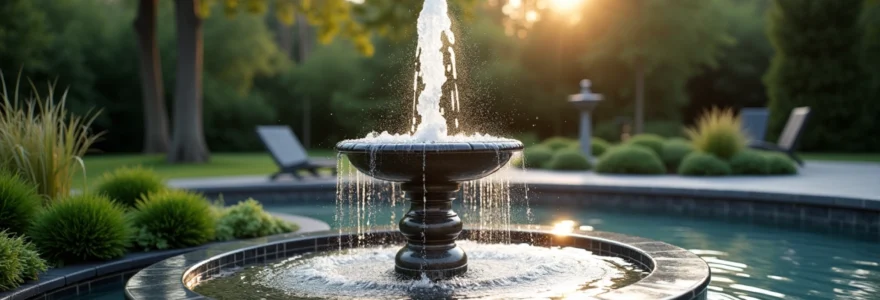
The gentle murmur of cascading water has captivated human senses for millennia, transforming ordinary spaces into tranquil sanctuaries that promote relaxation and mental clarity. Modern decorative water fountains harness this primal connection through sophisticated engineering principles that optimise acoustic properties, visual appeal, and psychological impact. From the precise calibration of flow rates to the strategic integration of natural materials, contemporary fountain design represents a convergence of art, science, and wellness technology that addresses our innate biophilic needs.
The creation of a truly serene atmosphere through water features extends far beyond aesthetic considerations, encompassing complex interactions between sound engineering, neurological responses, and environmental psychology. Today’s fountain installations leverage advanced pump technologies, filtration systems, and architectural placement strategies to deliver consistent, therapeutic benefits that can measurably reduce stress hormones whilst enhancing cognitive performance and emotional well-being.
Water fountain sound engineering and acoustic design principles
The acoustic properties of decorative water fountains form the foundation of their atmospheric impact, requiring careful consideration of multiple engineering variables to achieve optimal sound quality. Professional fountain designers employ sophisticated acoustic modelling techniques to predict and control the auditory characteristics of water movement, ensuring that the resulting soundscape promotes relaxation rather than distraction. The science behind fountain acoustics involves understanding how water droplet size, velocity, and impact surfaces interact to create specific frequency patterns that can either enhance or diminish the desired therapeutic effect.
Sound frequency analysis reveals that the most psychologically beneficial water sounds typically fall within the 200-2000 Hz range, mimicking the natural frequencies found in forest streams and gentle rainfall. This frequency spectrum has been demonstrated to activate the parasympathetic nervous system, triggering physiological responses associated with stress reduction and mental clarity. Advanced fountain designs incorporate multiple water sources and impact surfaces to create complex harmonic structures that prevent the monotony often associated with single-frequency white noise generators.
Decibel management through nozzle configuration and flow rate control
Precise decibel management represents a critical aspect of fountain sound engineering, with optimal ambient levels typically maintained between 45-55 dB to mask urban noise pollution without overwhelming conversation or contemplation. Modern nozzle configurations utilise computational fluid dynamics to optimise water dispersion patterns, creating laminar flows that minimise turbulent splashing whilst maximising the gentle trickling sounds that promote relaxation. Variable flow rate control systems allow fountain operators to adjust acoustic output throughout the day, accommodating changing ambient noise levels and user preferences.
Professional-grade fountain installations often incorporate multiple pump zones with independent flow controls, enabling the creation of layered soundscapes that can be fine-tuned for specific atmospheric requirements. The relationship between nozzle diameter, water pressure, and acoustic output follows predictable engineering principles, allowing designers to calculate precise specifications for achieving target decibel levels whilst maintaining visual appeal and energy efficiency.
Natural white noise generation using Multi-Tier cascade systems
Multi-tier cascade systems excel at generating natural white noise patterns that effectively mask distracting environmental sounds whilst creating a consistent acoustic backdrop for relaxation and meditation. These systems utilise gravity-fed water distribution to create multiple impact points, each contributing specific frequency components to the overall soundscape. The spacing and geometry of cascade tiers can be mathematically optimised to prevent resonant frequencies that might create unpleasant harmonic distortions or excessive volume spikes.
The acoustic benefits of cascade systems extend beyond simple noise masking, as the irregular timing of water droplet impacts creates subtle variations that prevent auditory adaptation and maintain user engagement. Research in environmental psychology indicates that these naturally occurring rhythm variations stimulate alpha brain wave production, promoting states of relaxed alertness that enhance creativity and problem-solving capabilities.
Resonance frequency optimisation in circular basin geometries
Circular basin geometries offer unique acoustic advantages through their ability to focus and amplify specific frequency ranges whilst minimising unwanted resonances that can create harsh or overwhelming sounds. The mathematical relationship between basin diameter, depth, and water level determines the resonant characteristics of the fountain system, with optimal configurations typically featuring diameter-to-depth ratios between 3:1 and 5:1 for maximum acoustic clarity. Advanced basin designs incorporate subtle geometric variations that break up standing wave patterns, preventing the acoustic dead zones that can occur in perfectly symmetrical installations.
Professional acousticians utilise finite element analysis software to model resonance patterns in complex basin geometries, enabling precise tuning of acoustic properties before construction begins. This computational approach allows designers to predict and eliminate potential acoustic problems, ensuring that the finished fountain delivers the intended therapeutic benefits whilst avoiding common issues such as excessive echo or frequency amplification.
Sound dampening materials: granite vs limestone vs fibreglass composite analysis
Material selection significantly influences the acoustic characteristics of decorative fountains, with different stone and composite materials exhibiting distinct sound absorption and reflection properties. Granite surfaces provide excellent durability and create crisp, clear water sounds due to their dense, non-porous structure, making them ideal for installations where sound clarity and longevity are priorities. However, granite’s reflective properties can sometimes amplify unwanted frequency ranges, requiring careful acoustic planning to achieve optimal results.
Limestone offers superior sound absorption capabilities due to its naturally porous structure, creating softer, more muffled water sounds that blend seamlessly with ambient environmental noise. This material excels in urban installations where noise pollution reduction takes priority over sound clarity, though its susceptibility to weathering requires more frequent maintenance in harsh climates. Modern fibreglass composite materials provide designers with unprecedented flexibility in acoustic tuning, as their density and surface texture can be precisely controlled during manufacturing to achieve specific sound characteristics whilst maintaining excellent durability and weather resistance.
Psychological impact of moving water features on stress reduction
The psychological benefits of moving water features extend far beyond simple aesthetic appreciation, triggering complex neurological responses that promote measurable improvements in mental health and cognitive performance. Scientific research demonstrates that exposure to water sounds can reduce cortisol levels by up to 37% within just fifteen minutes, whilst simultaneously increasing the production of beneficial neurotransmitters such as serotonin and dopamine. These physiological changes translate into tangible improvements in mood stability, stress resilience, and overall psychological well-being that can persist for hours after initial exposure.
The mechanisms underlying these psychological benefits involve multiple sensory pathways and neurological processes that evolved over millions of years to associate flowing water with safety, abundance, and survival. Modern fountain installations can leverage these evolutionary responses through careful attention to visual patterns, acoustic frequencies, and environmental integration that trigger optimal neurological responses. Understanding these mechanisms enables designers to create water features that deliver maximum therapeutic benefit whilst complementing the architectural and aesthetic requirements of their intended environment.
Neurological response to rhythmic water patterns and binaural beats
Rhythmic water patterns create subtle binaural beat effects when multiple water sources operate at slightly different frequencies, triggering brainwave entrainment responses that can induce specific mental states conducive to relaxation and focus. Electroencephalography studies reveal that exposure to fountain-generated binaural beats in the 8-12 Hz range promotes alpha wave production, associated with creative thinking and stress reduction. These effects can be enhanced through careful calibration of multiple pump systems operating at precisely calculated frequency differentials.
The neurological impact of rhythmic water patterns extends beyond brainwave entrainment to include activation of the default mode network, a brain network associated with introspection and mental restoration. This activation helps explain why fountain environments are particularly effective for meditation and contemplative practices, as they naturally facilitate the mental states required for deep reflection and psychological processing.
Cortisol level reduction through negative ion generation systems
Water fountains naturally generate negative ions through the process of water droplet fragmentation, creating localised atmospheric conditions similar to those found near waterfalls and ocean surf. These negative ions have been scientifically demonstrated to reduce cortisol production whilst increasing oxygen uptake at the cellular level, resulting in improved energy levels and enhanced immune function. The concentration of negative ions around properly designed fountain installations can reach levels comparable to natural forest environments, providing significant therapeutic benefits for users suffering from stress-related conditions.
Advanced fountain systems can incorporate supplementary negative ion generation through specialised atomisation technologies that maximise ion production without compromising visual or acoustic performance. Research indicates that negative ion concentrations above 1,000 ions per cubic centimetre provide measurable psychological benefits, with optimal therapeutic effects achieved at concentrations between 2,000-5,000 ions per cubic centimetre.
Visual meditation techniques enhanced by laminar flow fountains
Laminar flow fountains create perfectly smooth, glass-like water streams that serve as exceptional focal points for visual meditation and mindfulness practices. The hypnotic quality of laminar flow water helps practitioners achieve deeper meditative states by providing a consistent visual anchor that reduces mental wandering and promotes sustained attention. These installations often incorporate LED lighting systems that enhance the visual impact whilst creating dynamic colour patterns that can be synchronised with breathing exercises or meditation cycles.
The psychological effectiveness of laminar flow meditation aids stems from their ability to induce soft fascination, a mental state characterised by effortless attention that promotes cognitive restoration and stress recovery. This phenomenon has been extensively studied in environmental psychology, with research confirming that exposure to captivating natural patterns can restore mental fatigue and improve subsequent cognitive performance.
Chromotherapy integration using underwater LED colour temperature control
Chromotherapy integration through underwater LED systems enables fountain installations to deliver targeted psychological benefits through precise colour temperature control and dynamic lighting programs. Different colours have been scientifically proven to influence mood, energy levels, and cognitive performance, with blue lighting promoting calm and relaxation whilst warmer colours enhance creativity and social interaction. Modern LED systems can produce millions of colour combinations with programmable intensity curves that adapt to circadian rhythms and user preferences throughout the day.
The effectiveness of fountain-based chromotherapy depends on understanding the interaction between water refraction, lighting geometry, and human colour perception. Underwater LED placement must account for water movement and surface disturbances that can fragment or distort colour output, requiring sophisticated optical design to achieve consistent therapeutic effects. Advanced systems incorporate colour sensors and automated adjustment algorithms that maintain optimal chromotherapy delivery regardless of environmental conditions.
Architectural placement strategies for maximum atmospheric enhancement
Strategic fountain placement represents one of the most critical factors in achieving maximum atmospheric enhancement, requiring careful analysis of traffic patterns, sight lines, acoustic propagation, and environmental integration. Professional landscape architects utilise advanced modelling software to optimise fountain positioning within complex architectural environments, ensuring that water features complement rather than compete with existing design elements. The ideal fountain placement creates multiple interaction opportunities whilst maintaining visual coherence and acoustic harmony throughout the space.
Successful fountain integration involves understanding how water features influence human behaviour and movement patterns within architectural spaces. Research in environmental psychology demonstrates that well-positioned fountains can increase dwell time by up to 40% whilst reducing perceived stress levels and enhancing overall satisfaction with the environment. These effects are maximised when fountain placement follows established principles of biophilic design that leverage innate human preferences for natural patterns and elements.
The microclimate effects of fountain installations must also be considered during the placement planning process, as water features significantly influence local temperature, humidity, and air quality conditions. Strategic positioning can enhance natural ventilation patterns whilst providing localised cooling effects that improve comfort levels during warm weather. Proper fountain placement can create beneficial microclimates that extend usable outdoor space throughout the year whilst reducing energy consumption for climate control systems.
Contemporary placement strategies increasingly incorporate digital simulation tools that model acoustic propagation, visual impact, and environmental effects before installation begins. These tools enable designers to test multiple placement scenarios and optimise fountain positioning for specific atmospheric goals whilst identifying and resolving potential conflicts with existing infrastructure or future development plans. The integration of augmented reality visualisation allows stakeholders to experience proposed fountain installations in context, ensuring that the final placement delivers the intended atmospheric benefits whilst meeting all functional requirements.
Pump technology and filtration systems for continuous operation
Reliable fountain operation depends on sophisticated pump technologies and filtration systems that maintain consistent water quality and flow characteristics whilst minimising energy consumption and maintenance requirements. Modern fountain installations utilise advanced pump control systems that automatically adjust flow rates based on environmental conditions, user demand, and energy efficiency parameters. These intelligent systems can reduce energy consumption by up to 60% compared to traditional constant-speed pumps whilst maintaining optimal aesthetic and therapeutic performance throughout varying operational conditions.
The selection of appropriate pump technology involves balancing multiple factors including flow capacity, pressure requirements, noise levels, and energy efficiency ratings. Professional fountain designers must consider the long-term operational costs and maintenance requirements of different pump technologies, as these factors significantly impact the total cost of ownership and reliability of fountain installations. Advanced pump systems incorporate predictive maintenance capabilities that monitor performance parameters and alert operators to potential issues before they result in system failures or performance degradation.
Variable speed submersible pumps: grundfos vs oase performance comparison
Variable speed submersible pumps represent the gold standard for professional fountain installations, offering precise flow control capabilities and exceptional energy efficiency compared to traditional fixed-speed alternatives. Grundfos pumps excel in applications requiring maximum reliability and energy efficiency, with their advanced motor technologies delivering up to 15% better efficiency ratings than comparable models from other manufacturers. These pumps feature sophisticated variable frequency drives that enable precise flow adjustment whilst maintaining optimal motor protection and extended service life.
Oase pumps offer superior integration with fountain-specific control systems and accessories, providing seamless compatibility with LED lighting, filtration components, and automated maintenance systems. The modular design philosophy of Oase systems enables easier maintenance and component replacement, reducing long-term operational costs and minimising downtime during service procedures. Performance testing reveals that both manufacturers deliver exceptional reliability and efficiency, with specific model selection dependent on installation requirements and integration preferences.
UV sterilisation units and biological filtration for crystal clear water
UV sterilisation systems provide essential water quality management by eliminating harmful bacteria, viruses, and algae that can compromise fountain aesthetics and create health hazards. Modern UV units utilise high-efficiency germicidal lamps that destroy microorganisms at the DNA level, preventing reproduction and maintaining crystal-clear water quality without the need for chemical additives. The sizing and placement of UV systems requires careful calculation based on water volume, flow rates, and contamination levels to ensure effective treatment whilst avoiding over-sterilisation that could disrupt beneficial biological processes.
Biological filtration systems complement UV sterilisation by establishing beneficial bacterial colonies that naturally process organic waste and maintain optimal water chemistry. These systems utilise specialised filter media that provide maximum surface area for bacterial colonisation whilst maintaining excellent hydraulic efficiency. The combination of UV sterilisation and biological filtration creates a self-sustaining ecosystem that requires minimal chemical intervention whilst delivering consistently clear, healthy water conditions.
Energy-efficient circulation systems with solar panel integration
Solar panel integration offers significant opportunities for reducing operational costs and environmental impact whilst maintaining reliable fountain operation throughout daylight hours. Modern photovoltaic systems can provide sufficient power for most fountain applications during peak sunlight conditions, with battery backup systems ensuring continuous operation during cloudy periods and overnight hours. The sizing and configuration of solar arrays requires careful analysis of local solar irradiance data, fountain power requirements, and seasonal variations to ensure adequate power generation throughout the year.
Energy-efficient circulation systems maximise the benefits of solar power integration through optimised hydraulic design and intelligent control algorithms that minimise power consumption whilst maintaining desired aesthetic effects. Variable speed pumps enable dynamic power management that automatically adjusts fountain operation based on available solar energy, extending battery life and reducing dependence on grid power. Advanced systems incorporate weather forecasting data to optimise energy storage and consumption patterns, ensuring reliable fountain operation regardless of environmental conditions.
Winterisation protocols for Freeze-Thaw cycle protection
Comprehensive winterisation protocols are essential for protecting fountain systems from freeze-thaw damage that can result in costly repairs and extended downtime. Professional winterisation procedures involve complete water system drainage, pump protection, and the installation of freeze protection devices that prevent ice formation in critical components. The timing and execution of winterisation procedures must account for local climate conditions and fountain design characteristics to ensure complete protection whilst minimising preparation time and complexity.
Advanced fountain systems incorporate automated winterisation features that monitor temperature conditions and initiate protective measures without manual intervention. These systems can selectively activate heating elements, adjust water circulation patterns, or implement controlled drainage procedures based on weather forecasts and temperature thresholds. The integration of smart winterisation technologies reduces maintenance labour requirements whilst providing superior protection against unexpected temperature drops that could damage unprepared systems.
Feng shui water element positioning and chi flow optimisation
Feng shui principles provide valuable guidance for fountain positioning that enhances the flow of beneficial energy whilst supporting the overall harmony and balance of architectural spaces. Traditional feng shui theory associates water elements with wealth, prosperity, and emotional well-being, making proper fountain placement essential for maximising these beneficial influences. The direction, size, and style of water features must be carefully coordinated with the surrounding environment and existing energy patterns to achieve optimal chi flow and avoid potential energy conflicts that could diminish the desired effects.
Modern feng shui applications incorporate contemporary understanding of environmental psychology and biophilic design principles to create water features that satisfy both traditional energy flow requirements and scientific wellness criteria. The integration of feng shui positioning with acoustic engineering and visual design principles enables the creation of fountain installations that deliver measurable therapeutic benefits whilst supporting traditional energy enhancement goals. Professional designers increasingly utilise feng shui analysis as one component of comprehensive placement strategies that
optimise space utilisation whilst harmonising with natural energy flow patterns and contemporary design requirements.
The cardinal direction placement of fountains plays a crucial role in feng shui energy optimisation, with north-facing installations traditionally associated with career advancement and life path clarity. Water features positioned in the southeast sector are believed to enhance wealth accumulation and financial prosperity, making this placement particularly popular in commercial and residential applications. The eastern placement supports family harmony and health benefits, whilst western positioning can enhance creativity and children’s well-being, though care must be taken to avoid overwhelming the metal element traditionally associated with this direction.
Professional feng shui analysis considers the interaction between fountain size, surrounding architectural elements, and personal energy characteristics of the space’s primary users. The shape and material composition of water features must complement the elemental balance of their intended location, with curved forms and natural materials generally preferred for their ability to promote smooth energy circulation. Advanced practitioners utilise geomantic calculations and compass readings to determine optimal fountain orientation and sizing that maximises beneficial chi flow whilst avoiding energy conflicts that could create stress or discord within the space.
Contemporary feng shui applications integrate traditional principles with modern environmental science to create fountain installations that satisfy both spiritual and practical wellness requirements. The acoustic properties, negative ion generation, and visual meditation benefits of properly positioned water features align naturally with feng shui goals of promoting harmony, prosperity, and emotional balance. This convergence of ancient wisdom and modern understanding enables the creation of fountain environments that deliver measurable therapeutic benefits whilst supporting traditional energy enhancement objectives, making feng shui positioning an valuable component of comprehensive fountain design strategies.